Timber - PVC - Aluminium - Windows, Doors & Conservatories in Hampshire
Trickle Vents: The Complete UK Guide (2026 Regulations)
Trickle Vents: The Complete UK Guide (2026 Regulations)
New UK building regulations have sparked a nationwide debate regarding window ventilation. Discover exactly what trickle vents are, why they are now a strict legal requirement, and how they protect your property from condensation and black mould.
What is a trickle vent? A trickle vent is a small, manually adjustable opening integrated into a window or door frame that provides constant background ventilation. It allows fresh outside air to circulate naturally into a room while letting stale, damp air escape. Under updated UK Building Regulations (Part F), trickle vents are now a legal requirement on most replacement windows to prevent indoor condensation and dangerous black mould.
🪟 What Are Trickle Vents?
Small, adjustable ventilation grilles built directly into the top section of a new window or door frame.
🛡️ The Core Benefit
They provide continuous background ventilation. This lets fresh air in and damp air out, crucially preventing condensation and black mould.
⚖️ The Legal Requirement
Yes, trickle vents are mandatory. UK Building Regulations (Approved Document F) explicitly mandate them for new window installations to ensure safe home ventilation.
Page Contents
If you are planning to upgrade your double glazing, you have undoubtedly encountered the phrase “trickle vents”. While they seem like a minor addition, these small structural components have sparked a fierce nationwide debate.
Are trickle vents a truly vital tool for long-term home health, or simply an unnecessary, draughty addition forced upon homeowners?
This comprehensive guide expertly explains exactly how window trickle vents function, precisely why they now represent a strict legal requirement for most installations, and the genuine real-world pros and cons for you as a property owner.
1. Interactive Tool: Do I Need Trickle Vents?
Unsure whether your specific renovation project legally requires the installation of trickle vents under the new Part F regulations? Simply answer the question below, and our logic engine will instantly clarify your legal position.
2. What Are Trickle Vents and How Do They Work?
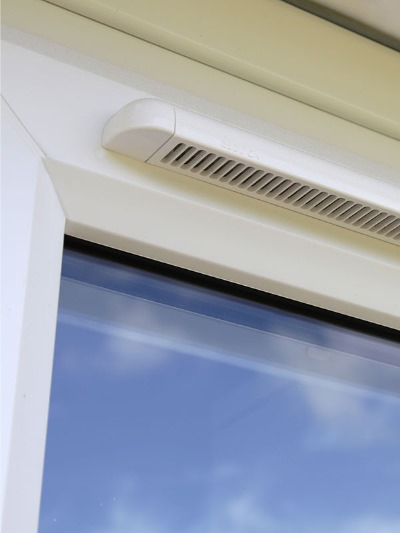
A trickle vent is a passive ventilation device specifically engineered to reliably maintain healthy indoor air quality. You will typically find trickle vents professionally installed within the top horizontal frame of a window (or occasionally within the opening sash itself). Visually, they appear as a small, slotted plastic grille featuring an adjustable sliding mechanism that you can manually open and close.
The underlying architectural principle remains incredibly simple. Window trickle vents expertly provide a continuous, highly controlled ‘trickle’ of natural ventilation from the outdoors. Consequently, this allows the incredibly stale, humid air trapped inside your home (routinely caused by daily cooking, hot showering, and even normal human breathing) to safely escape.
Simultaneously, it allows a very small, manageable amount of fresh, significantly drier exterior air to enter the room. Ultimately, this constant background ventilation proves absolutely essential for safely regulating humidity, aggressively preventing condensation, and continuously cycling out dangerous indoor air pollutants.
3. Why Are Trickle Vents a Legal Requirement Now?
This specific topic undeniably represents the most critical and frequently misunderstood aspect of modern window installation across the UK.
The Architectural Problem
During our nationwide drive for maximum energy efficiency, we have successfully made our modern homes incredibly airtight by utilising high-performance double glazing, intense draught-proofing, and deep cavity insulation. While this brilliantly saves money on winter heating bills, it also disastrously traps internal moisture and airborne pollutants. Consequently, this leads to extremely poor indoor air quality, which directly contributes to severe respiratory health issues.
The Government Solution (Approved Document F)
To actively combat this growing health crisis, the UK government officially updated Approved Document F (Ventilation) Gov.uk of the Building Regulations. The new, highly strict rules clearly state:
- Mandatory Installation: Trickle vents are now strictly required in the vast majority of all replacement windows and exterior doors.
- The Key Rule: When you replace old windows, the new frames absolutely must feature trickle vents, completely regardless of whether the old windows possessed them or not.
- The “No Worsening” Clause: The baseline ventilation for your property must absolutely not be made worse by the installation of new, highly airtight windows. Therefore, in almost all residential cases, installers must forcefully add window vents.
| Ventilation System | Trickle Vent Requirement | Engineering Rationale |
|---|---|---|
| Mechanical Ventilation (MVHR) | NOT REQUIRED. Do not install. | The complex MVHR system actively handles both air supply and extraction significantly more efficiently than standard passive vents. |
| Continuous Mechanical Extract | REQUIRED. | While the mechanical system successfully extracts stale air, passive trickle vents are legally needed to steadily provide the necessary “background supply” of fresh replacement air. |
| Natural Ventilation (Standard) | REQUIRED. | In standard residential homes, trickle vents serve as the absolute mandatory, primary source of essential background ventilation. |
Compliance is simply not optional. As an officially FENSA-registered installer, KJM Group meticulously ensures all our installations fully comply with these strict national regulations, thoroughly protecting your home and guaranteeing your installation is certified.
4. The Health Benefits for Your Home
While they certainly represent a strict legal requirement, trickle vents also inherently offer significant practical benefits for your property:
- Prevents Condensation and Black Mould: This remains the absolute primary benefit. By effectively providing an escape route for trapped water vapour, trickle vents dramatically reduce the immediate chances of moisture heavily settling on cool glass surfaces. As detailed in the official NHS guidance on damp and mould NHS.uk, stopping this moisture build-up precisely at the source is vital to preventing respiratory issues and immune system complications.
- Improves Indoor Air Quality: Window vents actively help to continuously remove hazardous indoor pollutants, external allergens like spring pollen, and lingering odours from heavy cooking, creating a significantly healthier living environment.
- Secure Ventilation: Crucially, you can confidently keep your home constantly ventilated without ever having to leave a main window open, which otherwise represents a massive security risk.
5. Addressing Common Homeowner Concerns
We completely understand that, despite the clear health benefits, homeowners frequently harbour genuine concerns about intentionally introducing small physical openings into their brand-new, highly energy-efficient windows.
- Aesthetic Impact: Historically, older trickle vents appeared incredibly bulky and highly unattractive. However, modern trickle vents are engineered to be far more discreet. Installers frequently integrate them seamlessly into the window profile (often colour-matched) to successfully minimise any visual disruption.
- Noise Pollution: The biggest unavoidable trade-off with any ventilation solution involves noise. Because a vent represents a small opening, it can naturally allow some external noise to enter. If you reside near a very busy road, we can expertly install specialised Acoustic Trickle Vents. Manufacturers specifically design these with internal noise-dampening foam structures to actively reduce sound transmission while fully maintaining airflow.
- Draughts and Heat Loss: Many people understandably worry about suffering a constant, freezing draught. However, trickle vents are precisely designed to gently allow a highly controlled, minimal airflow—upward towards the ceiling—certainly not a wide-open gust. While you may briefly notice a very slight cool spot, the massive health and condensation-prevention benefits significantly outweigh this minor issue.
6. Common Installation Mistakes
A high-quality trickle vent’s overall effectiveness can be severely compromised if a homeowner does not utilise it correctly.
- Permanently Closing Vents: This remains the absolute most common mistake. Homeowners frequently feel a slight winter draught and immediately close the vent permanently. This completely defeats the entire engineering purpose and will highly likely lead to a rapid return of severe condensation. You must leave trickle vents open.
- Painting Over Them: During internal redecoration, decorators frequently paint vents entirely shut, heavily blocking the sliding mechanism and destroying the airflow.
- Failing to Clean: Internal window vents can naturally become clogged with household dust, dead insects, or cobwebs over time. Therefore, you should gently vacuum or wipe them as part of your regular, monthly window cleaning routine to keep the air flowing freely.
7. Frequently Asked Questions
Generally, no. Under the 2022 Part F Building Regulations, if you are replacing existing windows, the new units must possess trickle vents to ensure you do not worsen the home’s ventilation. The only strict exceptions typically apply to Grade-Listed buildings where Conservation Officers may expressly forbid altering the visual appearance.
When properly open, trickle vents merely allow a very small, highly controlled flow of fresh air directed upwards. This is absolutely not the same as an uncontrolled, gusty draught you would typically experience from a poorly sealed old window. This essential micro-ventilation prevents condensation, damp, and dangerous mould growth.
This remains a highly common concern. A standard vent is a physical opening and will naturally let in some external noise. However, for high-noise areas, you can easily upgrade to ‘acoustic-rated’ trickle vents. These feature a special internal acoustic foam lining that actively dampens harsh sound waves while still perfectly allowing vital air to pass through.
Yes, this is entirely possible and is technically known as ‘retrofitting’. It strictly involves a professional carefully routing a small slot directly into your existing window frame to install the plastic vent. However, it is fundamentally far easier, significantly neater, and much more cost-effective to have trickle vents seamlessly integrated into new windows during factory manufacturing.
📚 Explore Our Performance Glazing Hub
Now you firmly understand the critical ventilation regulations, dive significantly deeper into the specific window options highly relevant to your home:
Ready to Upgrade Safely?
If you genuinely want to actively improve your home’s thermal efficiency without suffering from dangerous condensation, we can expertly help. KJM Group securely manages fully compliant, Part F certified window installations across Hampshire.
Contact KJM for a Free Consultation
Mark Pearce is a highly experienced specialist in the double glazing industry, having built his knowledge from the ground up through hands-on experience in installation, manufacturing, sales, and business management. Beyond his role at KJM, Mark is a keen blogger, writer, and traveller, often sharing insights on the latest innovations in the home improvement industry.
- Pilkington Launches Optitherm S3 Plus Triple Glazing Glass - 16 October 2026
- Comp Door Launches New 2026 Brochure Featuring ‘Total Black Out’ Frames - 11 September 2026
- Solidor launch five new doors - 21 August 2026