Timber - PVC - Aluminium - Windows, Doors & Conservatories in Hampshire
Why Are My Windows Steamed Up on the Outside?
Why Are My Windows Steamed Up on the Outside?
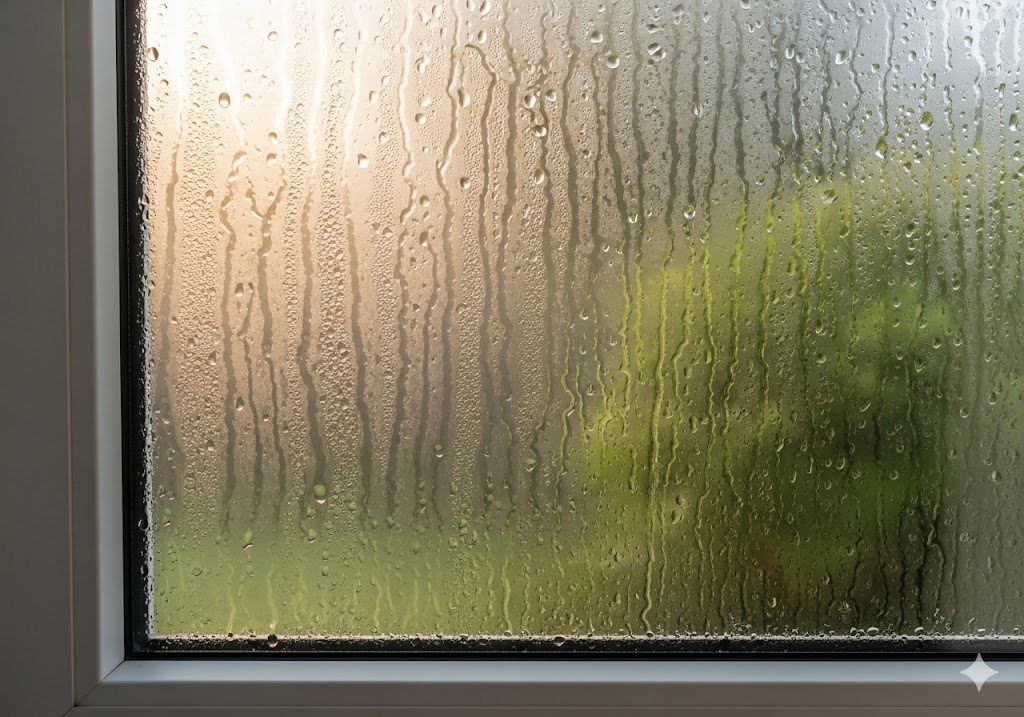
If you’ve noticed condensation on the outside of your windows, you might think something’s wrong. In most cases, it’s actually a sign your windows are working efficiently.
Quick Answer: If you are wondering, “why are my new windows wet on the outside?”, don’t panic. External condensation is completely normal. It happens because your new double glazing is doing its job—keeping the expensive heat inside your house. This leaves the outer pane of glass freezing cold, which turns morning moisture into water droplets. It will clear up naturally as the sun rises.
Where exactly is the moisture on your window?
- 👉 Outside the glass? You are in the right place. Keep reading below!
- 👉 Inside the room? This is a ventilation issue. Read our Guide to Internal Condensation.
- 👉 Trapped between the panes? Read our guide on Water between the panes.
- 👉 Need the full overview? Visit our Ultimate Guide to Window Condensation.
Page Contents
1. Is Condensation on the Outside of Windows Normal?
Yes, condensation on the outside of your windows is perfectly normal. It is a crisp, clear morning in the UK. You pull back the curtains to admire the view through your brand new, premium energy-efficient windows… only to find they are completely covered in heavy mist on the outside.
Immediate panic sets in. Are these expensive new windows completely faulty? Have the internal seals failed already? Why did my old, draughty timber windows never do this?
As someone who has assessed thousands of windows across Hampshire over the last 40 years, I can reassure you: over 80% of callouts we receive regarding “wet windows” are actually harmless external condensation or easily solvable ventilation issues. Condensation firmly settling on the outside of your double glazing is actually an absolute badge of honour for your home’s upgraded thermal insulation. In fact, bodies like the Energy Saving Trust actively recommend A-rated windows specifically because they trap this much heat inside.
2. Why Are My Windows Wet on the Outside?
To fundamentally understand exactly why new windows have condensation outside, imagine sitting in the garden on a beautifully warm summer evening holding an ice-cold glass of Gin and Tonic.
Within minutes, the outside of the glass becomes incredibly wet. Heavy water droplets naturally form and run down the side.

Is the glass physically leaking? No. Is the glass broken? Absolutely not.
What you are seeing is the scientific Dew Point in action. Here is how the process works on your home:
- Your new modern windows successfully trap all the warm central heating inside your house.
- Because the heat cannot escape through the glass, the outer pane is left completely freezing cold.
- When warmer, moist morning air hits that freezing surface, it can no longer hold onto its moisture.
- The invisible vapour instantly turns into liquid water, leaving your windows wet on the outside.
3. External vs Internal vs Misted: The Comparison
Different types of window condensation mean very different things. Use this quick reference table to determine if you have a problem that needs fixing.
| Type | Cause | Is it a Problem? | The Fix |
|---|---|---|---|
| External (Outside Glass) | Outer pane is colder than the outside air due to excellent insulation. | No. It proves your windows are highly energy-efficient. | Wait for the sun to rise. It will clear naturally. |
| Internal (Inside Room) | High indoor humidity (cooking, showering) hitting cold inner glass. | Yes. Can lead to black mould and damp. | Improve ventilation, use extractor fans, or open trickle vents. Read Guide → |
| Between Panes (Misted) | The hermetic perimeter seal of the double glazing unit has failed. | Yes. The window has lost its thermal efficiency. | The specific glass unit must be replaced. Read Guide → |
| Secondary Glazing | Warm room air bypassing the primary window and getting trapped. | Yes. Can rot timber frames over time. | Improve the seal on the secondary unit. Read Guide → |
4. Should You Worry About Condensation on Double Glazing?
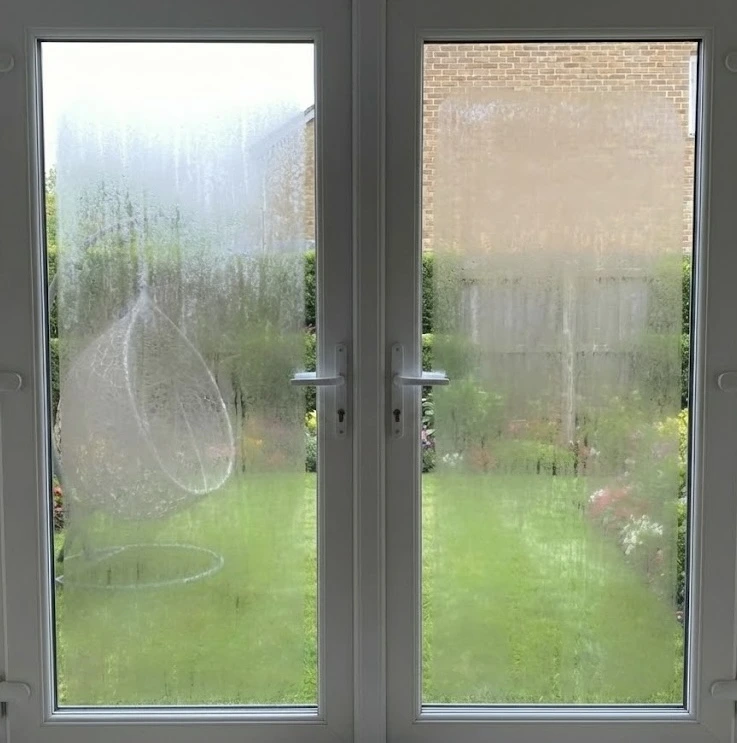
You should only worry if the condensation is on the inside of your room, or trapped between the glass panes. However, you might notice something seemingly strange about external condensation: it rarely covers the entire pane perfectly evenly.
The “Square of Mist” Mystery: External condensation usually forms a distinct square or rectangle right in the middle of the glass, leaving a clear border around the edges. Why? Because the absolute middle of the pane is the furthest point away from the window frame. The frame (and the internal spacer bar) actually leaks a tiny, unavoidable amount of internal heat, keeping the very edges slightly warmer than the freezing centre. That freezing centre point is precisely where the atmospheric dew point has been hit.
5. When Exactly Will It Happen in the UK?
You won’t see external window condensation every single day. Due to the UK’s specific climate, this physical phenomenon requires a highly specific set of natural weather conditions, typically seen during the transitional seasons of Spring and Autumn:
- The night must be completely clear (absolutely no insulating cloud cover).
- The external temperature must drop significantly overnight.
- There must be very high natural humidity (heavy moisture) present in the morning air.
- There is little to absolutely no moving wind to disperse the moisture.
📄 Download: The Official Condensation on Glass Guide (PDF)
6. Frequently Asked Questions
Yes, it is completely normal. External condensation is a physical indicator that your double or triple glazed windows are highly energy efficient. It shows that the internal heat of your home is not escaping through the glass to warm the outer pane.
Old, inefficient windows allowed expensive central heating to leak through the glass, which kept the outer pane warm enough to prevent condensation. New A-rated windows trap that heat inside, leaving the outer pane freezing cold, which naturally attracts morning dew.
No, it means the exact opposite! It is the ultimate proof of excellent insulation. If you have condensation inside the room, that indicates a ventilation or insulation issue, but exterior moisture is a sign of a high-performance window.
External condensation is temporary. Just like morning dew on your lawn or your car windscreen, it will naturally evaporate as soon as the morning sun rises, the ambient air temperature increases, or the wind picks up.
📚 Explore Our Performance Glazing Hub
This article is part of our comprehensive series on high-performance windows. To understand the complex science, costs, and comparisons in more detail, explore below:
Want Highly Energy Efficient Glazing?
If your current windows never physically mist up on the outside on a freezing morning, they might be severely leaking your expensive central heating. Upgrade to our high-performance, completely draught-free range today.
Contact KJM for a Free Quote
Mark Pearce is a highly experienced specialist in the double glazing industry, having built his knowledge from the ground up through hands-on experience in installation, manufacturing, sales, and business management. Beyond his role at KJM, Mark is a keen blogger, writer, and traveller, often sharing insights on the latest innovations in the home improvement industry.
- Pilkington Launches Optitherm S3 Plus Triple Glazing Glass - 16 October 2026
- Comp Door Launches New 2026 Brochure Featuring ‘Total Black Out’ Frames - 11 September 2026
- Solidor launch five new doors - 21 August 2026