Timber - PVC - Aluminium - Windows, Doors & Conservatories in Hampshire
Triple Glazed Windows & Triple Glazing: Is It Worth It?
Triple Glazed Windows & Triple Glazing: Is It Worth It?
The honest guide to Triple Glazing ROI, comfort, and costs. We weigh the Pros vs Cons to help you make an informed investment.
Triple glazing and triple glazed windows explained: Triple glazed windows use three panes of glass rather than the two found in standard double glazing, creating two insulating cavities within the sealed glass unit. This advanced construction can provide improved thermal insulation, dramatically lower U-values, and, in specific situations, better acoustic performance.
But does that extra performance justify the additional cost? In this guide, we look at the real-world benefits and disadvantages of triple glazing, including energy efficiency, comfort, condensation, noise reduction, costs, and when triple glazed windows make sense for your home.
Quick Answer: Are triple glazed windows worth the extra money?
For many homes, yes—particularly where energy efficiency, physical comfort, and eliminating cold spots are priorities. By utilising three panes of glass and two argon-filled cavities, triple glazing delivers up to 40% better thermal insulation than double glazing. While it typically costs 15% to 20% more upfront, it is highly recommended for north-facing rooms, extensions, and homes preparing for heat pumps. However, the performance of the complete window—including the glass, frame, spacer, and professional installation—matters just as much as the number of panes.
Page Contents
- 1. What Are Triple Glazed Windows?
- 2. Double vs Triple Glazing: The Direct Comparison
- 3. How much does triple glazing reduce heat loss?
- 4. Does triple glazing stop cold spots and condensation?
- 5. How much more does triple glazing cost?
- 6. Does triple glazing reduce noise?
- 7. The Pros and Cons of Fitting Triple Glazing
- 8. Frequently Asked Questions
What Are Triple Glazed Windows?
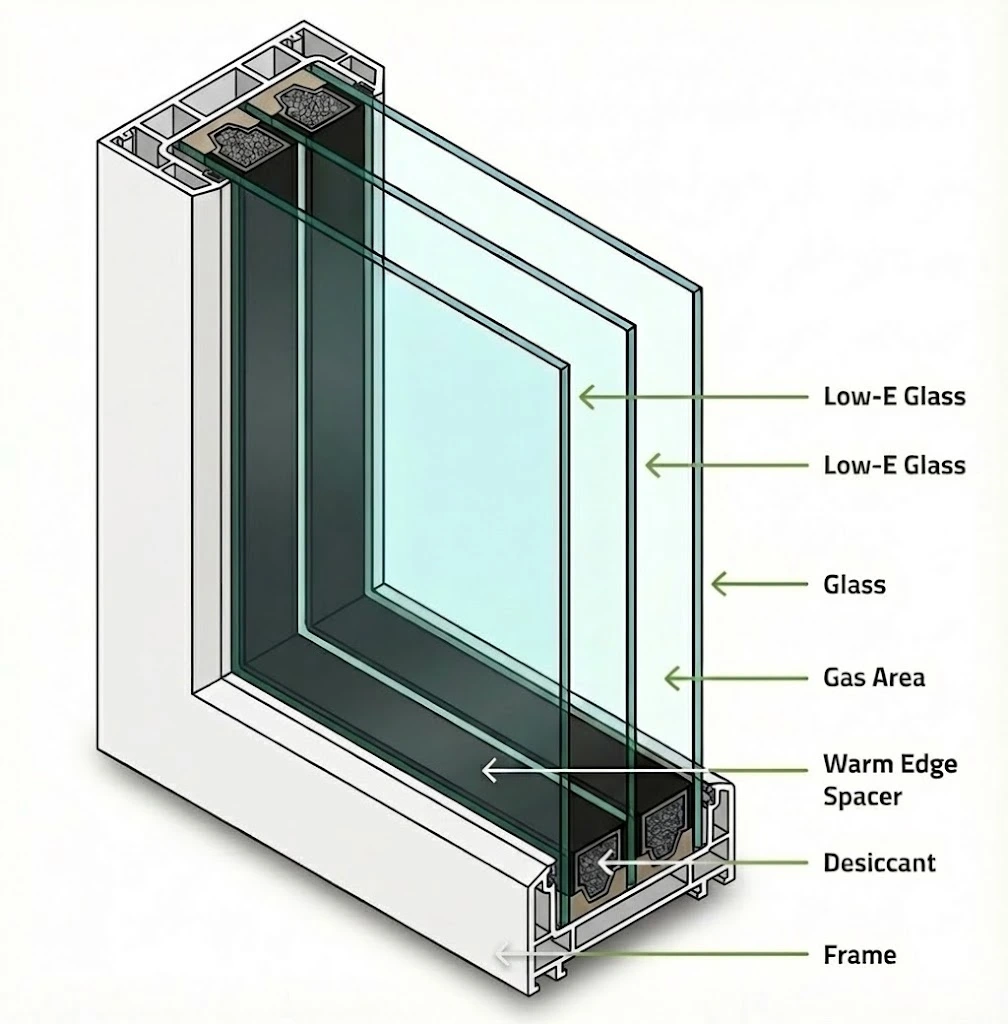
Fundamentally, triple glazing adds a third physical pane of glass to your sealed window unit, creating two completely separate cavities instead of just one. However, it isn’t simply “more glass”—rather, it is a highly engineered, complete thermal system designed to stop heat transfer dead.
THE BEST SPECIFICATION
Moreover, to be truly effective, triple glazing must be engineered correctly. Specifically, a standard KJM unit includes:
- Two Low-E Coatings: Chemically coated two of the three internal panes to physically reflect internal radiant heat back into the room.
- Inert Gas Fill: Both sealed cavities are filled with dense Argon (or sometimes Krypton) gas, which conducts heat far less efficiently than standard air.
- Warm Edge Spacer: A high-tech non-metallic bar separating the panes to completely stop the “cold bridge” effect at the edge of the window frame.
- Spacer bar size: The gap between the panes of glass is critical. Too small and the unit may not be much better than double-glazing. Aim for 14-16mm
- Thickness: The best triple glazed units are typically 40mm to 44mm thick, compared to the standard 28mm for double glazing.
Double vs Triple Glazing: The Direct Comparison
When deciding between double or triple glazing, how exactly do the physical specifications stack up? Use our direct comparison table below to see the precise thermal, acoustic, and security differences.
| Feature | A-Rated Double Glazing | 44mm Triple Glazing |
|---|---|---|
| Thermal Insulation | ~Best 1.0 W/m²K | 0.5 W/m²K (Over 40% Better) |
| Unit Depth | 28mm | 40mm to 44mm |
| Unit Weight | Standard (~20kg/m²) | Heavy (~30kg/m²) – Requires heavy-duty hinges |
| Security Level | High (2 Panes) | Ultimate (3 Panes to breach) |
| Noise Reduction | Good (Up to 31dB) | Can be better (Up to 35dB) |
| Condensation | Greatly reduced | Virtually eliminated internally |
| Price Premium | Baseline Cost | Usually 20% more |
How much does triple glazing reduce heat loss?
Naturally, when researching triple glazing, the real scientific difference is found in the U-Value. Essentially, the lower the number, the better the glass is at stopping heat from escaping.
Consequently, below is the strict technical breakdown of the Pilkington glass units we specify. Beware of thin triple glazing. If a company tries to squeeze three panes of glass into a thin 28mm frame, the gas cavities are simply too small to work properly, and the thermal efficiency actually drops!
| Unit Thickness | Gas Fill | Centre-Pane U-Value (Ug) | Solar Factor (g-value) | Performance Verdict |
|---|---|---|---|---|
| 28mm The “Slimline” Solution |
Krypton | 0.6 W/m²K | 0.33 | Excellent for restricted retrofits, but Krypton gas massively increases the cost. |
| 36mm Standard Spec |
Argon | 0.7 W/m²K | 0.33 | Good performance, but slightly compromised by the narrower cavity width. |
| 40mm High Performance |
Argon | 0.6 W/m²K | 0.33 | Very high efficiency, striking the perfect balance between weight and performance. |
| 44mm The Gold Standard |
Argon | 0.5 W/m²K | 0.33 | Ultimate Efficiency. The best performing, lowest heat-loss unit available. |
*Data based on the Pilkington Optitherm™ S1 Plus coating.
📂 Download The Official Tech Datasheets
Does triple glazing stop cold spots and condensation?
How much does triple glazing reduce cold spots?
Firstly, this is the vital, hidden benefit that simple financial ROI calculators completely miss. Even if your living room is fully heated to 21°C, sitting on a sofa directly next to a standard double-glazed window in December will still result in a noticeable chill on your skin.
Specifically, this happens because of **radiant heat loss**. Since your body actively radiates heat towards the cold glass surface, you feel a sudden drop in temperature. Consequently, as the warm room air hits the cold inner pane of glass, it cools rapidly and sinks. Ultimately, this creates a continuous, freezing floor-level draught known as a **convection current**.
Because triple glazing keeps the internal glass temperature almost completely identical to the surrounding solid wall temperature, these miserable cold spots disappear entirely. Furthermore, this allows you to turn your central heating thermostat down by a full 1°C without feeling any colder—potentially saving ~10% on your heating bills immediately.
Does triple glazing stop internal condensation?
Yes. Because the innermost pane of a triple glazed window stays significantly warmer than a double glazed window, warm, moist air inside your home does not reach its dew point when it touches the glass. Therefore, this virtually eliminates internal window condensation.
How much more does triple glazing cost?
Let’s directly address the elephant in the room: the cost. Triple glazing requires significantly more raw materials, heavier transport logistics, and stronger operational hardware.
The Premium: You can safely expect to pay approximately 15% to 20% more for triple glazing compared to an equivalent A-rated double glazed window from KJM Group. Furthermore, independent bodies like the Energy Saving Trust officially highlight that upgrading to highly energy-efficient windows will notably reduce both your annual heating bills and your home’s overall **carbon footprint**.
🧮 Triple Glazing Price
While every home is bespoke, here is how the 20% premium usually looks in reality when quoting for an average semi-detached property:
- A-Rated Double Glazing (Whole House): e.g., £10,000
- Triple Glazing (Whole House): e.g., £12,000
- The Difference: £2,000
The question you must ask yourself is: Are you willing to pay an extra £2,000 spread over the 20-year lifespan of the windows (just £100 a year) for the ultimate physical comfort and complete elimination of cold spots? For many homeowners, the answer is a resounding yes.
Does triple glazing reduce noise?
If you are exploring triple glazing sound insulation to block out heavy traffic noise, the physical realities might surprise you. Importantly, assuming standard triple glazing is the ultimate cure for noise is a highly common, expensive misconception.
Standard triple glazing uses three panes of the exact same thickness (e.g., 4mm). This identical thickness can accidentally create a “sympathetic resonance” where low-frequency sound waves (like a lorry engine) travel more easily through the unit. Consequently, it offers very little acoustic improvement over standard double glazing.
The Solution: If your primary goal is curing a noise problem, you must ask for Acoustic Laminated Glass (which uses asymmetric, thicker panes to disrupt the soundwaves) rather than assuming standard triple glazing will magically solve the issue.
📊 The Hard Data: Is Triple Glazing Worth It for Soundproofing?
A major reason homeowners consider paying the premium for triple glazing is to block out heavy traffic or neighbourhood noise. Financially, this is a mistake.
As proven by Pilkington’s laboratory acoustic testing, adding a standard third pane of glass provides almost zero noticeable noise reduction compared to standard double glazing. If your primary goal is soundproofing, your budget is vastly better spent on Acoustic Double Glazing (like Stadip Silence or Pilkington Optiphon™).
| Glass Upgrade | Acoustic Rating (Rw) | The ROI Verdict |
|---|---|---|
| Standard Triple Glazing (High cost premium) |
~32 dB | Poor Value Minimal noise reduction over standard double glazing. |
| Acoustic Double Glazing (Moderate cost premium) |
38+ dB | Excellent Value Effectively halves perceived traffic noise for a lower overall cost. |
Data derived from Pilkington’s official single-chamber (double) ↗ and double-chamber (triple) ↗ acoustic test certificates.
The Pros and Cons of Fitting Triple Glazing
Understanding the advantages and disadvantages is essential when deciding if triple glazing is the right physical investment for your property. Here is an objective, fluff-free verdict on how it performs.
| ✅ Advantages of Triple Glazing | 👉 Disadvantages of Triple Glazing |
|---|---|
| Better thermal performance: Dramatically lower U-values (as low as 0.5 W/m²K), retaining significantly more heat in your home, especially in North-facing rooms. | Higher upfront cost: The initial investment is generally 15% to 20% more than high-quality A-rated double glazed units. |
| Eliminates cold spots: Eradicates the freezing floor-level convection draughts near large expanses of glass, maintaining consistent room temperatures. | Heavier units: Requires purpose-built, steel-reinforced frames and heavy-duty Mega Egress hinges to carry the 30kg/m² load without warping. |
| Future-proofs your home: The ideal prerequisite for heat pump retrofits, which require the building fabric to stop heat loss completely to run efficiently. | Reduced solar gain: While it keeps heat in, it slightly limits the free thermal energy from the sun entering south-facing rooms. |
| Stops internal condensation: The innermost pane stays closer to room temperature, preventing warm, moist air from hitting its dew point on the glass. | Longer payback period: If you are moving house soon or already have modern double glazing, the financial ROI takes decades to realize. |
Frequently Asked Questions
Yes, if your primary goals are maximising thermal comfort and eliminating cold draughts. While they cost more upfront, triple glazed windows offer vastly superior heat retention, making them an excellent long-term investment for north-facing elevations or properties utilizing heat pumps.
You can expect to pay a premium of around 15% to 20% for triple glazed windows compared to high-quality A-rated double glazing. This accounts for the extra glass, specialised argon gas cavities, and the heavy-duty reinforced frames required to hold the units.
By achieving U-values as low as 0.5 W/m²K, triple glazing is up to 40% more thermally efficient than standard A-rated double glazing. This allows you to retain more central heating and potentially turn your thermostat down by a full degree without feeling colder.
Thermally, yes. They provide superior heat retention and eliminate internal cold spots. However, if your primary goal is reducing traffic noise, acoustic double glazing is actually a better and more cost-effective choice than standard triple glazing.
Yes, but they must be installed with brand new, reinforced frames. The glass is 50% heavier than double glazing, so you cannot retrofit triple glazed units into existing, older window frames. We offer flush casement and heritage styles that suit older properties beautifully while housing modern triple glazing.
Modern triple glazing specifically uses ‘extra clear’ Low-Iron glass on the outer pane. While there are three physical layers, the light transmission is excellent (approx 74%), so you will barely notice any visible difference compared to double glazing.
No. The exact same low-E layers that keep your radiator heat in during the winter also work dynamically to reflect extreme, direct solar heat out during the summer.
Condensation on the exterior proves the window is performing so efficiently that absolutely no heat is escaping from inside your house to warm up the outer pane of glass. It is a sign of excellent thermal efficiency.
A high-quality triple-glazed window, such as our 44mm specification, typically achieves a centre-pane U-value of 0.5 W/m²K. This performs significantly better than standard double-glazing requirements.
Yes. The inner pane stays much closer to room temperature, preventing warm, moist air inside your home from condensing on the glass surface.
A standard high-performance triple glazed unit is typically 40mm to 44mm thick (comprising three 4mm glass panes separated by two 14mm or 16mm argon cavities).
📚 Explore Our Glazing Knowledge Hub
This article is part of our comprehensive series on high-performance windows. To understand the science, costs, and comparisons in more detail, dive into our expert guides below:
Ready to upgrade your home’s thermal efficiency?
Don’t guess what your home needs. Visit the KJM Group showroom in Andover to feel the difference between double and triple glazing in person, or contact us today for a free, transparent quote across Hampshire, Berkshire, and Wiltshire.
Request a Transparent Quote
Mark Pearce is a highly experienced specialist in the double glazing industry, having built his knowledge from the ground up through hands-on experience in installation, manufacturing, sales, and business management. Beyond his role at KJM, Mark is a keen blogger, writer, and traveller, often sharing insights on the latest innovations in the home improvement industry.
- Comp Door Launches New 2026 Brochure Featuring ‘Total Black Out’ Frames - 11 September 2026
- Solidor launch five new doors - 21 August 2026
- KJM Group Wins Which? Trusted Trader of the Month (Aug 2026) - 4 August 2026