Timber - PVC - Aluminium - Windows, Doors & Conservatories in Hampshire
Manual vs Electric Garage Doors: Is Automation Worth It
Manual vs Electric Garage Doors: Is Automation Worth It
Tired of physically wrestling with heavy, freezing garage doors? We expertly compare the modern security, daily convenience, and realistic costs of manual vs electric garage doors for busy homeowners.
It is an all too familiar, classic British scenario: you drive home in the freezing, pouring rain, pull carefully into your dark driveway, and then inevitably have to get out of your warm car to physically wrestle with a heavy, wet garage door. Ultimately, it’s a miserable inconvenience we’ve stubbornly accepted for decades—but thankfully, we absolutely don’t have to anymore.
For many hard-working homeowners in Andover and across Hampshire, the seamless switch to a modern electric garage door is very often seen merely as an expensive luxury upgrade. However, as motor technology vastly improves and installation costs rapidly come down, seamless automation is fast becoming a totally standard, essential expectation for modern British homes.
At KJM Group, our experienced teams have installed thousands of heavy doors—both manual and electric. Consequently, in this comprehensive guide, we expertly break down the complex mechanics, the massive security benefits, and the true, realistic cost of automation to successfully help you decide.
⚡ Convenience
Electric definitively wins hands down. You can seamlessly open your heavy door securely from your car or smartphone without ever braving the freezing rain.
🔒 Security Profile
Electric motors actively push the heavy door down firmly to the floor, essentially acting as a “positive lock” that is significantly harder for criminals to force than basic manual latches.
💷 Cost vs Retrofitting
Expect to sensibly pay an extra £500 – £600 for full automation. Crucially, retrofitting is very easy for Retractable and Sectional doors, but unfortunately difficult and expensive for old Canopy doors.
Page Contents
1. The Case for Manual Doors
The traditional manual garage door has undeniably been an architectural staple for decades. Usually operating on a highly stressed spring-balanced system, they are explicitly designed to be physically lifted by hand. While they are fundamentally basic, they still definitively have their place.
✅ Manual Door Pros
- Lower Initial Cost: Manual doors are significantly cheaper to initially buy and install simply because there is absolutely no expensive motor, control unit, or complex wiring required.
- Mechanical Simplicity: Having vastly fewer moving parts generally equates to far fewer electrical things that can spontaneously go wrong over a 20+ year lifespan.
- No Power Needed: Absolutely ideal for completely detached garage blocks (highly common in older Andover estates) where there is sadly no mains electricity supply physically available.
- Physical Effort: As heavy doors get older, the massive springs rapidly lose critical tension, making them incredibly heavy to physically lift. Ultimately, this becomes a highly significant, dangerous issue for the elderly or anyone with severe mobility issues.
- Security Risks: Many older manual doors foolishly rely on incredibly simple, cheap handle latches that are easily forced open by determined local intruders.
- The “Rain Factor”: There is simply no magical way to actively avoid getting completely wet when forcefully opening a manual door in terrible British weather.
2. The Case for Automation
Modern electric garage doors intelligently use a powerful motor (called an operator) to effortlessly lift the heavy door at the simple touch of a remote button. Consequently, this isn’t just about laziness; it’s about robust security and cleverly future-proofing your expensive home.
Security: The Hidden Benefit
While most busy people switch solely for the convenience factor, the massive security upgrade is arguably far more important. Unlike basic manual doors that rely heavily on a weak plastic or metal latch, a highly geared electric motor physically acts as an aggressive positive lock.
When the door is fully closed, the heavy motor actively pushes down incredibly firmly (or effectively holds the complex gears totally locked). Therefore, this makes it incredibly difficult for an opportunist burglar to forcefully lever the door up from the outside. Furthermore, high-end, premium models like the SeceuroGlide Excel even feature intelligent physical locking clamps that engage absolutely automatically the instant the door hits the concrete floor.
Accessibility & Mobility
For anyone painfully struggling with severe back pain, chronic arthritis, or generally reduced physical mobility, wrestling a heavy, unyielding garage door is a genuinely dangerous daily hazard. Seamless automation actively removes the physical muscular strain entirely. Additionally, modern electric motors strictly feature “safety edge” technology—if the heavy door accidentally hits a minor obstruction (like a small child or a family pet), it violently stops and rapidly reverses direction instantly.
Smart Home Integration
Modern, highly advanced electric operators (like those manufactured by Garador or Somfy) are now fully “Smart” ready. With a remarkably small add-on receiver, you can easily:
- Securely open and completely close your heavy garage door directly from your smartphone, literally anywhere in the world.
- Instantly receive push alerts if you foolishly accidentally leave the huge door wide open.
- Safely grant highly temporary, trackable access to a delivery courier to leave an expensive parcel safely hidden inside.
3. Interactive: Automation Suitability Analyser
Are you currently heavily debating if your specific garage configuration is actually suitable for an electric upgrade? Use our interactive tool below to quickly find out.
4. Retrofitting: Can I Automate My Existing Door?
Undoubtedly, this is overwhelmingly the most incredibly common question we get asked daily at our Andover showroom. The true answer depends entirely on your specific door’s mechanical lifting mechanism.
| Existing Door Type | Automation Viability & Process |
|---|---|
| Retractable (Up & Over) | Very Easy. We simply securely bolt a long “boom” operator directly to the ceiling joists and connect the powerful arm to the top center of the door. |
| Sectional | Incredibly Easy. Almost all modern sectional doors are explicitly designed from the factory to be highly automated. |
| Canopy (Up & Over) | Highly Difficult. Strictly requires a clumsy, heavy “bow arm” mechanical converter. Ultimately, it is usually significantly cheaper and much safer to entirely replace the door. |
| Roller | Standard. Most new versions come with highly efficient tubular motors built-in. Genuine manual roller doors are extremely rare today. |
5. Real World Cost Comparison
Is the extra financial cost genuinely justified? Here is a highly realistic, rough guide to the exact difference in expenditure.
| Core Feature | Manual Door | Electric Door |
|---|---|---|
| Convenience Level | Very Low (You must physically exit the vehicle in all weather) | Incredibly High (Remote/App control from inside the car) |
| Security Profile | Standard (Heavily depends on the quality of the latch lock) | Maximum (The heavy motor effectively acts as a solid physical lock) |
| Financial Base Cost | Standard base rate | +£500 – £600 (typically) |
6. Frequently Asked Questions
Don’t worry, you absolutely won’t be permanently trapped. Every single electric door we install strictly includes a manual mechanical release mechanism. Furthermore, if you have absolutely no other physical entrance to the garage, we seamlessly install a highly discreet External Emergency Release device.
Yes, absolutely. Modern mechanical systems legally sold in the UK must strictly comply with rigorous safety standards. They intelligently feature automatic “force limitation” and sensitive obstacle detection. If the heavy door touches literally anything while closing, it instantly stops and rapidly reverses direction immediately.
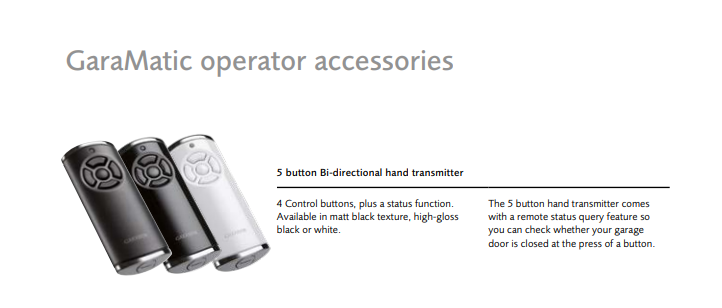
Typically, two secure handheld remotes are generously included as an absolute standard. However, we can also easily install highly secure wireless wall buttons directly inside your house or garage, and robust digital pin keypads completely outside.
Very little, thankfully. Modern DC garage motors are incredibly highly efficient. In standard standby mode (simply waiting for a radio signal), they successfully consume absolutely negligible power, frequently costing just mere pennies per entire year to continually run.
📚 Garage Door Knowledge Hub
We strongly believe an educated customer logically makes the absolute best decisions. Explore our specific garage door guides below:
Ready to Upgrade to Effortless Automation?
Discover precisely how KJM Group can thoroughly support your complex garage door installation needs. Whether you desperately require expert architectural advice on perfectly sourcing Garador motors, or you are carefully exploring a total electric replacement, we are here to definitely help.
Contact KJM for a Free Quote
Mark Pearce is a highly experienced specialist in the double glazing industry, having built his knowledge from the ground up through hands-on experience in installation, manufacturing, sales, and business management. Beyond his role at KJM, Mark is a keen blogger, writer, and traveller, often sharing insights on the latest innovations in the home improvement industry.
- Pilkington Launches Optitherm S3 Plus Triple Glazing Glass - 16 October 2026
- Comp Door Launches New 2026 Brochure Featuring ‘Total Black Out’ Frames - 11 September 2026
- Solidor launch five new doors - 21 August 2026