Timber - PVC - Aluminium - Windows, Doors & Conservatories in Hampshire
How to Ventilate Your Home: The Ultimate Guide
How to Ventilate Your Home: The Ultimate Guide
Are you constantly battling morning condensation or terribly stale indoor air? We expertly explain exactly how to ventilate your home to stop condensation effectively, clearly breaking down the vital differences between natural cross-ventilation, trickle vents, and advanced mechanical systems.
🌬️ Natural vs. Mechanical
Most modern homes strictly require a healthy mix of both. Opening your windows is “Natural”; electrically powered extractor fans and PIV systems are “Mechanical.”
⏱️ Flash Venting
In deep winter, rapidly open main windows totally wide for just 5-10 minutes rather than lazily leaving them slightly ajar all day to brilliantly save expensive energy.
💧 Source Control & Trickle Vents
Prevention is always significantly better than a cure. Actively stop moisture entirely at the source (using lids on boiling pans). Keep your window trickle vents open 24/7 for essential background airflow.
We all deeply love a beautifully warm, highly sealed home during the freezing UK winter, but hermetically sealing our properties far too tightly incredibly often leads to dangerous “Stale Air Syndrome.” Ultimately, completely without proper daily airflow, internal moisture rapidly builds up, aggressively leading to heavy condensation on cold windows, dark damp patches on masonry walls, and highly toxic black mould growth which poses severe health risks.
Consequently, to successfully ventilate a house effectively entirely without causing your expensive central heating bills to skyrocket, you urgently need a scientific strategy. This comprehensive guide carefully breaks down the critical difference between Natural and Mechanical ventilation, officially offering a highly efficient room-by-room plan to securely maintain a permanently healthier home.
Page Contents
1. Natural vs. Mechanical Ventilation Explained
Household ventilation absolutely isn’t just one single concept. It strictly falls directly into two distinct architectural categories, and heavily insulated modern homes incredibly often securely require both to function safely.
- Natural Ventilation: This is purely passive daily airflow naturally driven by external wind and internal thermal buoyancy. It primarily includes manually opening windows, external air bricks, and crucially, keeping modern window trickle vents open.
- Mechanical Ventilation: This is highly active, forced airflow electrically driven by powered fans. It officially includes heavy-duty extractor fans, advanced Positive Input Ventilation (PIV), and complex Heat Recovery (MVHR) systems.
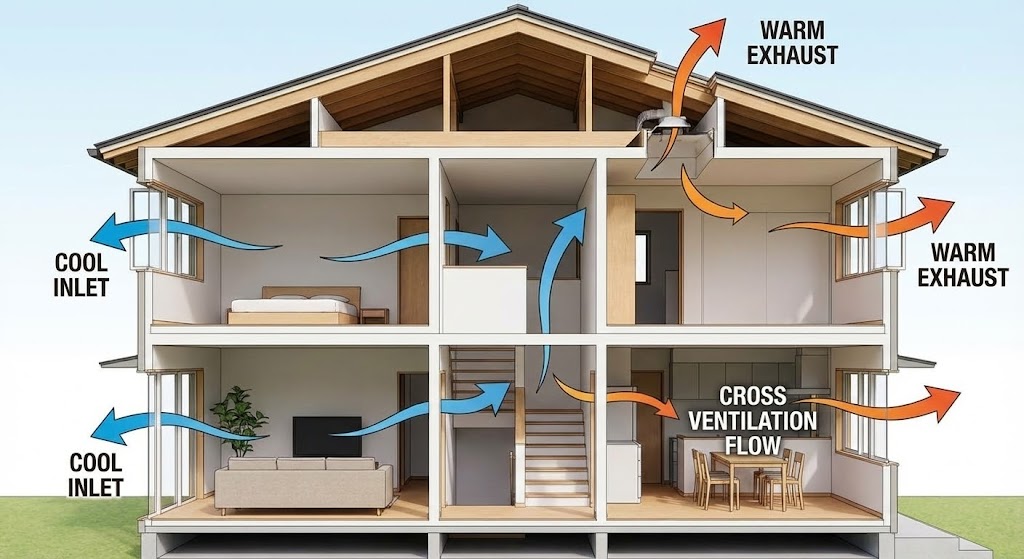
2. The Art of “Flash Venting” (Crucial Winter Strategy)
Undeniably, the absolute biggest, most expensive mistake UK homeowners repeatedly make in freezing mid-winter is stubbornly leaving a small window slightly ajar all day long. This brutally chills the deep physical fabric of the building (the masonry walls, heavy floors, and soft furniture), incredibly making it massively expensive to comfortably reheat the room later.
💡 The Best Way to Ventilate a House in Winter: Flash Venting
Instead of inadvertently creating a constant, freezing cold draught, decisively open main windows located directly on opposite sides of the house completely wide for just 5-10 minutes. This brilliantly creates a massive “Cross Ventilation” pressure difference that actively purges stale, highly moist air and rapidly replaces it completely with clean, fresh, dry outdoor air.
Crucially, because the thick interior walls effortlessly retain their deep thermal heat during this brief period, the room miraculously warms back up incredibly quickly once you close the windows, massively saving energy when directly compared to the highly inefficient “always ajar” method.
3. Mechanical Ventilation Solutions Demystified
For highly modern, tightly airtight homes, or older historic properties suffering from severe, persistent damp issues, basic natural airflow might simply not be enough. Here is the strict architectural hierarchy of powered solutions:
1. Extract Fans
The Basic Essential. Strictly located in highly humid “wet rooms”. They absolutely must be used aggressively during heavy cooking or showering and safely left running for at least 15 mins afterwards.
2. PIV Systems
The Retrofit Hero. Positive Input Ventilation safely sits in the dark loft, gently pushing highly filtered, totally dry air directly down into the main house, expertly forcing damp, stale air out.
3. MVHR
The Gold Standard. Mechanical Ventilation with Heat Recovery continuously extracts polluted stale air but incredibly uses it to beautifully warm up the incoming freezing fresh air. Ideal for new builds.
4. The Definitive Room-by-Room Guide
Completely different rooms inherently produce entirely different, dangerous pollutants. You must actively tailor your exact ventilation strategy accordingly to succeed.
| Target Room | Primary Pollutant | Expert Ventilation Strategy |
|---|---|---|
| Busy Kitchen | Heavy Steam & Toxic Fumes | Powered Mechanical Extract. Use the main cooker hood (strictly vented directly outside) every single time you cook. Always keep the internal door firmly closed to successfully stop pungent smells spreading. |
| Family Bathroom | Extreme Daily Humidity | Heavy Extract + Rapid Flash Vent. Run the powered fan continuously during the shower + exactly 20 mins after. Briefly open the main window immediately after use to totally clear the lingering steam cloud. |
| Main Bedroom | Dense CO2 & Condensation | Constant Trickle Vents. Always keep window trickle vents totally open all night long to safely manage rising CO2 levels. Execute a rapid 10-minute flash vent in the early morning. |
5. Source Control: Stopping Moisture at the Origin
While excellent ventilation brilliantly removes existing airborne moisture, strict “Source Control” intelligently stops the heavy water vapour from ever being created in the very first place.
⚠️ The Dangerous “Indoor Laundry” Problem
Repeatedly drying heavily wet clothes directly on hot radiators is officially the absolute #1 leading cause of toxic black mould in UK homes. It aggressively releases multiple litres of raw water directly into the trapped air. Always physically dry clothes outside if at all possible. If forced to dry indoors, exclusively use a completely closed room with a window slightly open and the internal door firmly shut, or heavily utilise a powerful electric dehumidifier.
Highly Effective Quick Wins for Source Control:
- Lids Firmly on Pans: This remarkably simple action drastically reduces boiling steam release by an incredible 90% while actively cooking dinner.
- Wipe Down the Glass: Habitually use a rubber squeegee on the shower glass and wet tiles immediately after daily use. This brilliantly directs heavy water straight down the drain, rather than slowly letting it violently evaporate entirely into the warm air.
- Clear Furniture Gaps: Ensure you carefully pull large, heavy wardrobes roughly 50mm away from freezing cold external brick walls. This effortlessly allows vital airflow safely behind them, permanently preventing highly dangerous “dead spots” where toxic mould loves to grow unseen.
6. Frequently Asked Questions
They explicitly allow a very small, highly controlled amount of continuous air exchange, which is absolutely legally necessary for human health. However, highly modern trickle vents are intelligently designed with internal deflectors (usually safely directing the cold airflow entirely upwards towards the ceiling) to effectively minimise the uncomfortable feeling of a direct cold draught. Stubbornly keeping them permanently closed entirely defeats the fundamental health purpose of installing modern windows.
Yes, absolutely! But you must do it highly strategically using the precise “Flash Venting” method expertly described above. A rapid 5-10 minutes of completely wide-open windows is remarkably, scientifically far better for your overall thermal energy efficiency than a small window lazily left slightly ajar all day long.
Modern ‘A’ rated double glazing possesses a significantly warmer internal glass surface temperature than incredibly old single glass. This explicitly means warm indoor moisture is vastly less likely to actively condense directly on it. However, if the total humidity trapped in the sealed room is extremely high (due entirely to incredibly poor daily ventilation), heavy condensation can absolutely still violently form on the absolute coolest surface available.
No, this is actually a fantastic, highly positive sign! It explicitly proves that your new windows are actively insulating your property so incredibly well that the absolute outer pane remains freezing cold (because absolutely zero expensive heat is secretly leaking out from your warm home). This simply causes natural morning dew to form directly on the outside glass, exactly like it forms on a cold car. It will effortlessly disappear entirely as the morning sun safely rises.
📚 Explore Our Glass Knowledge Hub
Improve your home environment and completely stop condensation with these expert guides:
Ready to Upgrade Your Windows?
If your old windows are failing to keep the cold out, or they lack essential modern trickle vents to keep your air fresh, we can expertly help. KJM Group rigorously installs high-performance, fully compliant windows across Hampshire.
Contact KJM for a Free Quote
Mark Pearce is a highly experienced specialist in the double glazing industry, having built his knowledge from the ground up through hands-on experience in installation, manufacturing, sales, and business management. Beyond his role at KJM, Mark is a keen blogger, writer, and traveller, often sharing insights on the latest innovations in the home improvement industry.
- Comp Door Launches New 2026 Brochure Featuring ‘Total Black Out’ Frames - 11 September 2026
- Solidor launch five new doors - 21 August 2026
- KJM Group Wins Which? Trusted Trader of the Month (Aug 2026) - 4 August 2026