Timber - PVC - Aluminium - Windows, Doors & Conservatories in Hampshire
Hard Water Window Damage
Hard Water Window Damage
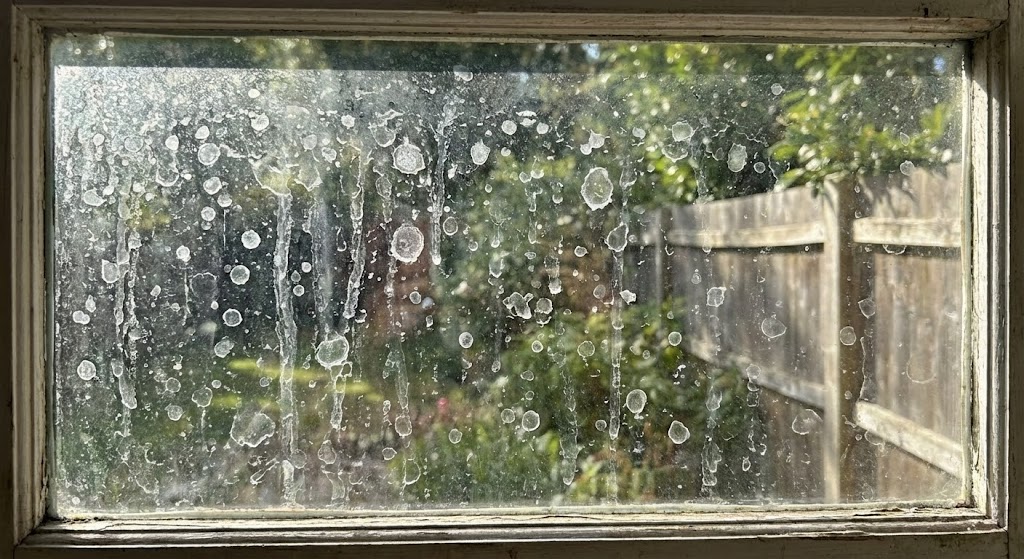
Hampshire’s notorious chalky water (frequently exceeding 300ppm+) rapidly destroys window hinges and aggressively etches exterior glass. Learn exactly why soft rain is safe but tap water is dangerous, and get our expert 50/50 vinegar recipe to permanently remove hard water stains from glass.
If you live locally in Winchester, Andover, or the surrounding Test Valley, it’s absolutely not just bad luck that your heavy window handles are constantly stiff or your expensive glass is continually spotty. Ultimately, it’s all about local geology. Our entire region sits directly on massive ancient chalk aquifers, meaning the water pouring out of your garden hose is effectively “liquid rock.”
💧 The Chalk Problem
Hampshire notoriously sits on massive, porous chalk aquifers. Consequently, local tap water is heavily loaded with aggressive minerals that rapidly etch smooth glass.
🌧️ Rain is Actually Safe
Natural rainwater is wonderfully soft and slightly acidic, so it effortlessly dries totally clean. Ultimately, it is your garden hosepipe water that causes terrible spotting.
🧪 The Permanent Fix
Absolutely do not blindly use standard washing up liquid. Instead, strictly use a powerful 50/50 mix of White Vinegar and Distilled Water to safely dissolve rock-hard limescale.
Page Contents
- 1. The “Liquid Rock” Geological Problem
- 2. The Science: Rain Water vs. The Garden Hose
- 3. Interactive: Hampshire Water Risk Analyser
- 4. The Destructive Science of Glass Etching
- 5. The “Hampshire Mix”: 50/50 Vinegar Recipe
- 6. The “Silent Killer”: Blocked Drainage Channels
- 7. Frequently Asked Questions
1. The “Liquid Rock” Geological Problem
💧 Understanding Hampshire’s Aquifers
Our specific region geographically sits directly on massive, ancient Chalk Aquifers BGS.ac.uk. This explicitly means the standard tap water in Hampshire is heavily loaded with densely dissolved Calcium Carbonate. Crucially, when this mineral-rich water dries on your hot windows in summer, it physically etches and scars the delicate glass surface permanently.
2. The Science: Rain Water vs. The Garden Hose
We remarkably often hear deeply frustrated customers ask: “Rain is just water, so why doesn’t heavy rain leave those terrible white spots?” The fascinating scientific answer lies entirely in the specific journey the water takes before it hits your home.
Falling rain is essentially naturally distilled. It strictly has almost zero heavy mineral content. Because it is naturally perfectly soft (and ever so slightly acidic), it effortlessly dries completely clean. Natural rain is absolutely not the enemy.
Conversely, your tap water has likely spent over 50 long years deep underground slowly filtering through solid chalk. It typically contains ~300mg of dissolved rock per litre. If you lazily wash your windows with a hose and let them air dry, you are literally painting them with liquid chalk.
“But I never use a hosepipe, and I still get terrible spots!”
This frustrating phenomenon frequently happens when soft rain violently hits a dirty concrete lintel, a porous stone sill, or a heavily rendered wall directly before it cascades onto your glass. The soft rain instantly dissolves heavy minerals from the building material itself, turning it aggressively “hard” just seconds before it dirties your window.
3. Interactive: Hampshire Water Risk Analyser
Hard water is officially measured scientifically in Parts Per Million (PPM). According to standard local data, our specific region consistently ranks as “Aggressively Hard.” Use our interactive tool below to check your exact local risk factor.
4. The Destructive Science of Glass Etching
Many homeowners continually ask why they simply can’t just forcefully scrub the stubborn white spots off with hot soapy water. Ultimately, it’s strictly because the damage isn’t just sitting on the glass.
If highly alkaline calcium limescale stubbornly sits on hot glass (which is chemically composed of silica) for far too long, it violently triggers a destructive chemical reaction specifically called Ion Exchange. The harsh calcium aggressively bonds directly with the natural sodium safely inside the glass, effectively creating microscopic, permanent craters. The expensive glass itself is physically pitted. This is exactly why proactive “prevention” (always drying the glass immediately with a squeegee) is genuinely the only absolute cure.
| Household Cleaner Type | Approx. pH Level | Chemical Effect on Hard Limescale |
|---|---|---|
| Standard Blue Glass Spray | ~10 (Highly Alkaline) | ❌ Total Fail. It beautifully polishes loose dirt but disastrously seals in the hard minerals. |
| Standard Washing Up Liquid | ~7 (Perfectly Neutral) | ❌ Total Fail. Great for greasy mud, but chemically useless for dissolving chalk. |
| Pure White Vinegar | ~2.5 (Highly Acidic) | ✅ Massive Success. The strict acidity aggressively dissolves Calcium Carbonate directly on contact. |
5. The “Hampshire Mix”: 50/50 Vinegar Recipe
If you are urgently wondering exactly how to remove hard water stains from glass without causing devastating scratches, you must safely rely on basic chemistry.
The 50/50 Vinegar Glaze Solution
The Core Ingredients:
- 50% Pure White Distilled Vinegar (The active acid)
- 50% Pure Distilled Water (The safe solvent)
- 1 Tiny Drop of Dish Soap (To break the watery surface tension)
Crucial Note: Absolutely do not use tap water for the mix! If you attempt to clean with chalky tap water, you are ridiculously adding more chalk as you actively clean.
The Professional Method:
- Generously spray the acidic solution directly onto the stubborn “white spots” scattered on the glass.
- Wait exactly 3 minutes. This specific chemical dwell time is absolutely crucial—you must patiently let the harsh acid actively eat the calcified calcium.
- Gently wipe away the dissolved residue with a clean microfibre cloth.
- Buff completely dry immediately. Never, ever let hard water air-dry naturally on exterior glass.
6. The “Silent Killer”: Blocked Drainage Channels
There is an incredibly dangerous hidden threat that most busy homeowners completely miss. At the very bottom of your modern uPVC frame, completely hidden inside the lower rebate, are highly specific “Drainage Channels” meticulously designed to let trapped rainwater safely flow out.
The Hard Water Effect: In chalky Hampshire, these vital channels incredibly often calcify. Exactly like a severely blocked human artery, the dense chalk aggressively builds up over summer until the winter water simply can’t physically escape.
The Disastrous Result: In freezing mid-winter, the heavily trapped water rapidly freezes, violently expands, and brutally blows the fragile rubber seals or physically cracks the expensive plastic frame.
The Expert Fix: Strictly once a year in late autumn, gently pour a tiny little bit of warm water (safely mixed with the exact vinegar solution above) directly down into the tiny tracks to aggressively dissolve the chalk and keep them flowing perfectly.
Is Your Window Stubbornly Seized Shut?
If chalky water has totally destroyed your mechanism, you frequently don’t actually need a massive, expensive new window. We expertly perform rapid, highly cost-effective window hinge repair in Andover and the wider Test Valley.
Book a Rapid Hinge Repair7. Frequently Asked Questions
You must absolutely avoid using basic alkaline cleaners like standard blue glass spray. Instead, rigorously use a powerful, acidic 50/50 mixture of pure White Distilled Vinegar and completely Distilled Water. Spray it generously, wait exactly 3 minutes for the strict acid to dissolve the calcium, wipe clean, and immediately buff totally dry to prevent etching.
Natural rainwater is scientifically naturally distilled through complex evaporation. It contains absolutely zero heavy rock minerals and is naturally slightly acidic. Consequently, it effortlessly dries completely clean. Ultimately, it is highly mineralised local tap water (from a garden hose) that leaves disastrous white chalk deposits when it air-dries.
Yes, absolutely. Beyond totally ruining the clear glass, heavy limescale aggressively builds up directly inside the hidden internal drainage channels located at the bottom of the plastic frame. When this trapped water violently freezes in winter, it massively expands and can literally crack the structural welds of the frame entirely.
📚 The Maintenance Knowledge Hub
We strongly believe an educated customer logically makes the absolute best decisions. Explore our highly transparent maintenance guides below:

Mark Pearce is a highly experienced specialist in the double glazing industry, having built his knowledge from the ground up through hands-on experience in installation, manufacturing, sales, and business management. Beyond his role at KJM, Mark is a keen blogger, writer, and traveller, often sharing insights on the latest innovations in the home improvement industry.
- Pilkington Launches Optitherm S3 Plus Triple Glazing Glass - 16 October 2026
- Comp Door Launches New 2026 Brochure Featuring ‘Total Black Out’ Frames - 11 September 2026
- Solidor launch five new doors - 21 August 2026