Timber - PVC - Aluminium - Windows, Doors & Conservatories in Hampshire
How Much Should a New Front Door Cost Installed? | 2026 Price Guide
How Much Should a New Front Door Cost Installed? | 2026 Price Guide
A transparent, fully-fitted price guide covering uPVC, Composite, Aluminium, and Timber front doors.
If you are wondering how much should a new front door cost installed, the answer depends entirely on the specification. A genuine, fully-fitted installation—including a new frame, professional installation, VAT, and a warranty—starts from £1,095 for a simple uPVC door. A solid Composite Front Door starts from £1,450 (averaging around £1,850 for a popular specification), while modern Aluminium doors start from £1,650, and bespoke Timber doors start from £4,000.
Why Front Door Prices Can Vary So Much
When comparing front door prices, it is important to check exactly what is included. Some prices found online cover only the door slab itself, while others include the frame, hardware, professional installation, and the removal of the old door.
The specification can make a significant difference to the final cost. The type of door, glazing, colour, handles, locks, side panels, and any work needed to prepare the existing opening will all affect the price.
This guide focuses on estimated fully fitted prices from KJM Group, allowing you to understand the likely cost of a complete replacement rather than comparing baseline figures that cover entirely different things.
🤝 How KJM Approaches Front Door Quotations
At KJM Group, we want you to understand exactly what you are paying for before making a decision. We will discuss your requirements, explain the available options, and provide a quotation based on the agreed specification. The cost will depend on the door you choose and the work required at your property. Our No Pressure Promise means there is no need to choose a door simply because it is the most expensive option; our aim is to help you find a solution that perfectly suits your home, preferences, and budget.
Page Contents
1. The Fully Fitted Pricing Table
The following figures are KJM Group’s indicative starting prices for selected fully fitted front door options. They are intended to help homeowners plan a realistic budget rather than serve as a fixed quotation.
Fully Fitted Front Door Costs
Prices last checked: August 2026. These baseline estimates are fully supplied and fitted, inclusive of VAT, hardware, new frame, professional installation, and warranty.
| Door Type & Specification | Estimated Fully Fitted Cost |
|---|---|
| Simple uPVC Door (Half Glazed) | From £1,095 |
| uPVC Front Door (Full Panel) | From £1,155 |
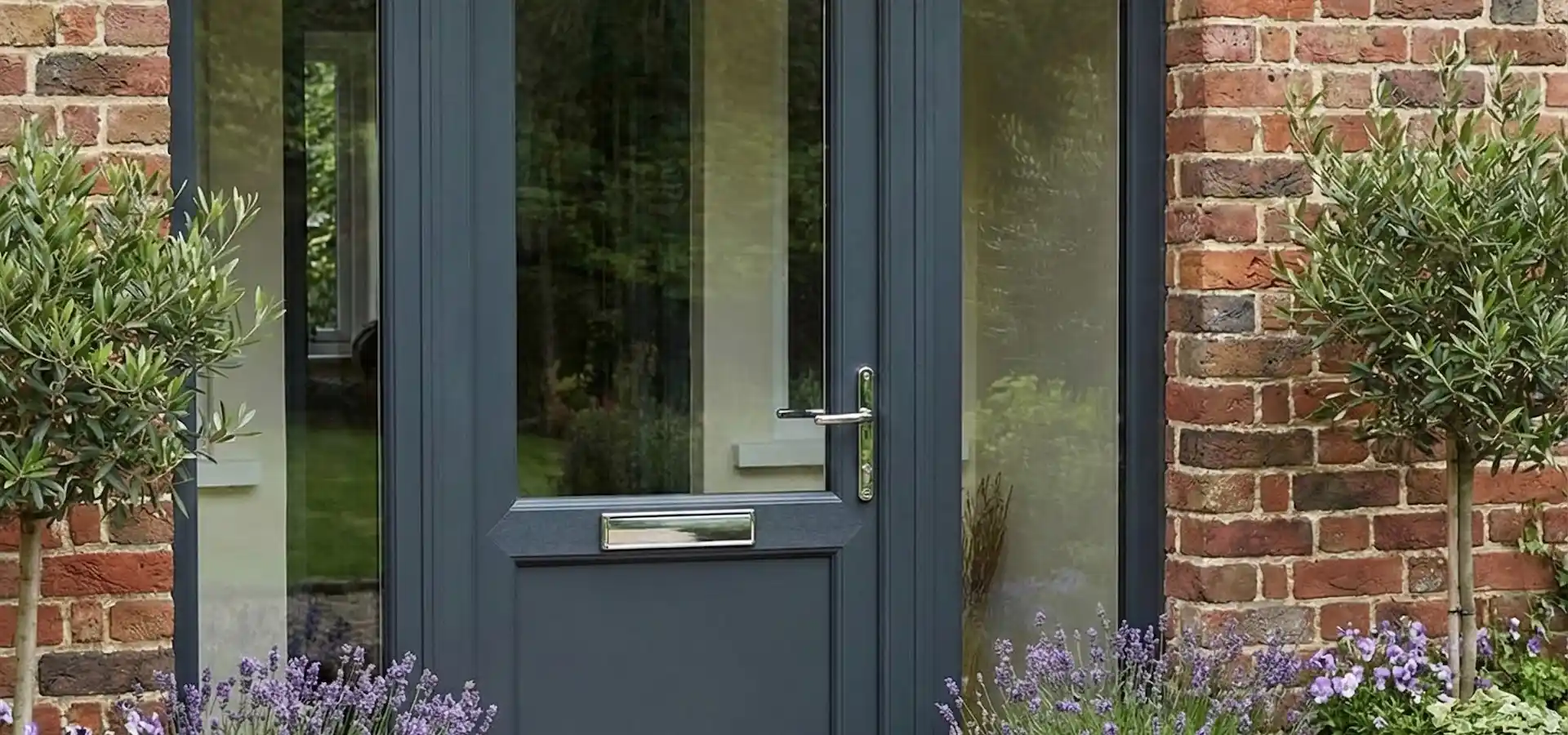
| Composite Front Door (Solid) | From £1,450 |
| Average Composite Door Order | Approx. £1,850 |
| Premium Composite (e.g. Long Bar Handles) | From £2,000+ |
| Simple Aluminium Door | From £1,650 |
| Designer Aluminium Door | From £3,500 |
| Bespoke Timber Doors | From £4,000 |
2. uPVC Doors
Starting at £1,095 fully fitted, uPVC is often a cost-effective option for securing your home. It is a highly sensible choice for rental properties, utility room entrances, or standard back doors where robust functionality is a priority.
While the aesthetic options are slightly more limited than composite, modern uPVC doors from KJM feature strong multi-point locking systems and are generally very low maintenance.
3. Composite Doors
Composite doors are a popular option for homeowners looking for a combination of design choice, insulation, security features, and relatively low maintenance. Starting from £1,450, with the average order being around £1,850 for upgraded glass and colours, they represent excellent value.

Composite doors are designed to withstand everyday weather exposure, mimicking the beautiful grain of real wood without the need for painting. Long-term durability and performance ultimately depend on the door’s specific construction, professional installation, and routine maintenance.
4. Aluminium Doors
Aluminium can be a good option for homeowners who prefer contemporary styling, slim profiles, and a particular range of sleek design options. A simple aluminium setup starts at £1,650, while highly engineered designer aluminium doors start from £3,500.

Aluminium’s inherent strength allows the frames to be incredibly slim, maximizing the amount of glass. Modern thermal-break technology ensures they are exceptionally energy-efficient.
5. Timber Doors
Timber doors can suit traditional homes and properties where a particular authentic style or finish is important. Starting from £4,000, they offer a natural appearance and can be specified in a range of classic designs.

Timber doors generally require more ongoing maintenance than many uPVC or composite alternatives. If your property is listed or located in a conservation area, check whether planning permission or other consent is required before choosing a replacement door.
6. A Fair Comparison of Door Materials
There is no single best material for every property. The right choice depends on your budget, preferred appearance, security requirements, thermal performance, and maintenance expectations.
- uPVC DOORS: Potential advantages: Often a cost-effective option and generally low maintenance. Points to consider: Design, finish, and construction options vary by product.
- COMPOSITE DOORS: Potential advantages: A wide choice of styles and finishes, with generally low maintenance requirements. Points to consider: Costs vary considerably depending on construction and specification.
- ALUMINIUM DOORS: Potential advantages: Contemporary appearance and slim profiles available on suitable designs. Points to consider: Usually a higher initial cost than basic uPVC options.
- TIMBER DOORS: Potential advantages: Natural appearance and suitability for many traditional properties. Points to consider: Usually require more ongoing maintenance, and bespoke options can cost more.
7. What Should a Fully Fitted Quote Include?
When comparing quotations between different installers, it is vital to check what is actually covered. Ask each installer to explicitly confirm if their quote includes:
- The exact door design, construction, and dimensions.
- The frame and threshold specification.
- The glazing (if applicable) and obscure patterns.
- The locking system, handles, and other hardware.
- Removal of the existing door and frame.
- Installation and sealing by trained professionals.
- Whether internal or external making good (trim/plastering) is included.
- Removal and responsible disposal of old materials.
- VAT included in the final price.
- Any applicable Building Regulations compliance documentation (e.g., FENSA).
- Product and installation warranties.
A quotation should explain what is included and what might cost extra. If two quotations differ substantially, compare their specifications and inclusions before deciding that one is simply “better value” than the other.
8. Frequently Asked Questions
Prices vary because online guides often quote for a “supply only” door slab, omitting the frame, locks, handles, installation labour, VAT, removal of the old door, and compliance documentation. The specification of the door itself (colour, hardware, sidelights) will also significantly alter the final price.
Not necessarily. Whether the existing frame can be retained depends on its condition, dimensions, alignment, and compatibility with the new door. If the frame is damaged or deteriorating, a new frame may be needed. KJM can advise on the appropriate option after inspecting the existing doorway.
Whether a composite door is worth the additional cost depends on your priorities and the available budget. When comparing the two, you should consider the complete specification, including the construction, glazing, locking system, thermal performance, finish, and warranty.
Replacement external doors may need to comply with applicable Building Regulations. Doors that consist of less than 50% glazing generally do not require a FENSA certificate, but installations that include glazed side panels or top lights usually do. Where the installation falls within the scope of KJM’s competent-person scheme, we provide the relevant certification. Learn more in our guide to FENSA.
A standard, straightforward front door replacement by our expert team usually takes between half a day to a full day. If your installation requires structural alterations, brickwork repairs, or the fitting of complex side panels, it may take slightly longer.
📚 Explore The Composite Door Hub
Continue your research and build the perfect entrance for your home with our dedicated guides below:
Ready for an honest, no-pressure quote?
If you live in Hampshire, Berkshire, or the surrounding areas, contact the Window and Door Experts at KJM Group today. We will provide a transparent, fully-fitted price tailored exactly to your home.
Request Your Free Quote
Mark Pearce is a highly experienced specialist in the double glazing industry, having built his knowledge from the ground up through hands-on experience in installation, manufacturing, sales, and business management. Beyond his role at KJM, Mark is a keen blogger, writer, and traveller, often sharing insights on the latest innovations in the home improvement industry.
- Pilkington Launches Optitherm S3 Plus Triple Glazing Glass - 16 October 2026
- Comp Door Launches New 2026 Brochure Featuring ‘Total Black Out’ Frames - 11 September 2026
- Solidor launch five new doors - 21 August 2026