Timber - PVC - Aluminium - Windows, Doors & Conservatories in Hampshire
Timber-Cored vs Foam-Filled Composite Doors: Which is Best?
Timber-Cored vs Foam-Filled Composite Doors: Which is Best?
When replacing your front door, it is easy to get distracted by colours, glass designs, and shiny hardware. But the most important decision you will make is what lies beneath the surface.
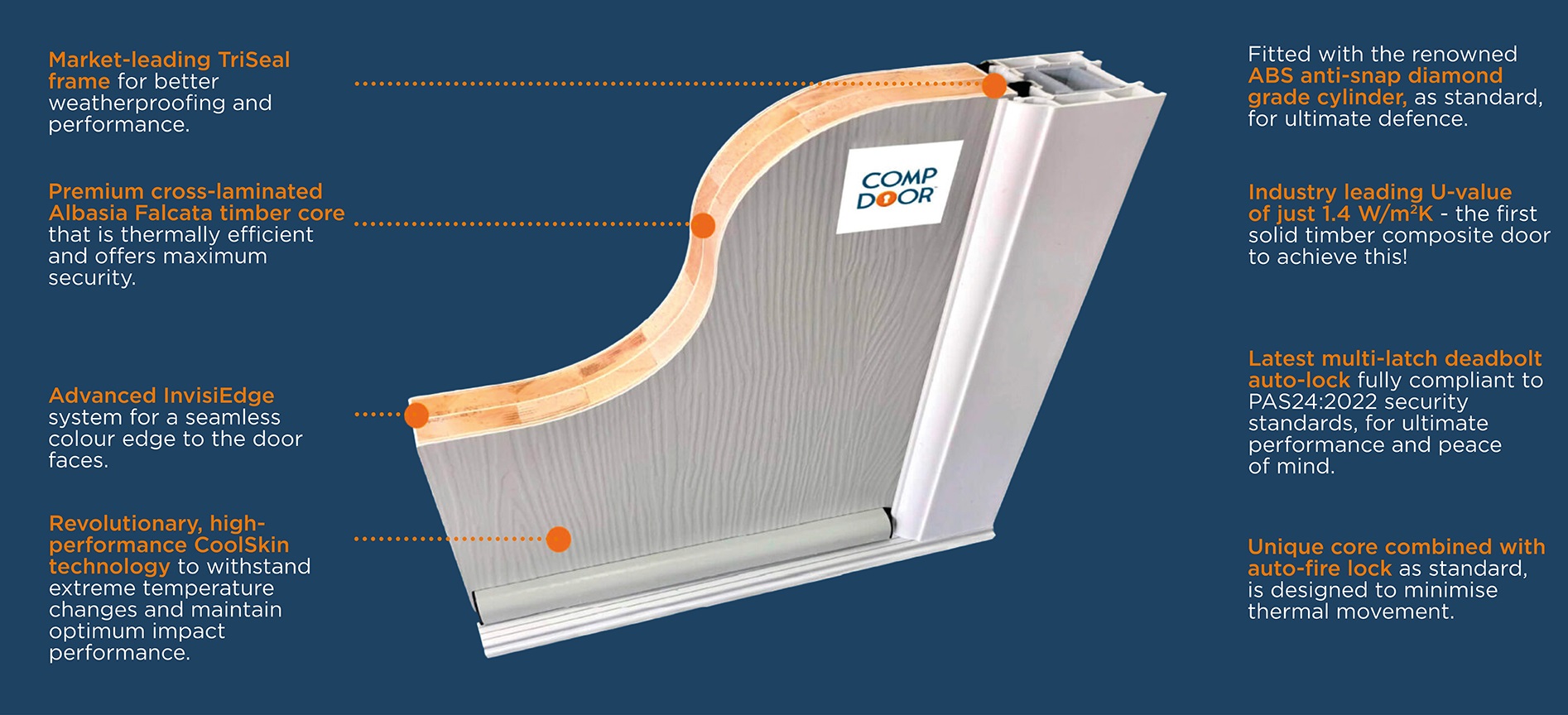
Foam-filled composite doors can offer good thermal insulation and value for money, but their performance can vary depending on the construction and specification. Timber-cored composite doors, such as Comp Door, use a solid 48mm cross-laminated timber core designed to provide greater rigidity and resistance to thermal movement, combined with CoolSkin technology for the outer finish.
We recently surveyed a property where the customer’s existing front door had developed significant shrinkage gaps. It let in draughts, rattled in the wind, and was increasingly difficult to lock on hot summer days. Our assessment indicated that thermal movement in the existing door was contributing to the alignment and sealing problems.
In our quotation, we explained exactly why we recommend upgrading to a solid timber-cored door. Here is the technical breakdown of why we recommend timber-cored composite doors for homeowners looking for a substantial, rigid and durable entrance door.
What is a Foam-Filled Composite Door?
When composite doors first entered the market, they were designed as a low-maintenance alternative to uPVC and traditional wood. Early composite doors (and many options still sold today) are manufactured using a polyurethane foam core injected between two thin GRP (Glass Reinforced Plastic) skins.
Foam provides excellent insulation, but its lower structural density means the door relies more heavily on its skins, edge construction and reinforcement for rigidity. When a foam-filled door is exposed to direct sunlight—especially in dark, popular colours like black, navy, or anthracite grey—the outer skin heats up and expands.
Why Do Dark Doors Warp in the Sun?
It comes down to simple physics. Dark colours absorb significantly more solar radiation than lighter colours. On a hot summer day, a dark-coloured, south-facing door can reach significantly higher surface temperatures than the surrounding air. As the outer GRP skin expands from the heat, the internal foam offers limited resistance.
This can lead to thermal bowing, where the door temporarily warps out of shape. The top and bottom of the door pull away from the weather seals, creating draughts, while the locking mechanism misaligns, making it incredibly difficult to lift the handle and engage the lock.
The Solid Timber Core Difference
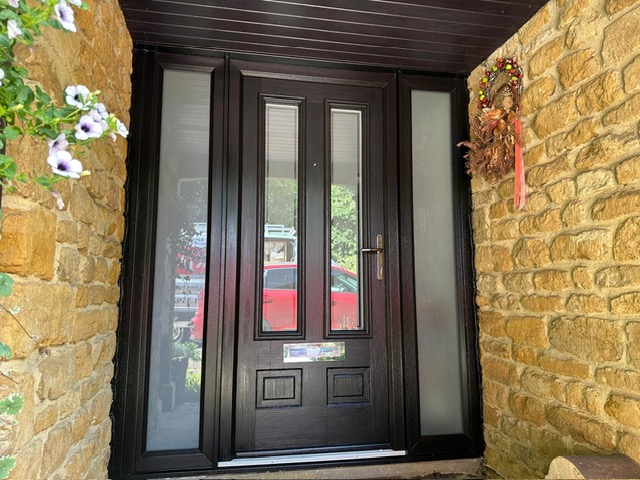
To significantly reduce the risk of thermal bowing, premium manufacturers reimagined the composite door from the inside out. Instead of foam, doors like our Comp Door range are built around a highly dense, 48mm thick solid engineered timber core.
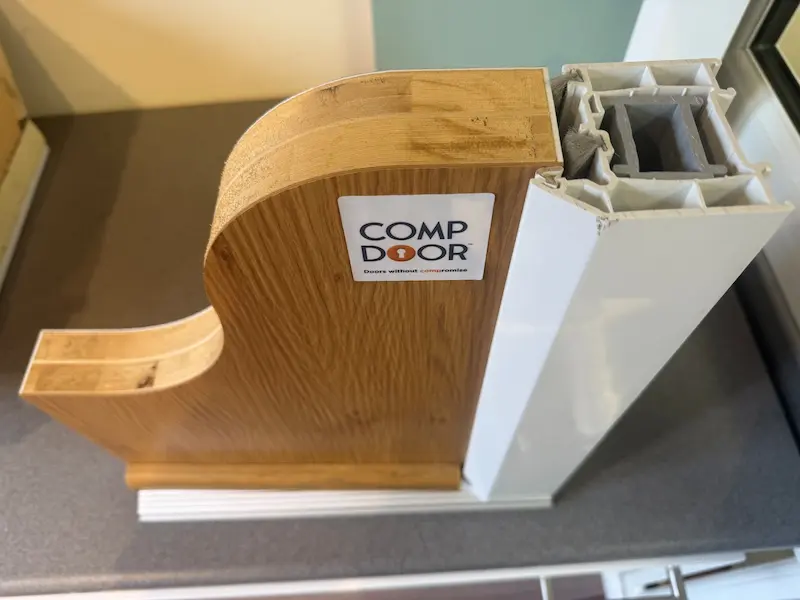
This core is made from Albasia Falcata, a fast-growing, highly sustainable timber. Crucially, the timber is cross-laminated (layered with the wood grain running in alternating directions). This specific engineering technique makes the door incredibly strong and physically prevents the timber from twisting or warping under intense thermal stress.
Because the core is solid wood, these doors provide the reassuringly heavy, substantial “clunk” of a traditional wooden door when you close them, without any of the sanding, painting, or maintenance associated with real timber.
Security: Why the Complete Door Set Matters
The core is an important part of a composite door’s construction, but it is not the only factor that determines security. The locking system, cylinder, hinges, reinforcement, frame and installation all contribute to the performance of the complete door set.
A solid timber core provides a dense fixing material for hardware and contributes to the overall rigidity of the door. Comp Door systems are also designed and tested to meet recognised security requirements (such as PAS 24 standards), giving homeowners an independently assessed benchmark rather than relying on the core material alone.
The CoolSkin™ Advantage
The outer surface of the door takes the brunt of the British weather. This is where Comp Door’s CoolSkin technology comes into its own.
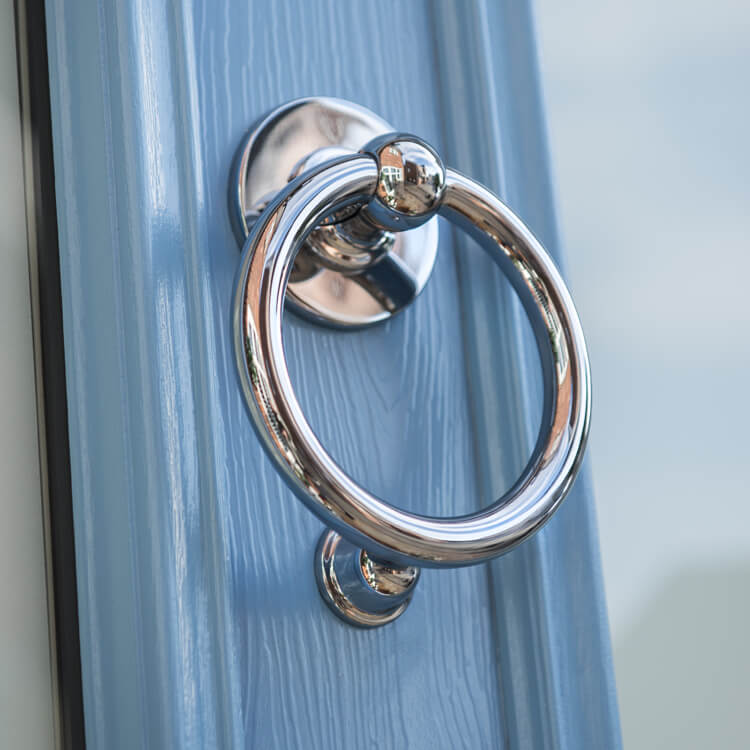
Standard composite doors are often just painted GRP. Over time, that paint can fade in UV light, and if you accidentally knock the door with keys, a bicycle, or a pram, the paint chips away, revealing the white plastic underneath.
Every Comp Door is wrapped in a CoolSkin layer. This is not paint; it is a highly advanced, heat-reflective bonded colour foil. It is specifically engineered to reflect infrared light away from the door, keeping surface temperatures manageable even in direct sunlight. Because the colour is foiled and bonded directly to the skin, it is also highly resistant to scratching and chipping. (For a look at the latest design options featuring this finish, you can read our Comp Door 2026 Brochure update).
Comparison: Foam-Filled vs Timber-Core
| Feature | Foam-Filled Composite | Timber-Core Composite |
|---|---|---|
| Core Material | Polyurethane foam | 48mm cross-laminated timber |
| Thermal Movement | Depends on construction, colour and exposure | Designed to minimise thermal movement |
| Weight & Feel | Generally lighter | Generally heavier (traditional wood feel) |
| Thermal Performance | Can be excellent | Can be excellent |
| Security | Depends on complete door-set specification | Depends on complete door-set specification |
| Outer Finish | Varies by manufacturer | CoolSkin on Comp Door |
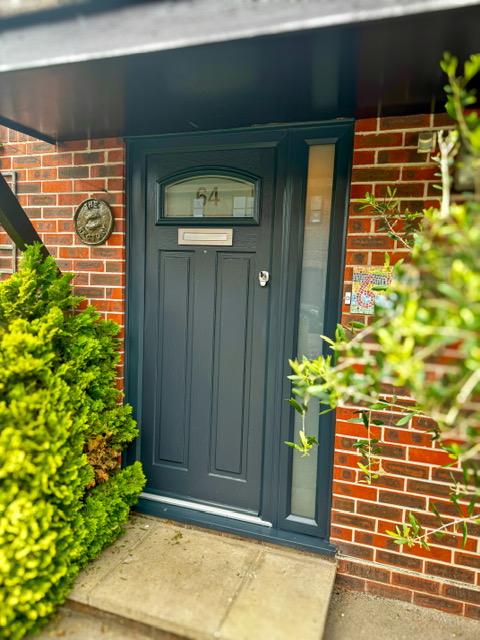
So, Which Composite Door Should You Choose?
There isn’t one core material that is automatically right for every homeowner. Foam-filled composite doors can provide good insulation and value, while timber-core doors offer greater density, weight and structural rigidity.
If your priority is a substantial door with a solid feel and increased resistance to thermal movement, a timber-core system may be worth considering. If you’re comparing specific doors, look beyond the core and compare the complete door-set specification, including U-value, security certification, frame, locking system, finish and warranty.
Frequently Asked Questions
Dark-coloured doors can absorb significant solar heat, which can contribute to thermal movement in some composite doors. Premium timber-cored doors such as Comp Door are designed to significantly reduce the risk of thermal bowing, using a dense cross-laminated timber core together with a heat-reflective outer finish.
Timber-core composite doors can provide excellent security, but the performance of the complete door set is what matters. The core, locking system, hinges, frame and installation all contribute. Comp Door systems are designed and tested to meet recognised security requirements.
CoolSkin is a highly advanced, heat-reflective foil bonded to the outside of the door. It perfectly mimics authentic woodgrain while reflecting infrared heat away from the door, helping to manage thermal movement and preventing UV fading.
Both foam-filled and timber-core composite doors can provide excellent thermal performance. Polyurethane foam is highly insulating, while a well-designed timber-core door can also achieve strong U-values. When comparing doors, look at the published U-value for the complete door rather than assuming that the core material alone determines thermal performance.
Thinking About a New Composite Door?
If you’re considering a new front door, our expert team can help you compare the latest composite door options and choose the right style, colour, glazing, and hardware for your home.

Mark Pearce is a highly experienced specialist in the double glazing industry, having built his knowledge from the ground up through hands-on experience in installation, manufacturing, sales, and business management. Beyond his role at KJM, Mark is a keen blogger, writer, and traveller, often sharing insights on the latest innovations in the home improvement industry.
- Pilkington Launches Optitherm S3 Plus Triple Glazing Glass - 16 October 2026
- Comp Door Launches New 2026 Brochure Featuring ‘Total Black Out’ Frames - 11 September 2026
- Solidor launch five new doors - 21 August 2026