Timber - PVC - Aluminium - Windows, Doors & Conservatories in Hampshire
Surviving Article 4: The ‘Test Valley’ Planning Guide
Surviving Article 4: The ‘Test Valley’ Planning Guide
Live in a conservation area? We explain Article 4 directions for Andover, Basingstoke, and Winchester, and which heritage windows satisfy the planners.
If you are desperately searching for planning permission for windows in conservation area, you must understand “Article 4”.
- 🏛️ The “Tri-Council” Trap: Why the planning rules in Andover (Test Valley) differ drastically from those in Overton (Basingstoke) or Winchester.
- 👁️ The “Sightline” Rule: Why 90% of standard, cheap uPVC window applications get immediately rejected by local conservation officers.
- ✅ The Solution: How modern “Heritage Flush Sash” timber-alternative windows (like Residence 9) legally satisfy the strict planners.
Based in Andover, KJM Group sits exactly at the complex crossroads of three major planning authorities: Test Valley Borough Council, Basingstoke & Deane, and Wiltshire Council (with Winchester City Council just down the road). While they all ultimately want to preserve history, they each have their own incredibly specific quirks and interpretations of the law.
If you are confused by article 4 direction replacement windows, this guide cuts through the dense legal jargon to explain exactly what it means for your home renovation, and how you can successfully upgrade your freezing windows without upsetting the local planners.
Page Contents
1. What is an Article 4 Direction?
Usually, changing the windows on your home falls completely under your “Permitted Development” (PD) rights—meaning you do not legally need to ask the council for permission to upgrade from timber to uPVC.
However, if you live in a designated Conservation Area, the local council has the power to issue an Article 4 Direction over your specific street or village. This legal order officially strips away your Permitted Development rights to violently protect the historical “character” of the street.
It simply means “You must ask us first.” You have to formally apply for planning permission, and the replacement window must look virtually identical to the original timber architecture.
Historic England explicitly states that change is allowed if it carefully preserves the historical significance of the building. You can read their full Guidance on Traditional Windows here Gov.uk.
2. Interactive: The Planning Wizard
Are you confused about whether you need to apply for planning permission? Use our interactive checker below. Answer three simple questions about your property to find out exactly where you stand.
3. Know Your Council: The “Tri-Council” Confusion
Because KJM Group in Andover sits incredibly close to the regional borders, your exact postcode dictates the rules you must follow. Here is how the local authorities generally differ in their strictness when it comes to replacing windows:
If you are researching test valley conservation area windows, know they are incredibly strict on the “Principal Elevation” (front). They often comfortably allow modern flush timber-effect on the rear, but may heavily demand genuine wood on the front in highly sensitive villages like Wherwell.
They have highly specific directions for Overton. If you search for basingstoke window planning rules, you’ll find they are increasingly open to premium uPVC systems like “Residence 9”, provided the mechanical joints replicate traditional timber perfectly.
Winchester article 4 windows are notoriously tough to get approved in the city centre. Wiltshire is generally more lenient in rural spots but equally tough in historical town centres like Salisbury. Premium flush sash is mandatory.
4. The Solution: “Flush Sash” Technology
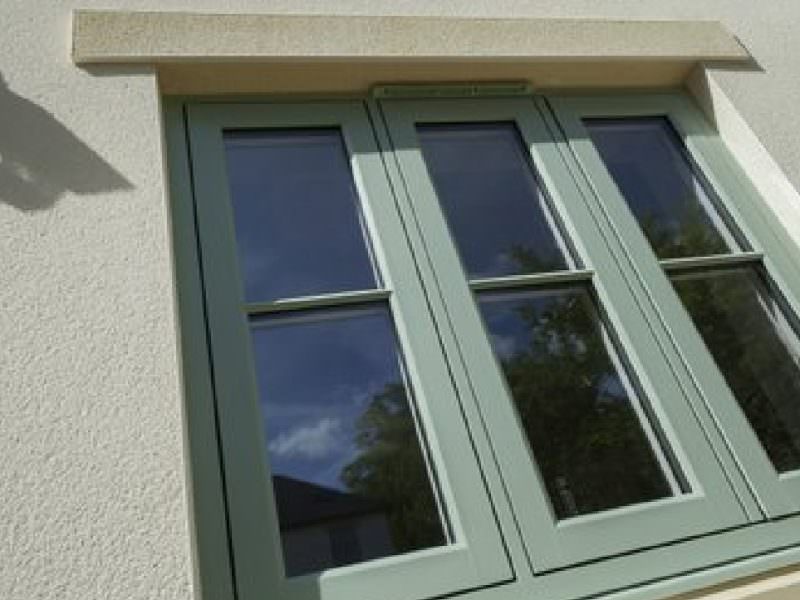
Ten years ago, a local council planner would simply say, “Timber or nothing.” Today, engineering technology has finally caught up. We now successfully install modern Timber-Alternative windows (such as the premium Residence Collection or Deceuninck Heritage) that fully satisfy strict planning officers while offering A-rated thermal efficiency.
The “Sightline Trap”
Why do planners instantly reject standard, budget uPVC windows? It is entirely about the Glass-to-Frame Ratio. Old historical timber windows were crafted with very slim, elegant frames. Standard modern uPVC features thick, chunky frames that visibly reduce the amount of glass area, ruining the architectural proportions of the house.
Our Heritage Flush Sash systems use a 100mm deep frame (exactly matching 19th-century timber sizes) but feature slim internal profiles, flawlessly replicating the delicate, balanced look of the original architecture.
| Feature | Standard uPVC (Often Rejected) | Heritage Flush Sash (Accepted*) |
|---|---|---|
| Corner Joints | Welded (Ugly diagonal line) | Mechanical (Vertical 90-degree join like wood) |
| Surface Finish | Shiny, smooth white plastic | Woodgrain Foil (Authentic Matte texture) |
| Profile Depth | 70mm (Modern Standard) | 100mm (Matches 19th Century timber exactly) |
| Opening Style | Casement physically sticks out | Sits completely “Flush” within the outer frame |
*Always subject to specific, individual council approval. Every property is judged on its own merits.
5. Application Success Stories
If you are searching for residence 9 windows conservation area success rates, KJM Group has an outstanding track record. We have successfully navigated highly complex planning applications for replacement windows in conservation areas across the entire region.
The absolute key is microscopic detail. When we submit a formal application for you, we provide extensive architectural cross-section drawings to the council, clearly proving that the new sightlines, astragal bars, and mechanical joints match your original rotting timber frames millimetre for millimetre.
Navigating strict local planning officers requires highly specialised regional knowledge. If you are researching who to trust with your heritage project, read our definitive 2026 guide to the top window and conservatory companies in Hampshire to learn how to properly vet local experts.
6. Frequently Asked Questions
Often, no. Article 4 usually focuses exclusively on the “Principal Elevation” (what the public can physically see from the road or public footpath). You might be legally allowed to put standard, cheaper energy-efficient uPVC windows on the hidden rear, while investing in premium Heritage Flush Sash on the front. We can check your specific property deed to be absolutely sure.
Yes. We can act officially as your agent. We will draw up the technical specifications, take the required site photos, and submit the entire application to the Test Valley, Basingstoke, or Winchester planning portals on your behalf to remove the stress.
Yes, they are more expensive than standard white uPVC because of the complex mechanical Timberweld joints and the application of premium woodgrain foils. However, they are significantly cheaper than bespoke, handmade timber windows, and crucially, they require absolutely zero sanding or painting over their 25-year lifespan.
📚 Explore the Heritage Knowledge Hub
Continue your research by exploring our dedicated heritage products and deep-dive guides below:
Unsure if you are in a conservation area?
Don’t risk an expensive planning enforcement notice. Contact KJM Group today for a free site visit. We will assess your home’s legal standing and provide a transparent quote across Hampshire, Berkshire, and Wiltshire.
Request a Free Site Survey
Mark Pearce is a highly experienced specialist in the double glazing industry, having built his knowledge from the ground up through hands-on experience in installation, manufacturing, sales, and business management. Beyond his role at KJM, Mark is a keen blogger, writer, and traveller, often sharing insights on the latest innovations in the home improvement industry.
- Comp Door Launches New 2026 Brochure Featuring ‘Total Black Out’ Frames - 11 September 2026
- Solidor launch five new doors - 21 August 2026
- KJM Group Wins Which? Trusted Trader of the Month (Aug 2026) - 4 August 2026