Timber - PVC - Aluminium - Windows, Doors & Conservatories in Hampshire
Double Glazing for Listed Buildings: The 2026 Planning Guide
Double Glazing for Listed Buildings: The 2026 Planning Guide
A homeowner’s guide to modern glazing for historic properties in the UK
- ❌ The Old Rule: “No double glazing in Grade II buildings” is no longer an absolute rule.
- 💡 The Game Changer: “Vacuum Glazing” (like LandVac or Fineo) is now thin enough (around 8mm) to fit historic timber frames.
- 🏛️ Planning Policy: Historic England’s latest guidance supports retrofitting if it doesn’t harm the “significance” of the building.
- 🛡️ The Alternative: Secondary glazing remains the best, planning-free option for Grade I or strict conservation areas.
For decades, owning a Listed Building in the UK meant resigning yourself to cold winters, condensation, and sky-high energy bills. The stance from local Conservation Officers was usually a strict “no” to double glazing.
However, the tide is turning. With the urgent national need to decarbonise UK homes and rapid advancements in glass technology, planning attitudes are shifting. It is no longer impossible to get Listed Building Consent for double glazing—if you use the right technology.
Page Contents
1. The Historic Problem: “Thick” Glass
Why have Conservation Officers historically rejected double glazing? It wasn’t just about the material; it was entirely about the sightlines.
Standard modern double glazing is typically 24mm to 28mm thick. Original single-glazed Georgian or Victorian sash windows are designed to hold glass that is only 3mm or 4mm thick. Trying to squeeze a fat, modern double-glazed unit into a delicate timber frame requires deepening the rebate and making the glazing bars (the criss-cross muntins) much thicker.
This destroys the delicate, elegant proportions of the historic window, leading to a bulky, “clunky” look that fundamentally alters the character of the property.
2. The Solution: Vacuum Glazing
This is the modern technology that is changing planning decisions across Hampshire and the UK. Vacuum Glazing (such as the LandVac or Fineo systems) works differently from standard double glazing.
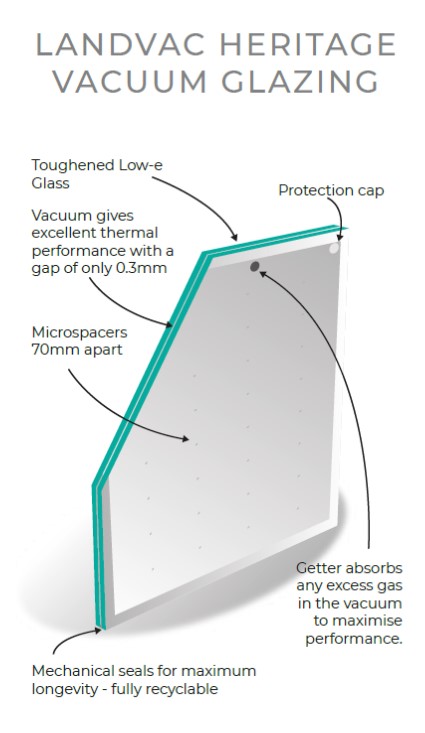
Instead of filling the gap between the two panes of glass with a gas (like Argon or Krypton), all the air is sucked out to create a vacuum. Because a vacuum is the perfect thermal insulator (heat cannot travel through nothing), the gap between the panes can be microscopic—just 0.3mm.
| Feature | Single Glazing (Historic) | Standard Double Glazing | Vacuum Glazing (e.g. LandVac) |
|---|---|---|---|
| Total Thickness | 4mm | 24mm – 28mm | 8.3mm |
| U-Value (Insulation) | 5.8 (Very Poor) | 1.2 (Good) | 0.4 – 0.7 (Excellent) |
| Visual Impact | Original | Thick Sightlines | Virtually Invisible |
3. The Alternative: Slimline Double Glazing
Before vacuum glass became widely commercially available, “Slimline” double glazing was the best option for heritage homes. These units use a very small gap (usually 4mm-6mm) filled with heavy inert gases like Krypton or Xenon to achieve insulation.
While thinner than standard units (typically measuring 12mm-14mm total), they are still significantly thicker than single glazing and vacuum glass. They remain a valid option for many conservation areas, especially if vacuum glazing is outside your project budget, but they generally come with a shorter manufacturer’s warranty due to the reduced depth of the perimeter seal.
4. Navigating Listed Building Consent
Even with this new, ultra-thin technology, you must apply for Listed Building Consent (LBC) through your local authority. Changing windows without it is a criminal offence. However, your case is now stronger than ever.
When applying for LBC, you must focus on the “Harm vs. Benefit” argument. You can argue that Vacuum Glazing causes “less than substantial harm” to the visual aesthetic (because it flawlessly mimics single glazing) while providing a “substantial public benefit” by securing the building’s energy future, reducing carbon emissions, and preventing rot by eliminating internal condensation.
Historic England’s Stance: In their recent national guidance on “Traditional Windows: Their Care, Repair and Upgrading,” Historic England explicitly acknowledges that upgrading glazing can be acceptable where it does not harm the historical significance of the specific building.
5. The Safe Bet: Secondary Glazing
If your property is Grade I listed, if the existing timber frames are too fragile to hold new glass, or if you simply want to avoid the planning headache and cost entirely, Secondary Glazing remains the ultimate, stress-free solution.
Unlike replacing the window or the glass, secondary glazing is a fully reversible alteration. You add a discrete, slimline aluminium frame on the inside of the room, leaving the historic exterior fabric totally untouched. Because it is reversible, conservation planners almost always approve this approach without friction.
| Comparison Factor | Vacuum Glazing (Replacement) | Secondary Glazing (Addition) |
|---|---|---|
| Planning Risk | Medium (Requires Consent) | Very Low (Usually Permitted) |
| Visuals | Best (Looks exactly like original) | Good (Discreet internal aluminium frame) |
| Soundproofing | Good | Excellent (The Best Option for Noise) |
| Cost | High (Premium modern product) | Medium (Highly Cost Effective) |
6. Frequently Asked Questions
Yes, you legally need Listed Building Consent (LBC). Even though vacuum glazing looks almost identical to single glazing, it is classed as a material alteration. However, precedent is growing rapidly for approvals across the UK.
The “sightline” is the width of the spacer bar inside a double-glazed unit. If this is too thick, you can clearly see the metal strip sticking out past the slim timber glazing bars, which ruins the historic look. Vacuum glazing eliminates this issue.
Yes, it is a premium product, costing significantly more than standard double glazing. However, when compared to the cost of moving house, or the massive ongoing energy savings in a large, draughty heritage property, it is often a highly viable long-term investment.
Yes. By creating a sealed pocket of air between the warm room and the cold external glass, secondary glazing stops warm, moist indoor air from hitting the freezing outer pane, practically eliminating condensation.
📚 Explore Our Heritage Glazing Hub
Need advice for your Listed property?
Upgrading heritage windows is complex. Contact the experts at KJM Group in Andover today to discuss vacuum glass, slimline double glazing, and secondary glazing options.
Get Expert Advice
Mark Pearce is a highly experienced specialist in the double glazing industry, having built his knowledge from the ground up through hands-on experience in installation, manufacturing, sales, and business management. Beyond his role at KJM, Mark is a keen blogger, writer, and traveller, often sharing insights on the latest innovations in the home improvement industry.
- Pilkington Launches Optitherm S3 Plus Triple Glazing Glass - 16 October 2026
- Comp Door Launches New 2026 Brochure Featuring ‘Total Black Out’ Frames - 11 September 2026
- Solidor launch five new doors - 21 August 2026