Timber - PVC - Aluminium - Windows, Doors & Conservatories in Hampshire
How to Stop Internal Window Condensation (Causes & Fixes)
How to Stop Internal Window Condensation (Causes & Fixes)
Waking up to windows streaming with water inside your bedroom is frustrating, but it is rarely a fault with the glass itself. Learn the lifestyle causes of internal condensation and exactly how to stop it.
Quick Answer: Why is there condensation on the inside of my windows? It happens when warm, humid air inside your home (caused by breathing, cooking, and showering) meets the cold surface of your window glass. To stop internal window condensation, you must improve ventilation by creating “short sharp bursts” of cross-ventilation, using extractor fans, and avoiding drying wet clothes on hot radiators.
Where exactly is the moisture on your window?
- 👉 Inside the room? You are in the right place. Keep reading below!
- 👉 Outside the glass? This is normal. Read our Guide to External Condensation.
- 👉 Trapped between the panes? This is a blown seal. Read our Repair Guide.
- 👉 Need the full overview? Visit our Ultimate Guide to Window Condensation.
Page Contents
1. Why Are My Windows Wet on the Inside?
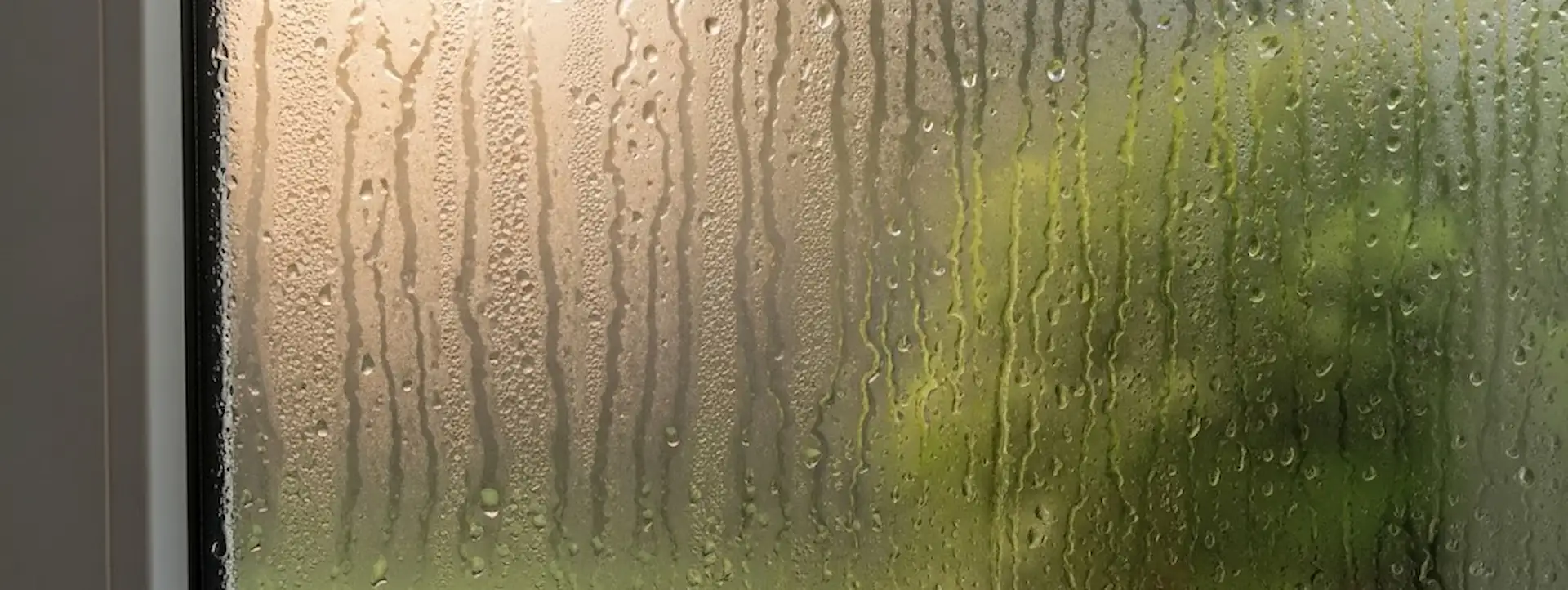
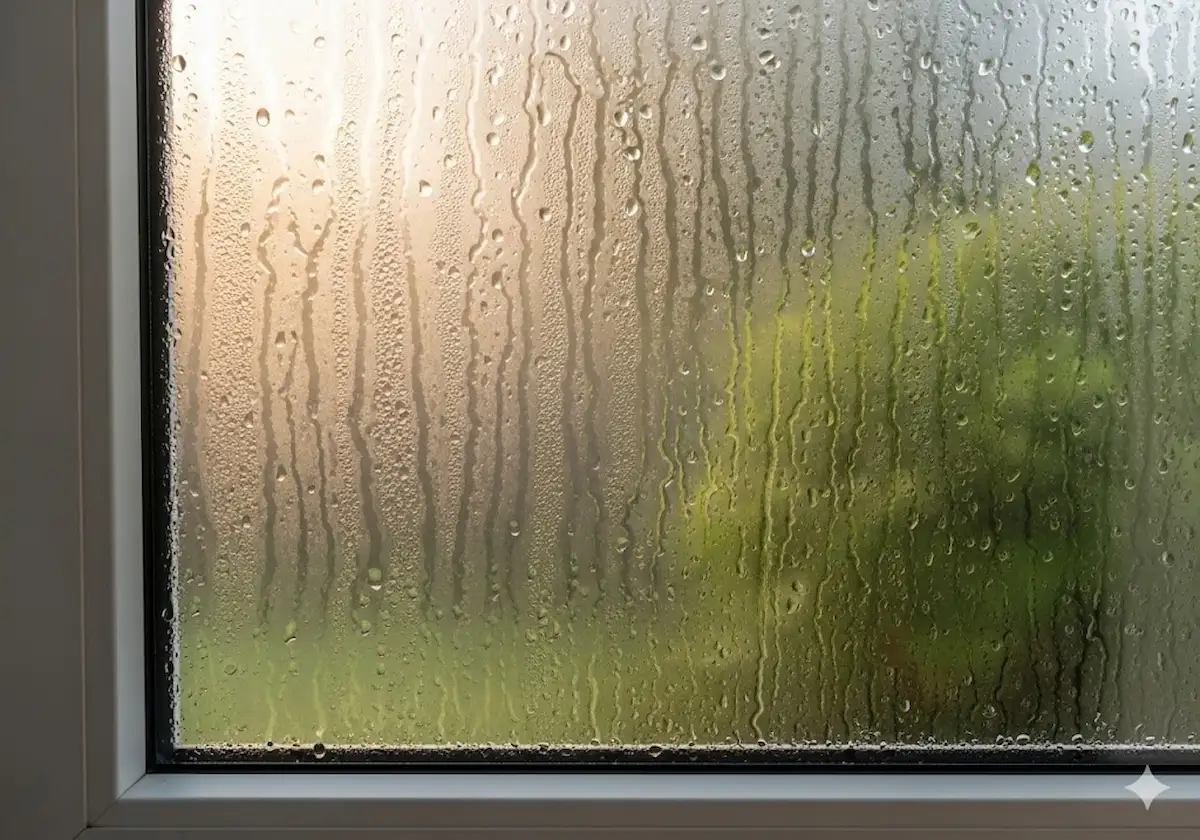
If you can physically wipe the water off the glass from inside your bedroom or kitchen, you are dealing with internal condensation. Crucially, this is rarely a fault with the actual window itself. Instead, it is a clear visible indicator that the humidity levels inside your home are simply too high.
The Science of the Dew Point:
To understand why this happens, imagine pouring an ice-cold drink on a warm summer day. Immediately, the outside of the glass quickly becomes wet with droplets.

Air naturally contains invisible water vapour. In fact, a typical family of four produces around 14 litres of water vapour a day simply by breathing, cooking, and showering. Warm air from your central heating can hold onto a lot of this moisture. However, when that warm, humid air hits the coldest surface in the room (which is almost always your window glass), it rapidly cools down. Consequently, as it cools, it can no longer hold the moisture, turning it directly into physical water droplets on your window frame and glass.
2. The “New Window” Paradox
A very common complaint we hear is: “My old, single-glazed timber windows never had this much condensation. Since I installed these expensive new double-glazed windows, my house is soaking wet!”
This is entirely true, but for a very specific reason. Older windows were usually incredibly draughty. While you slept, the wind simply blew through the gaps in the frame, safely carrying the moist air away with it. Unfortunately, those draughts also carried away all your expensive central heating.
Furthermore, modern uPVC and aluminium windows are explicitly designed to be completely airtight to comply with UK Building Regulations. They are incredibly good at sealing the house. Because they seal the house so effectively, they trap the heat in—but they consequently trap the moisture in as well. Therefore, if you do not actively let that moisture out, it has nowhere to go except onto your cold glass.
3. The Health Risk: Black Mould & Cold Walls
Leaving internal condensation unchecked is not just an aesthetic annoyance; it can become a genuine health hazard. Constant moisture sitting on your window sealant, uPVC frames, or adjacent walls actively creates the perfect breeding ground for toxic black mould (Stachybotrys chartarum).
The Danger of Cold Walls:
It is crucial to understand that it is not just your windows at risk. If you try to save money by letting your house get too cold during the winter, the actual fabric of the building (your solid or cavity walls) drops in temperature. When the warm, moist air inside your home inevitably touches these freezing external walls, the condensation forms directly on the plaster or wallpaper instead. Over time, this constant dampness inevitably leads to severe black mould growth spreading rapidly across your walls and ceilings.
How to Safely Clean Window Mould:
If you already have black spots growing on your window frames or silicone sealant, remove it immediately using this safe method:
- Protect yourself: Wear rubber gloves and a face mask. Never scrub dry mould, as this instantly releases dangerous spores into the air you breathe.
- The Solution: Mix 1 part household bleach to 4 parts warm water. (Alternatively, use a 50/50 mix of white vinegar and water).
- Apply: Gently spray or dab the solution directly onto the black mould spots. Let it sit undisturbed for 15-20 minutes.
- Wipe & Dispose: Clean the area with a damp cloth, dry it thoroughly with paper towels, and immediately throw the used towels in an outside bin.
4. KJM’s 5-Step Ventilation Checklist to Stop It
To permanently stop condensation on the inside of your windows, you must change the atmospheric conditions inside your home. Accordingly, follow this daily checklist:
- 1. Leave Trickle Vents Open: If your new windows have trickle vents (the small sliding vents at the top of the frame), keep them open 24/7. They are mandated by Building Regulations specifically to provide secure, low-level background ventilation without causing a massive draught.
- 2. The “Short, Sharp Burst” (Cross-Ventilation): When you wake up, open windows on opposite sides of your property for exactly 10 minutes. This creates a powerful ‘through-draft’ that completely flushes out the 8 hours’ worth of moist, stale air you exhaled overnight. This short, sharp burst of cross-ventilation replaces the damp air with fresh, dry air very quickly, doing so without giving your walls and furniture time to cool down.
- 3. Stop Radiator Drying: Drying wet laundry directly on hot radiators is the number one cause of winter condensation. It instantly pumps litres of water directly into your rooms. Instead, always dry clothes outside, in a tumble dryer, or in a closed room with the window slightly open.
- 4. Use Your Extractor Fans: Always run your kitchen hood when boiling pasta, and run your bathroom extractor fan for at least 15 minutes after you finish showering. Keep the bathroom door closed so the damp air doesn’t escape into your hallways.
- 5. Invest in a Dehumidifier: If you live in a highly airtight new-build property, purchasing a plug-in electric dehumidifier or installing a loft-based PIV (Positive Input Ventilation) system will physically suck the excess moisture out of the air.
5. Frequently Asked Questions
Overnight, the external temperature drops, making your window glass freezing cold. At the exact same time, you are asleep, breathing out warm, moist air for 8 hours with the bedroom door closed. This combination creates the perfect storm for heavy morning condensation.
It helps significantly, but it won’t cure it entirely if your home is extremely humid. Because triple glazing adds an extra layer of insulation, the inner pane of glass stays much warmer than standard double glazing, making it harder for the moisture to hit its “Dew Point”. However, if you don’t ventilate, the moisture will simply find the next coldest surface to condense on (like an external wall).
No. Surface condensation accumulating inside the room is not covered by any window installer’s warranty, as it represents a lifestyle and ventilation issue rather than a broken window. (However, if the condensation is trapped between the two panes of glass, this is a failed unit and IS covered).
Yes, absolutely. A good quality electric dehumidifier removes the excess water vapour from the air before it ever has a chance to reach your cold windows. Many modern units even have a dedicated “laundry drying” setting which is excellent for winter months.
📚 Explore Our Performance Glazing Hub
This article is part of our comprehensive series on high-performance windows. To understand the complex science, costs, and comparisons in more detail, explore below:
Want Warmer, More Efficient Windows?
If your old windows are draughty and causing black mould, it might be time for an upgrade. Our A-rated double and triple glazing keeps the heat in and the cold out.
Contact KJM for a Free Quote
Mark Pearce is a highly experienced specialist in the double glazing industry, having built his knowledge from the ground up through hands-on experience in installation, manufacturing, sales, and business management. Beyond his role at KJM, Mark is a keen blogger, writer, and traveller, often sharing insights on the latest innovations in the home improvement industry.
- Pilkington Launches Optitherm S3 Plus Triple Glazing Glass - 16 October 2026
- Comp Door Launches New 2026 Brochure Featuring ‘Total Black Out’ Frames - 11 September 2026
- Solidor launch five new doors - 21 August 2026