Timber - PVC - Aluminium - Windows, Doors & Conservatories in Hampshire
The Complete Guide to Buying New Windows in the UK (2025)
The Complete Guide to Buying New Windows in the UK (2025)
Are your heating bills climbing? Do you feel a constant draught, hear too much outside noise, or struggle with condensation? Your windows are one of the most important features of your home, affecting its warmth, security, and “kerb appeal.”
But replacing them can feel like a daunting process. What material is best? What style suits your home? What’s an “A++” energy rating?
As an award-winning, FENSA-registered installer, we’ve helped thousands of homeowners through this journey. We’ve created this complete, no-jargon guide to walk you step-by-step through everything you need to know to make the right choice for your home.
- Start with Material: uPVC is the best all-rounder, while aluminium offers slim, modern frames.
- Check the Rating: Look for an A+ Window Energy Rating (WER) to ensure high thermal efficiency.
- Prioritise Security: Only choose windows that meet PAS 24 security standards.
- Use a FENSA Installer: This is crucial. Using a FENSA-accredited installer (like KJM) ensures your installation is legal, meets building regulations, and comes with a certificate.
Table of contents
- Step 1: 7 Signs You Need to Replace Your Windows
- Step 2: Choosing Your Window Material
- Step 3: Choosing Your Window Style
- Step 4: Understanding Glazing, Energy Efficiency & WERs
- Step 5: Security (PAS 24 & Secured by Design)
- Step 6: Understanding Building Regulations & FENSA
- Step 7: How to Choose a Good Installer
- Step 8: What to Expect from the Installation Process
- Step 9: How Much Do New Windows Cost?
- Homeowner’s Buying Checklist
- FAQs
- Recommended
Step 1: 7 Signs You Need to Replace Your Windows
First, how do you know if your current windows are failing? If you spot any of these signs, it’s probably time to start budgeting.
- You Feel a Draught: Stand by your window on a cold day. If you feel a draught, your seals have failed.
- High Energy Bills: Old, inefficient windows are like a hole in your wall. New windows are one of the best ways to improve your home’s insulation.
- Condensation Between the Panes: A little condensation on the inside is a humidity issue, but mist or fog between the glass panes means the sealed unit has broken and is no longer insulating.
- Too Much Noise: Can you hear conversations from the street? Modern double or triple glazing offers huge improvements in soundproofing.
- Difficult to Open or Close: Windows that stick, jam, or won’t lock properly are a security risk and a daily frustration.
- Rotting or Warped Frames: Obvious signs of decay (flaking paint, soft timber) mean the frame’s integrity is compromised.
- They Just Look Bad: Old, discoloured windows can ruin your home’s appearance.
Step 2: Choosing Your Window Material
This is the biggest choice you’ll make. It affects cost, aesthetics, and maintenance.
uPVC (Unplasticised Polyvinyl Chloride)
The most popular choice in the UK. Modern uPVC is a highly versatile and efficient all-rounder.
- Pros: Excellent thermal efficiency, low maintenance (no painting), most affordable option, available in a huge range of colours and woodgrain finishes.
- Cons: Frames are typically wider than aluminium.
- Best for: Most home types, budgets, and anyone wanting a “fit and forget” low-maintenance window.
Aluminium
A premium choice known for its sleek, modern look and exceptional durability.
- Pros: Extremely strong, allowing for very slim frames and larger glass areas. Incredibly durable (lifespan of 40+ years). Can be powder-coated in any colour.
- Cons: Higher upfront cost.
- Best for: Modern homes, extensions, and properties with a great view where you want to maximise the glass.
Timber
The traditional choice, offering unbeatable character.
- Pros: Classic, period-authentic aesthetics. A natural insulator. Can be repaired.
- Cons: Requires regular maintenance (painting/staining) to prevent rot. Typically the most expensive option.
- Best for: Period properties, listed buildings, or conservation areas where the original look is essential.
Can’t decide? Read our in-depth comparison: uPVC vs. Aluminium: The 2025 Guide.
Step 3: Choosing Your Window Style
Your next choice is the opening mechanism and look. This often depends on your property’s age and your personal preference.
- Casement Windows: The most common UK style, hinged at the side like a door. They offer a very tight seal when closed, making them highly efficient.
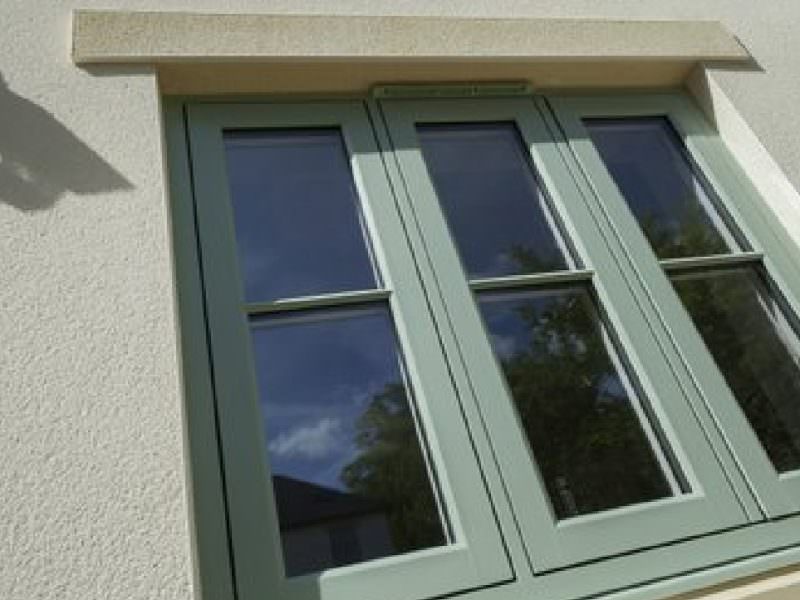
- Flush Casement Windows: A modern take on a classic. The window sash sits “flush” with the frame when closed, giving a flat, clean look that’s perfect for both traditional and contemporary homes.
- Sliding Sash Windows: The classic “box sash” window seen in Georgian and Victorian properties, where one or both sashes slide up and down.
- Tilt & Turn Windows: A versatile European style. The handle turns once to tilt the window inwards from the top for ventilation, or turns again to open the full window inwards from the side for cleaning.
Step 4: Understanding Glazing, Energy Efficiency & WERs
Don’t just buy “double glazing”—look for the Window Energy Rating (WER).
You’ll see a rainbow-coloured sticker on all new windows, just like on a fridge. The rating goes from G (worst) to A++ (best). An ‘A’ rated window is the minimum standard for most replacements.
- Double Glazing: The standard. Two panes of glass with an insulating gas (like argon) in the gap. A high-quality double-glazed unit is perfect for almost all UK homes.
- Triple Glazing: Three panes of glass. Offers the ultimate in thermal and acoustic (sound) insulation, but is heavier and more expensive. It’s best for homes in very cold, exposed locations or those suffering from extreme noise pollution.
- The “A++” Rating: This is achieved through a combination of factors: an efficient frame, high-performance glazing, low-iron glass, warm-edge spacer bars, and argon gas.
Step 5: Security (PAS 24 & Secured by Design)
A window’s most important job is to keep your home secure. Don’t overlook this.
- Good Locks: Look for multi-point locking systems and key-lockable handles.
- Internal Beading: This means the small strips holding the glass in place are on the inside of the window, so intruders can’t remove them from the outside.
- PAS 24: 2016: This is the key standard. It means the entire window unit (not just the lock) has been rigorously tested to withstand common break-in methods.
- Secured by Design (SBD): A police-backed initiative. SBD-approved windows meet the PAS 24 standard and more. Ask your installer if their windows meet this spec.
Step 6: Understanding Building Regulations & FENSA
You don’t need “planning permission” to replace windows (unless you’re in a listed building). But you do need to comply with Building Regulations.
This sounds complex, but it’s simple. You have two options:
- Apply for approval from your local council’s Building Control department (slow and costly).
- Use an installer who is registered with a Competent Person Scheme like FENSA or Certass.
Using a FENSA installer (like KJM) is the easiest and most popular way. We are authorised to self-certify that our work complies with all regulations. After the installation, you’ll be sent a FENSA certificate, which is essential for when you come to sell your home.
Step 7: How to Choose a Good Installer
The best windows in the world will fail if they are poorly installed. The installer is as important as the product.


- Check Accreditations: Are they FENSA or Certass registered? Are they members of the Glass and Glazing Federation (GGF)?
- Read Real Reviews: Check Google, Checkatrade, and Which? Trusted Traders. Look for patterns in what customers say.
- Get Itemised Quotes: Get 2-3 quotes. A good quote will be fully itemised, not just a single figure on the back of a business card.
- Beware the “Hard Sell”: Avoid any company that uses high-pressure tactics, like “sign today for 50% off” or “I need to phone my manager.” A professional company (like KJM) will give you a detailed quote to consider in your own time. This is our “No Pressure Promise.”
- Ask About Warranties: A 10-year, insurance-backed guarantee is the industry standard.
Step 8: What to Expect from the Installation Process
A professional installation should be a smooth, tidy process.
- Quote: You’ll discuss your needs and get an itemised quote.
- Survey: Once you agree, a qualified surveyor (not a salesperson) will visit to take precise measurements. This is the final check.
- Manufacture: Your windows are made to order based on the survey.
- Installation Day: The team will arrive, lay down dust sheets everywhere, remove one old window at a time, install the new one, and then move to the next.
- Finishing: They will “make good” any plasterwork around the new window, clean the glass, and tidy up all debris.
- Sign-off: You’ll be shown how to operate your new windows, and the team will only leave when you are 100% happy.
Step 9: How Much Do New Windows Cost?
This is the number one question, but it’s like asking “how much does a car cost?” The price depends entirely on:
- Material: uPVC is the most affordable; aluminium and timber cost more.
- Style: A standard casement is cheaper than a complex sliding sash.
- Size: Larger windows require more materials and labour.
- Glazing: Triple glazing adds to the cost.
Be wary of any “average price” online. The only way to get an accurate figure is with a free, no-obligation quote from a reputable installer.
Homeowner’s Buying Checklist
Use this simple checklist when getting quotes.
- [ ] Are you FENSA or Certass registered?
- [ ] Are you a member of the GGF?
- [ ] Can I see your reviews (Google, Which?, Checkatrade)?
- [ ] Can I have a detailed, itemised quote?
- [ ] What is the Window Energy Rating (WER) of these windows?
- [ ] Do the windows meet PAS 24 security standards?
- [ ] What is the warranty, and is it insurance-backed?
Ready to Explore Your Options?
We hope this guide has given you the confidence to start your project. If you’re in Hampshire, Berkshire, or the surrounding areas, our non-commissioned, expert team would be happy to help.
Visit Our Andover Showroom & Get DirectionsFAQs
High-quality uPVC windows, like those installed by KJM, have a typical lifespan of 20-30 years. Their durability and low maintenance make them a fantastic long-term investment.
Do I need to apply for planning permission to replace my windows?
A FENSA certificate is your proof that your new windows have been installed by a registered, competent installer and that the work complies with all Building Regulations. You will be sent this certificate after the job is complete, and it is vital for when you sell your home.
This depends on the number of windows, but a typical full-house installation (approx. 8-10 windows) is usually completed in 2-3 days. A single-window replacement can be done in just a few hours.
Recommended

Mark Pearce is a highly experienced specialist in the double glazing industry, having built his knowledge from the ground up through hands-on experience in installation, manufacturing, sales, and business management. Beyond his role at KJM, Mark is a keen blogger, writer, and traveller, often sharing insights on the latest innovations in the home improvement industry.
- Comp Door Launches New 2026 Brochure Featuring ‘Total Black Out’ Frames - 11 September 2026
- Solidor launch five new doors - 21 August 2026
- KJM Group Wins Which? Trusted Trader of the Month (Aug 2026) - 4 August 2026