Timber - PVC - Aluminium - Windows, Doors & Conservatories in Hampshire
Battling the Traffic Drone: A Local’s Guide to Silencing the A303, A34 & M3
Battling the Traffic Drone: A Local’s Guide to Silencing the A303, A34 & M3
Are you desperately wondering how to stop road noise through windows? We expertly explain exactly why standard triple glazing often miserably fails to block heavy traffic drone, and precisely how modern acoustic secondary glazing flawlessly creates the essential “Magic 100mm” silence gap.
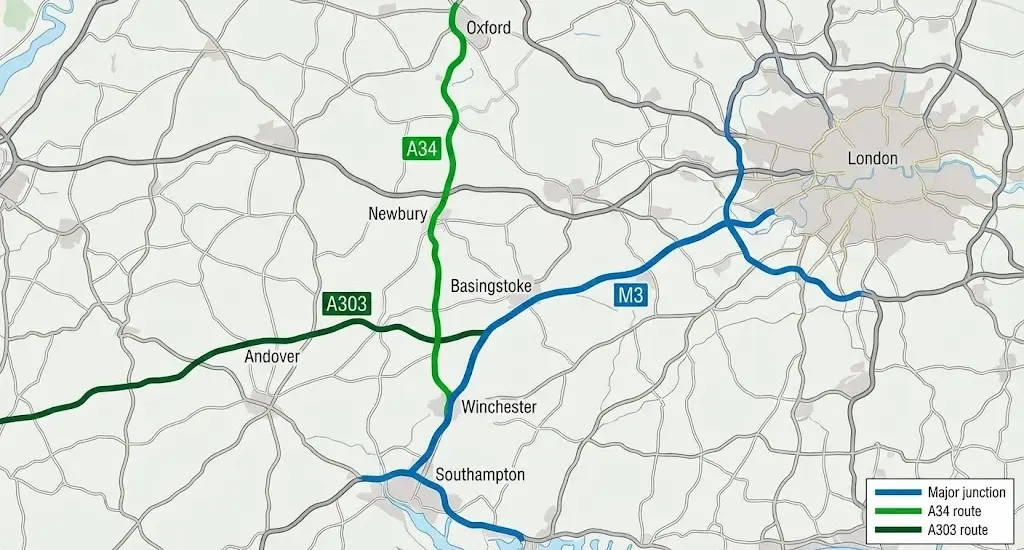
From the totally constant, aggressive hum of the M3 near historic Winchester to the relentlessly heavy drone of the A303 rushing directly past Andover, our beautiful region is inherently defined by its massive, incredibly busy transport links. Consequently, it’s definitively not just lightweight traffic; it’s a deeply penetrating, low-frequency sound wave that standard double glazing simply cannot physically block.
Thousands of relatively modern new builds successfully constructed across Andover, Basingstoke, and Winchester were cheaply fitted with highly basic “Thermal” double glazing. While undeniably excellent for securely keeping expensive heat in, these specific units are unfortunately often entirely acoustically transparent to Heavy Goods Vehicles.
The harsh, expensive truth: Simply blindly upgrading to standard triple glazing is incredibly often a total waste of money for solving this highly specific acoustic problem.
At KJM Group, we remarkably often visit exhausted homeowners who have tragically spent thousands of pounds on heavy new windows, only to devastatingly find the 4am lorry noise is exactly the same. Ultimately, this comprehensive guide expertly explains the complex physics of sound transmission and precisely how to actually permanently stop it.
🔊 The Noise Trap
Standard triple glazing can actually frequently amplify heavy low-frequency traffic noise due to a complex physical resonance effect.
📏 The Magic 100mm
Sound heavily struggles to cross massive gaps. A 100mm+ gap utilizing interior Secondary Glazing acts as a total, impenetrable acoustic shock absorber.
🛡️ The Smart Alternative
If you absolutely must entirely replace the outer frames, Acoustic Laminated Glass (using totally asymmetric pane thicknesses) is vastly superior to triple glazing.
Page Contents
1. The Science of Silence: Understanding Decibels
Most deeply frustrated homeowners completely fail to realise that physical sound is absolutely not measured linearly. It actually strictly operates on a complex logarithmic scale. This explicitly means a seemingly incredibly small number change represents a genuinely huge physical difference in your bedroom.
The Ultimate Goal: A wide-open window carelessly lets in roughly 70dB of aggressive street noise. Standard old double glazing might successfully reduce this by a highly mediocre 25dB. To genuinely make a brutally busy road sound wonderfully like a quiet library, we absolutely need to aggressively aim for a total structural reduction of 40dB to 50dB.
2. Exactly Why Your Current Windows Are Failing
To successfully fix the terrible noise, you first absolutely have to accurately diagnose the specific frequency. As explicitly shown on the official Defra Strategic Noise Map Gov.uk, major local arteries like the busy A34 and M3 generate a highly specific, complex sound profile:
- High Frequency (Whine): Fast tyres on wet tarmac, sharp wind noise, loud police sirens. Standard thermal double glazing incredibly blocks this reasonably well.
- Low Frequency (Drone): Heavy HGV engines, deep exhaust rumble, the steady, relentless A303 “hum”. This is a massive, long sound wave that tragically passes straight through standard glass completely unimpeded.
Standard triple glazing incredibly often identically uses three completely equal panes of basic 4mm glass. Because they are all the exact same thickness, they violently vibrate at the exact same frequency (scientifically known as Sympathetic Resonance). Effectively, the massive low-frequency sound wave maliciously uses the middle glass pane as a highly efficient bridge to aggressively cross straight into your quiet bedroom.
3. Interactive: The Noise Diagnosis Tool
Are you currently heavily debating exactly what type of soundproof glass your specific property truly needs? Use our highly interactive noise diagnosis tool below to instantly find your definitive acoustic strategy.
🔊 The Noise Diagnosis Tool
Answer 2 remarkably quick questions to instantly find your specific acoustic fix.
Exactly what does the highly annoying noise sound like?
Are you currently residing in a strict Conservation Area?
(e.g., Winchester City Centre, historic Salisbury?)
✅ Highly Recommended: Secondary Glazing
Why: The relentless, heavy A303/M3 drone is absolutely best killed by creating a massive air gap (100mm+). Expertly installed Secondary Glazing brilliantly “decouples” the penetrating sound.
The Smart Fix: Keep your beautiful original timber windows (perfectly preserving the look for strict planners) and seamlessly install a highly discreet, slimline aluminium unit directly inside.
Expected Reduction: An incredible 50dB+ (A genuinely massive difference).
View Secondary Glazing Options →🛠 Highly Recommended: Acoustic Laminate Replacement
Why: Since you fortunately aren’t heavily restricted by brutal planning laws, you can entirely replace the old frames, but you must strictly avoid standard triple glazing.
The Smart Fix: You desperately need Asymmetric Glazing (e.g., 6mm Stadip Silence + 4mm standard glass). The vastly different thicknesses brilliantly disrupt the heavy sound wave, and the complex PVB plastic layer actively absorbs the vibration.
Expected Reduction: ~40-42dB (A highly significant acoustic improvement).
Get a Quote for Acoustic Glass →4. The “Magic 100mm” Acoustic Air Gap
For incredibly frustrated residents living in historic areas like Salisbury or heavily protected Winchester, where heritage aesthetics are absolutely key, interior Secondary Glazing is actually scientifically vastly superior to total replacement windows for killing noise.
Sound waves aggressively struggle to successfully jump across incredibly large spaces. Standard double glazing only has a tiny gap of roughly 16mm-20mm. Conversely, secondary glazing brilliantly creates a massive gap of 100mm to 200mm. Ultimately, this massive “dead air” completely acts as a totally impenetrable acoustic shock absorber.

5. Real World Noise & Cost Comparison
Is it genuinely worth paying slightly extra for specific acoustic upgrades? Here is the exact, undeniable scientific difference.
| Acoustic Solution | Typical Capital Cost | Total Noise Reduction (dB) | Real World Human Feeling |
|---|---|---|---|
| Standard Triple Glazing | £££ (Highly Expensive) | ~32dB | Only slightly muted |
| Acoustic Double Glazing | ££ (Moderate Investment) | ~42dB | Perceived as roughly 75% Quieter |
| Specialist Secondary Glazing | £ (Highly Cost-Effective) | 50dB+ | An incredible 95% Quieter (Library Quiet) |
6. A Warning: The Strict Planning Trap
Before you hastily rush out to aggressively replace your noisy windows, you must absolutely check your exact postcode. Many highly historic parts of Winchester and Salisbury are rigorously protected Conservation Areas, or fiercely subject to incredibly strict Article 4 Directions.
In these highly frustrating scenarios, Secondary Glazing is an absolute lifesaver. Because it is highly discreetly installed totally on the inside of your home, it legally does not require complex planning permission in roughly 99% of cases.
7. Frequently Asked Questions
For the incredibly constant M3 or A34 low-frequency ‘drone’, usually absolutely not. Standard triple glazing is specifically designed purely for thermal heat retention. If the three glass panes are all the exact same thickness, they can actually physically vibrate together (resonance), disastrously letting the low-frequency noise seamlessly pass completely through.
For total replacement windows, you absolutely need highly specific ‘Acoustic Laminate’ glass (like the premium Stadip Silence) which intelligently uses a dense PVB plastic interlayer to completely dampen structural vibration. However, the ultimate, unbeatable solution for low drone is always Secondary Glazing with a massive 100mm+ air gap installed by a highly trained specialist.
If you intelligently use discreet Secondary Glazing, usually absolutely no—even in heavily Listed Buildings—because it is completely reversible and securely sits entirely inside the property. Conversely, if you want to entirely replace the main outer windows, you must rigorously check if you are in a protected Conservation Area (like Upper Clatford or Winchester) where strict Article 4 directions may legally apply.
📚 The Windows Knowledge Hub
We strongly believe an educated customer logically makes the absolute best decisions. Explore our fully transparent buying guides below:
Ready to Finally Sleep Past 5am?
We are a highly experienced local Hampshire business. We drive the noisy A303, A34 and M3 every single day. We know exactly what that terrible drone sounds like, and we expertly know exactly how to completely stop it.
Book a Free Acoustic Survey
Mark Pearce is a highly experienced specialist in the double glazing industry, having built his knowledge from the ground up through hands-on experience in installation, manufacturing, sales, and business management. Beyond his role at KJM, Mark is a keen blogger, writer, and traveller, often sharing insights on the latest innovations in the home improvement industry.
- Comp Door Launches New 2026 Brochure Featuring ‘Total Black Out’ Frames - 11 September 2026
- Solidor launch five new doors - 21 August 2026
- KJM Group Wins Which? Trusted Trader of the Month (Aug 2026) - 4 August 2026