Timber - PVC - Aluminium - Windows, Doors & Conservatories in Hampshire
Why Won’t My uPVC Door Shut in the Heat? (And How to Fix It)
Why Won’t My uPVC Door Shut in the Heat? (And How to Fix It)
Category: Troubleshooting & Repairs
Reading Time: 6 Minutes
📌 The Quick Summary
- It is Science, Not a Breakage: Summer heat causes the plastic to physically swell, which is exactly why your plastic door sticks in the summer.
- The KJM Recommendation: Dark colours absorb more heat than say white doors. For south-facing homes, we strongly recommend thermally stable Aluminium doors or timber core composite doors to prevent your front door sticking in hot weather.
- Do NOT Force It: If your uPVC door won’t lock when hot weather hits, forcing the handle upwards could snap the internal gearbox, leading to a permanent repair.
- The Quick Fix: Hose the door down with cold water to shrink the plastic back to size, or simply wait for the evening temperatures to drop.
It is the peak of a beautiful British summer. You have had the back doors wide open all afternoon to let the breeze in. But when the sun starts setting and you try to lock up for the night, the door refuses to shut. The handle is stiff, the frame is catching, and the lock won’t engage.
Before you panic and assume your door is permanently broken, take a breath. You are experiencing one of the most common seasonal calls our service department receives: thermal expansion.
Table of Contents
1. Why Does My Plastic Door Stick in Summer?
uPVC (Unplasticised Polyvinyl Chloride) is an incredibly durable, weather-resistant plastic. However, like all materials, it reacts to extreme temperature changes.
In technical terms, uPVC has a high coefficient of linear thermal expansion (roughly 6 × 10⁻⁵ to 8 × 10⁻⁵ per °C). If the surface of your door goes from a cool 15°C morning to a baking 60°C in direct afternoon sunlight, the physical plastic profile can swell significantly. In fact, it is entirely normal to find that your uPVC door frame expanded in the sun by up to 14mm.
Because the complex multipoint locking mechanism requires millimetre-perfect alignment to engage smoothly, even a 5mm swell will make the door feel impossibly stiff, causing the heavy metal hooks to miss the ‘keeps’ fixed to the outer frame.
2. Front Door Sticking in Hot Weather? The “Dark Colour” Factor
This expansion problem is particularly severe on south-facing or west-facing elevations that take the brunt of the afternoon sun.
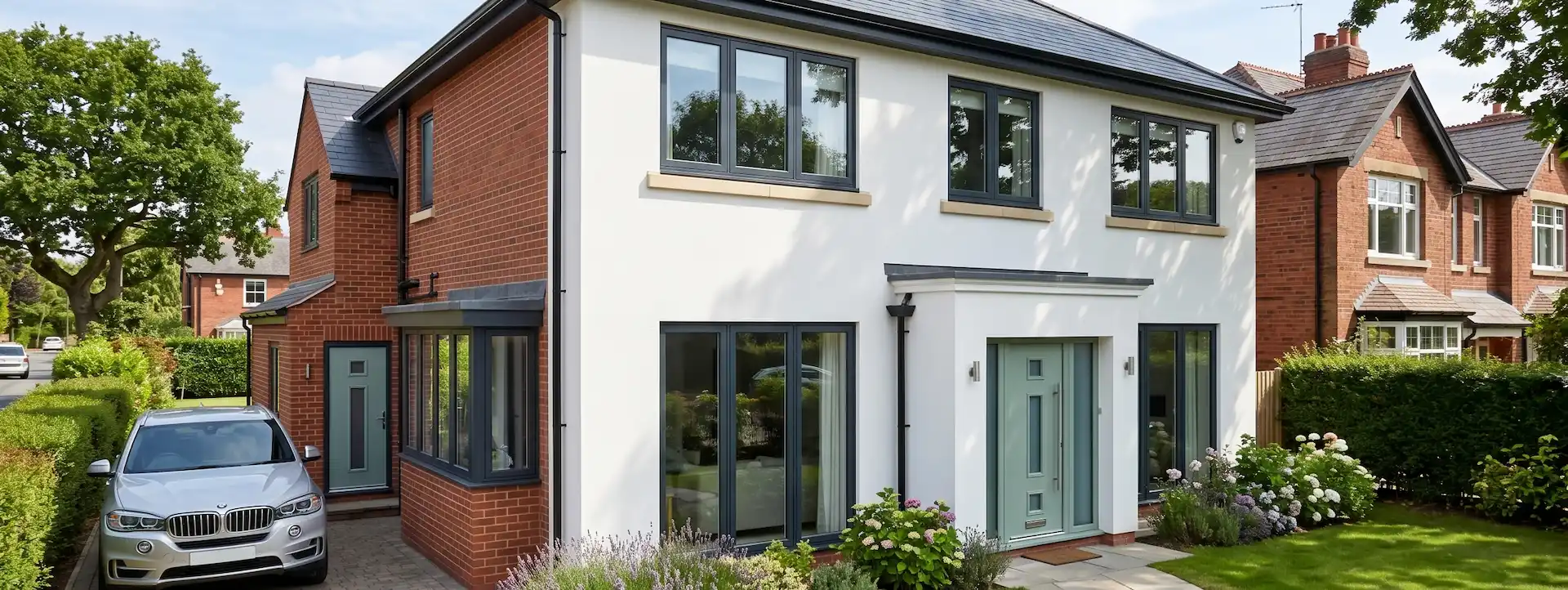
If you have modern, dark-coloured foils (such as Anthracite Grey, Black, or Rosewood), your doors will absorb considerably more solar radiation. White uPVC naturally reflects heat, whereas dark colours act like a heat sponge, accelerating the thermal expansion process.
🏆 KJM Expert Advice: South-Facing Doors
If your property has a south-facing or west-facing garden, we actively advise against installing dark-coloured uPVC French or Bifold doors.
Instead, we highly recommend Aluminium doors. Aluminium is structurally rigid and incredibly thermally stable. It has a significantly lower expansion rate than plastic. It will not warp, swell, or stick, no matter how hot the British summer gets, making it the perfect choice if you want to stop your front door sticking in hot weather.
3. uPVC Door Won’t Lock in Hot Weather? Immediate Emergency Fixes
If your uPVC door won’t lock when hot weather hits, and you are wondering how you are going to secure your home for the night, follow these steps.
⚠️ The Golden Rule: DO NOT FORCE THE HANDLE
If the handle feels excessively stiff when you push it up to lock the door, stop immediately. Applying extreme force will snap the spindle inside the central gearbox. If the gearbox breaks, the door is stuck permanently, and you will need to pay for a professional locksmith or window engineer to drill out and replace the entire mechanism.
Instead of forcing the lock, try these two highly effective, damage-free hacks:
- The “Wait it Out” Method: The swelling is not a permanent defect. As soon as the direct sunlight passes and the ambient evening temperature begins to drop, the uPVC will naturally contract back to its original shape. Simply wait a few hours until dusk, and the door should lock perfectly smoothly.
- The “Lift the Door” Method: Is the door dragging on the bottom? Hold the handle and try to lift the door as you close it. This may help clear whatever the door is catching on at the bottom.
- The “Close both Doors Together” Method: If you are having trouble closing a french door and it is catching on the other door. Open both doors and close together at the same time, so that they meet before touching all parts of the frame.
- The Outside Tap Trick: If you cannot wait and need to leave the house immediately, you need to artificially cool the plastic. Take a hosepipe from an outside tap, or a bucket of cold water, and generously soak the outer uPVC frame and door slab. The cold water will rapidly draw the heat out of the plastic, shrinking it back to size within minutes.
4. How to Adjust uPVC Door Expansion in Heat (The Long-Term Fixes)
While the cold water trick is a great emergency fix, nobody wants to be hosing their back door down every July. Many online blogs will tell you to simply grab an Allen key and adjust the flag hinges yourself. We strongly advise against this DIY approach.
Turning the wrong adjustment screw can drop the heavy door onto the frame, making the alignment noticeably worse and potentially voiding your warranty. Instead, here are the professional, long-term options to permanently resolve a sticky door:
| Solution | How it Works & Things to Consider |
|---|---|
| Professional Hinge Adjustment | A qualified window engineer can adjust the flag hinges to pull the door slightly further away from the frame, allowing for summer swelling. Warning: If you adjust the door for summer heat, you may create a draughty gap in the winter when the plastic fully contracts. |
| Keep Adjustment | Instead of moving the heavy door, an engineer can slightly loosen and reposition the metal locking keeps on the outer frame, widening the tolerance so the hooks can engage even when the door is swollen. |
| Material Upgrade | If your uPVC door is old, constantly warping, and driving you mad, the ultimate permanent fix is upgrading to a material that doesn’t suffer from significant thermal expansion, such as a premium Aluminium bi-fold or solid-core Composite door. |
5. Frequently Asked Questions
First, do not force the locking handle upwards. Cool the frame down using cold water from a hosepipe or a wet cloth to shrink the plastic back to its normal size. Once cooled, the door will close normally.
Generally, no. The uPVC has a structural memory and will almost always return to its original shape once the temperature cools down. Permanent warping usually only occurs in very old, first-generation, un-reinforced uPVC panels.
Modern toughened safety glass is highly resistant to thermal shock. However, it is always best practice to aim your hosepipe or cold damp cloth specifically at the plastic uPVC frame and the door slab edges, rather than drenching hot glass panes directly.
We strongly advise against it unless you are highly experienced. Turning the wrong adjustment screw on a flag hinge can drop the heavy door onto the frame, making the alignment noticeably worse, and may potentially void your installation warranty. Always call a professional.
When uPVC gets extremely hot, the plastic not only expands outwards but also softens slightly. The sheer weight of the double-glazed glass units can cause the softened plastic sash to sag slightly on its hinges, which is why it often catches on the bottom threshold.
Yes. Just as heat causes expansion, freezing winter temperatures cause the plastic to contract and shrink. This can pull the locking points too far away from the frame, making the door equally difficult to lock or causing annoying winter draughts.
Yes. Premium composite doors are built with a solid timber or high-density foam core wrapped in a GRP skin. They are vastly more structurally and thermally stable than hollow uPVC, meaning they do not suffer from noticeable summer swelling or winter sticking.

Mark Pearce is a highly experienced specialist in the double glazing industry, having built his knowledge from the ground up through hands-on experience in installation, manufacturing, sales, and business management. Beyond his role at KJM, Mark is a keen blogger, writer, and traveller, often sharing insights on the latest innovations in the home improvement industry.
- Pilkington Launches Optitherm S3 Plus Triple Glazing Glass - 16 October 2026
- Comp Door Launches New 2026 Brochure Featuring ‘Total Black Out’ Frames - 11 September 2026
- Solidor launch five new doors - 21 August 2026