Timber - PVC - Aluminium - Windows, Doors & Conservatories in Hampshire
Can I Install uPVC Windows in a Conservation Area? (Hampshire Guide)
Can I Install uPVC Windows in a Conservation Area? (Hampshire Guide)
Living in a Conservation Area in Andover or Winchester? Learn how Article 4 directions work and why modern “Heritage” uPVC is now frequently approved by planners.
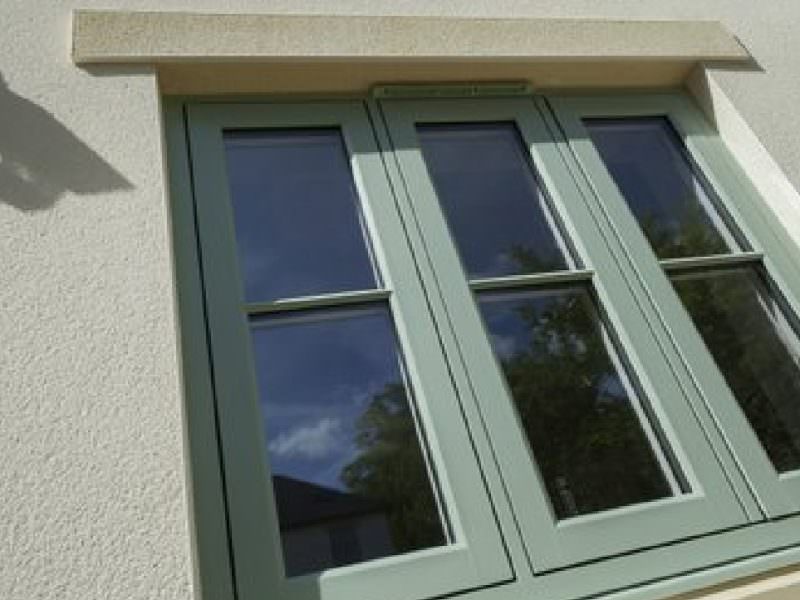
Can you legally install uPVC windows in a Conservation Area? Yes, you often can, but you absolutely cannot always use standard “bright white” glossy plastic windows. You may have to specify “Heritage” flush sash windows (such as the premium Residence 9 system) that meticulously replicate historical timber sightlines and mechanical joints. However, you must always check if your specific street has an active “Article 4” direction first.
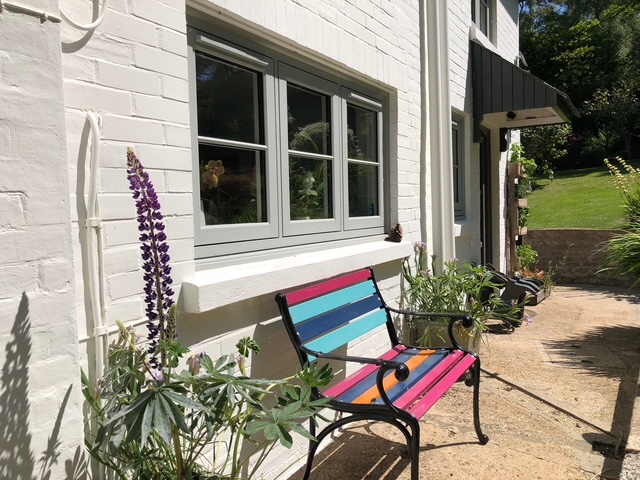
Many of us in Hampshire and Wiltshire are incredibly lucky to live in beautiful older homes. While these stunning properties are full of historical character, they unfortunately often come equipped with original single-glazed windows that are severely draughty, highly insecure, and outrageously expensive to heat through the winter.
Replacing them with modern, energy-efficient glazing is the obvious financial solution, but the phrase “Conservation Area” strikes absolute fear into many homeowners.
The good news is that local planning rules have heavily evolved. Planning authorities in towns like Andover, Winchester, and Romsey are increasingly far more accepting of modern, maintenance-free materials—provided the design is strictly respectful to the building’s heritage.
Page Contents
- 1. What Exactly is a Conservation Area?
- 2. Article 4 Directions Explained
- 3. Interactive: Planning Permission Checker
- 4. The Ultimate Dilemma: Repair vs. Replace
- 5. Timber vs. Heritage uPVC (Data Comparison)
- 6. The 3 Council-Approved Solutions
- 7. ⚠️ Warning: Listed Buildings
- 8. Frequently Asked Questions
1. What Exactly is a Conservation Area?
A designated Conservation Area is an officially protected area of special architectural or historic interest. Unlike a Listed Building (which legally protects one specific individual structure), a Conservation Area protects the general “scene” and character of an entire neighborhood or village.
There are currently over 10,000 active conservation areas across the UK. In our region of Hampshire, they are strictly managed by local councils (such as Test Valley Borough Council or Winchester City Council) to aggressively ensure that the character of our historic market towns isn’t ruined by unsympathetic modern renovations.
📺 The “White Gold” Stigma
In the 1980s and 1990s, the double glazing industry earned a terrible reputation for aggressively ripping out beautiful, intricate sash windows and lazily replacing them with chunky, shiny white plastic. This caused significant, irreversible visual harm to historic streetscapes.
As a direct result, many councils issued incredibly strict rules effectively banning “plastic windows.” However, manufacturing technology has moved on exponentially. Modern Heritage uPVC is now virtually visually indistinguishable from painted timber, leading to a massive, welcome relaxation of these outdated rules.
2. Article 4 Directions Explained
Normally, changing the windows on your home falls firmly under your “Permitted Development” rights, legally meaning you do not need to ask for planning permission. However, if you live in a Conservation Area, your council may have quietly issued an Article 4 Direction over your street.
⚠️ Key Definition: What is Article 4?
An Article 4 Direction legally removes your Permitted Development rights. It does not mean you cannot change your windows; it simply means you must submit a formal planning application first so the conservation officer can physically check and approve the new design.
Does every single house in a Conservation Area have an Article 4 Direction? No. It is highly specific to certain streets and elevations. You can check this officially on your local council’s website, or simply ask KJM Group to check the registry for you.
3. Interactive: Planning Permission Checker
If you are confused about whether you need to apply for planning permission to change your windows, use our interactive wizard below to quickly find out exactly where you legally stand.
4. The Ultimate Dilemma: Repair vs. Replace
Before you boldly decide to replace your windows, you must honestly consider the condition of the originals. Planning officers will always strongly prefer repair over replacement if the original windows are historically significant.
When to Repair:
- Historic Glass: If you are lucky enough to have original “Crown Glass” (glass with visible ripples/imperfections from before 1850), this is incredibly rare and valuable. Do not throw it in a skip.
- Minor Rot: If only the bottom cill is slightly rotten, a skilled timber specialist can often splice in new wood without needing to remove the whole window frame.
When to Replace:
- Beyond Economic Repair: If the wooden frames are severely warped, allowing significant water ingress or deep rot that threatens the internal structure of the wall.
- Energy Efficiency: If the thin single glazing is causing massive condensation, black mould, and completely unmanageable heating bills in winter.
- Non-Original Replacements: If your home unfortunately already has poor-quality, chunky plastic windows from a terrible 1980s renovation, replacing them with high-quality heritage replicas is actively seen as an “enhancement” by planners and will be heavily supported.
5. Timber vs. Heritage uPVC (Data Comparison)
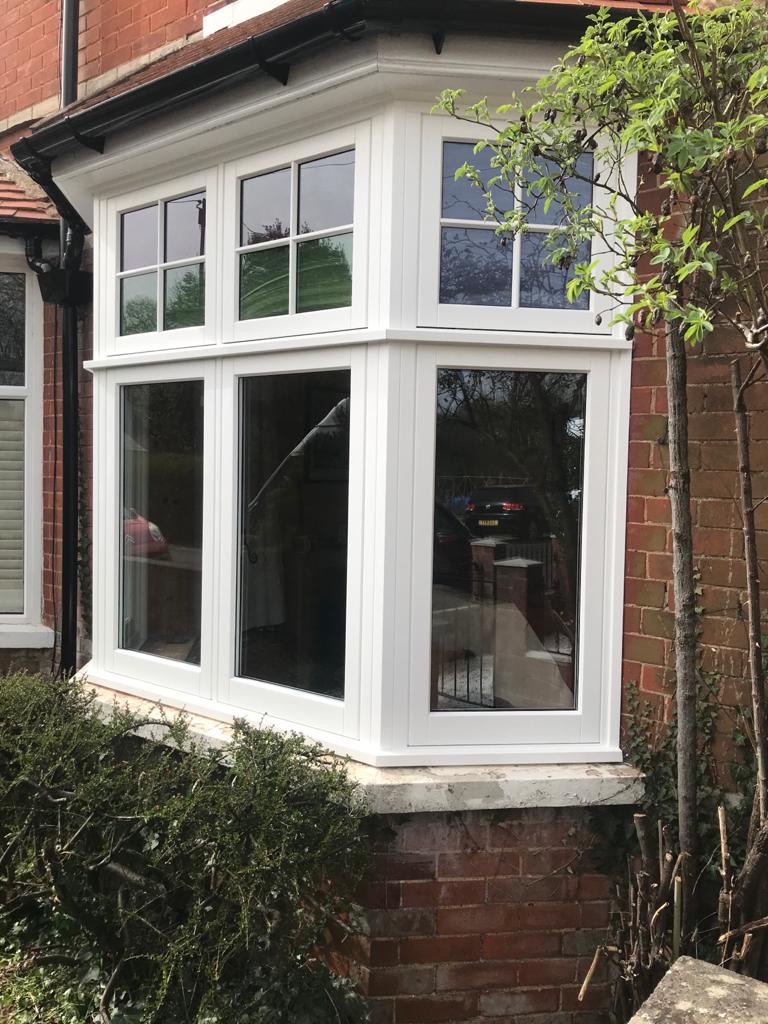
If you are looking to replace windows listed building Hampshire, you must use real wood. However, for standard Conservation Areas, many homeowners falsely assume they must use timber. While we proudly install beautiful hardwood windows, many planners now happily accept Residence 9 (uPVC) as a highly valid alternative.
| Feature | Genuine Timber | Heritage uPVC (Residence 9) |
|---|---|---|
| Appearance | 100% Authentic | 99% Authentic (Uses straight Mechanical Joints, no diagonal welds) |
| Maintenance | Requires sanding and painting every 5-7 years | Virtually Maintenance Free (Just wipe with soapy water) |
| Cost | High (£££££) | Medium-High (£££) |
| Lifespan | 50+ Years (Only if heavily maintained) | 35+ Years (Without lifting a paintbrush) |
| Planning Approval | Almost always approved instantly | Frequently approved (Subject to specific local council rules) |
6. The 3 Council-Approved Solutions
At KJM Group, we have clearly identified three main architectural routes that successfully gain planning approval in Hampshire and Wiltshire conservation areas.
The Concept: A high-end composite uPVC system designed from the ground up to flawlessly replicate 19th-century timber.
Why Planners Like It: It has a 100mm deep frame (matching old timber), authentic mechanical butt-joints (no ugly diagonal plastic welds), and a perfectly flat flush sash finish.
The Concept: The UK’s leading uPVC vertical sliding sash window, specifically designed to replace freezing, draughty Victorian box sashes.
Why Planners Like It: It features solid “Run-through Sash Horns” and a super-slim meeting rail (just 35mm), successfully keeping the visible glass area large and historically authentic.
The Concept: A discreet, ultra-slimline aluminium frame added directly to the inside of your existing window.
Why Planners Like It: It completely leaves the external historic fabric of the building untouched. It is highly effective for noise reduction and usually requires absolutely NO planning permission.
7. ⚠️ Warning: Listed Buildings
We cannot stress this enough: Conservation Area rules are completely different from Listed Building rules.
🛑 Listed Building Consent
If your home is officially Grade I or Grade II Listed, you cannot simply replace the windows, even with exact 1-to-1 timber replicas, without acquiring formal “Listed Building Consent.” This legal process is drastically stricter than standard planning permission. In 90% of Listed Building cases we see, internal Secondary Glazing is the only realistic, approved solution to improve warmth.
For highly official, national guidance before you start your project, we strongly recommend reading Historic England’s Guide to Upgrading Old Windows Gov.uk.
8. Frequently Asked Questions
It should have been officially flagged by your solicitor when you originally bought the home. If you are in any doubt, you can quickly check your local council’s online planning map, or simply give KJM Group a call—we know the local Hampshire and Wiltshire boundaries incredibly well!
Yes. If your residence 9 conservation area approval is rejected, we offer a stunning, wide range of high-performance engineered timber windows and solid hardwood doors (including Sapele hardwood, Oak, and Accoya). This includes flush stormproof casements and traditional timber pulley-and-weight vertical sash windows.
Absolutely. We have decades of hands-on experience working directly with local authorities in Andover, Winchester, and across Hampshire. We can provide all the detailed cross-section architectural drawings and product specifications that planners legally require to make a favourable decision.
📚 Explore Our Heritage Hub
Find the exact right solution for your period property:
Need expert planning advice?
Don’t risk ordering windows that the council will force you to remove. Contact KJM Group today for a free, no-obligation site survey. We will honestly assess your property’s legal standing and provide a transparent quote across Hampshire, Berkshire, and Wiltshire.
Request a Free Site Survey
Mark Pearce is a highly experienced specialist in the double glazing industry, having built his knowledge from the ground up through hands-on experience in installation, manufacturing, sales, and business management. Beyond his role at KJM, Mark is a keen blogger, writer, and traveller, often sharing insights on the latest innovations in the home improvement industry.
- Pilkington Launches Optitherm S3 Plus Triple Glazing Glass - 16 October 2026
- Comp Door Launches New 2026 Brochure Featuring ‘Total Black Out’ Frames - 11 September 2026
- Solidor launch five new doors - 21 August 2026