



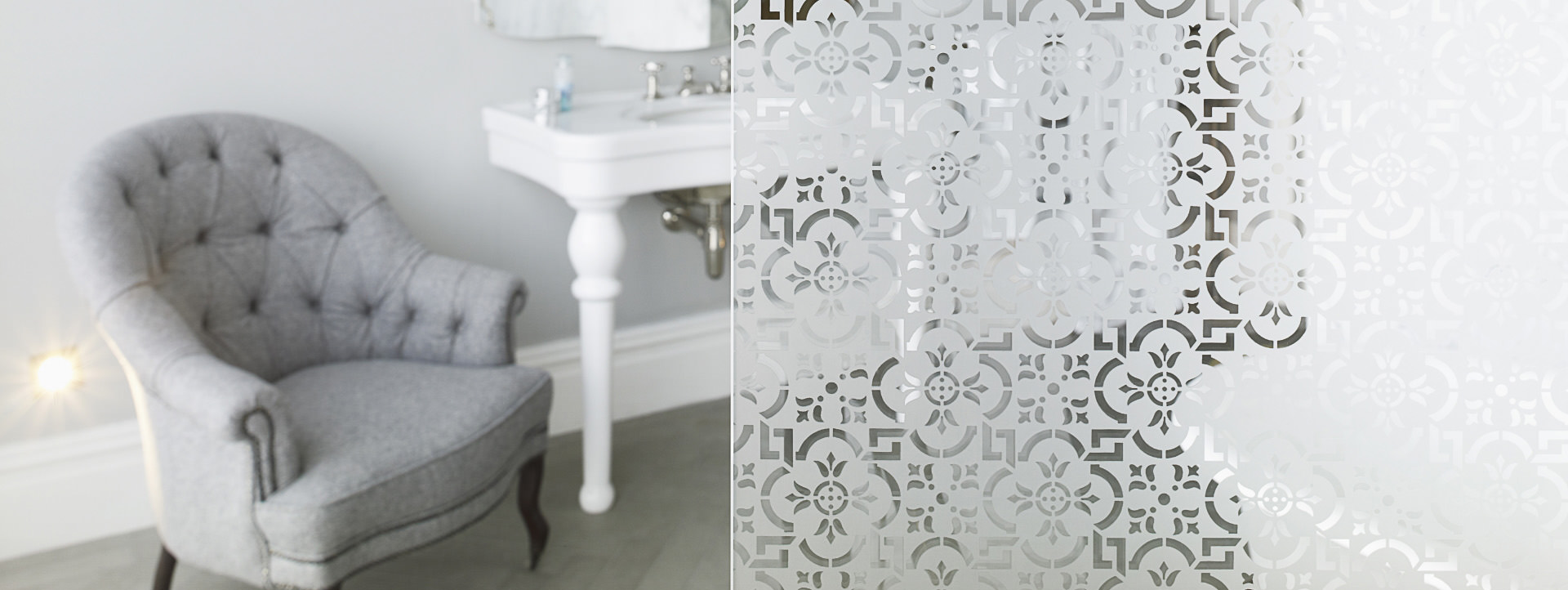
Glass Andover & Hampshire
Since 1983, KJM has provided expert installation services across Andover and Hampshire. Extending business to Berkshire, Dorset, Surrey, Wiltshire and surrounding areas, you can receive a bespoke quote for our beautiful glass today in the windows or doors of your choice.
📌 Key Takeaways: The World of Modern Glazing
- More Than Just Clear: Modern glass is a high-tech material engineered to control heat, light, sound, and safety.
- Energy Efficiency is Standard: Low-E coatings are essential for retaining winter heat and meeting building regulations.
- Safety is Mandatory: Critical locations (like doors) require Toughened or Laminated safety glass to prevent injury.
- Lifestyle Solutions: Specialized options exist for specific needs, such as self-cleaning coatings for conservatories or acoustic glass for noisy roads.
Gone are the days when glass was just a fragile, clear material to fill a hole in the wall. Today, modern glazing is a high-tech component integral to the comfort, security, and energy efficiency of your home.
But with so many options available—from coatings invisible to the naked eye to complex laminated layers—how do you know which glass is right for which window?
At KJM Group, we believe in empowering our customers with knowledge. This hub page is your definitive guide to the major types of glass used in residential glazing today. Explore the summaries below and click through to our in-depth guides to master your choices.
Energy efficiency
Low-Emissivity (Low-E) glass is the cornerstone of energy-efficient modern homes. It features a microscopically thin, transparent coating that acts as a thermal mirror. It reflects the heat generated by your radiators back into the room, preventing it from escaping outside.
This significantly lowers your energy bills and is essential for meeting modern building regulations (Part L).
Solar Control
If you have a conservatory, orangery, or large south-facing bi-fold doors, you are likely familiar with the “greenhouse effect.”
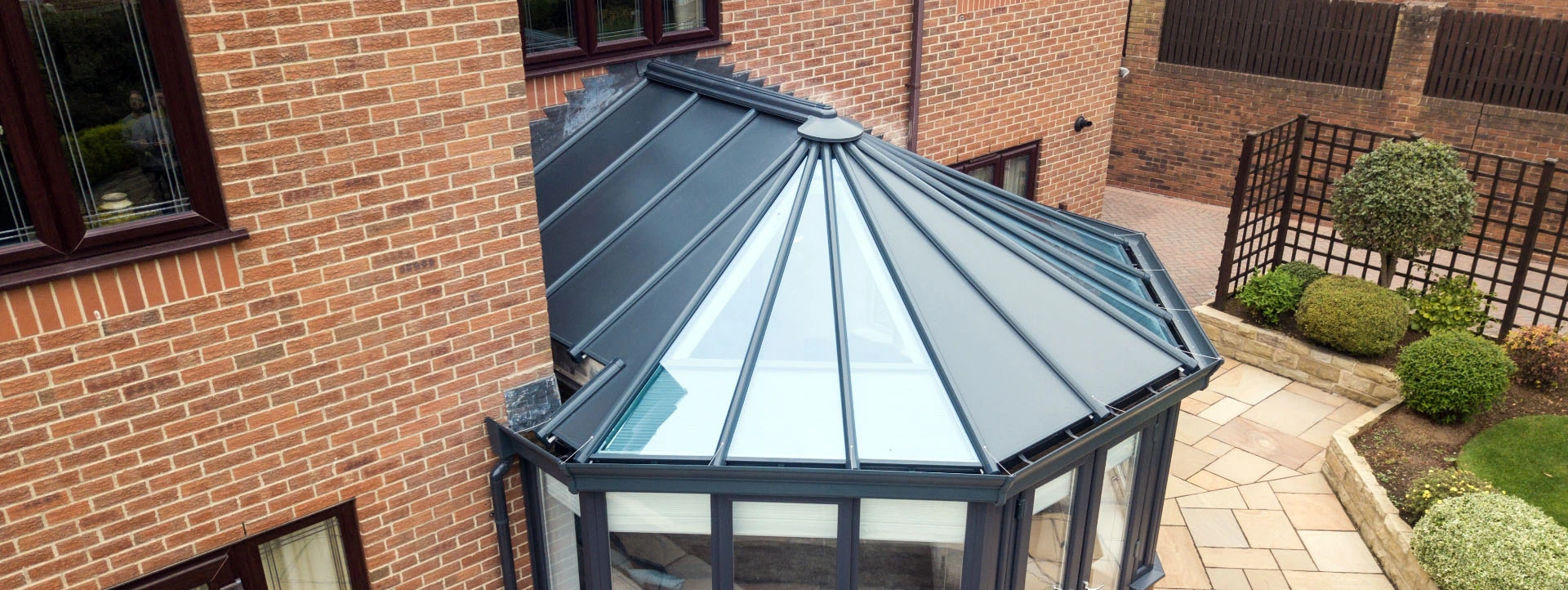
Solar control glass uses advanced coatings to reflect a large percentage of the sun’s infrared heat before it enters your home. It keeps bright rooms cool and comfortable in summer without blocking out natural light or requiring expensive air conditioning.
Lifestyle Choices
Low-Iron Glass (Crystal Clear)
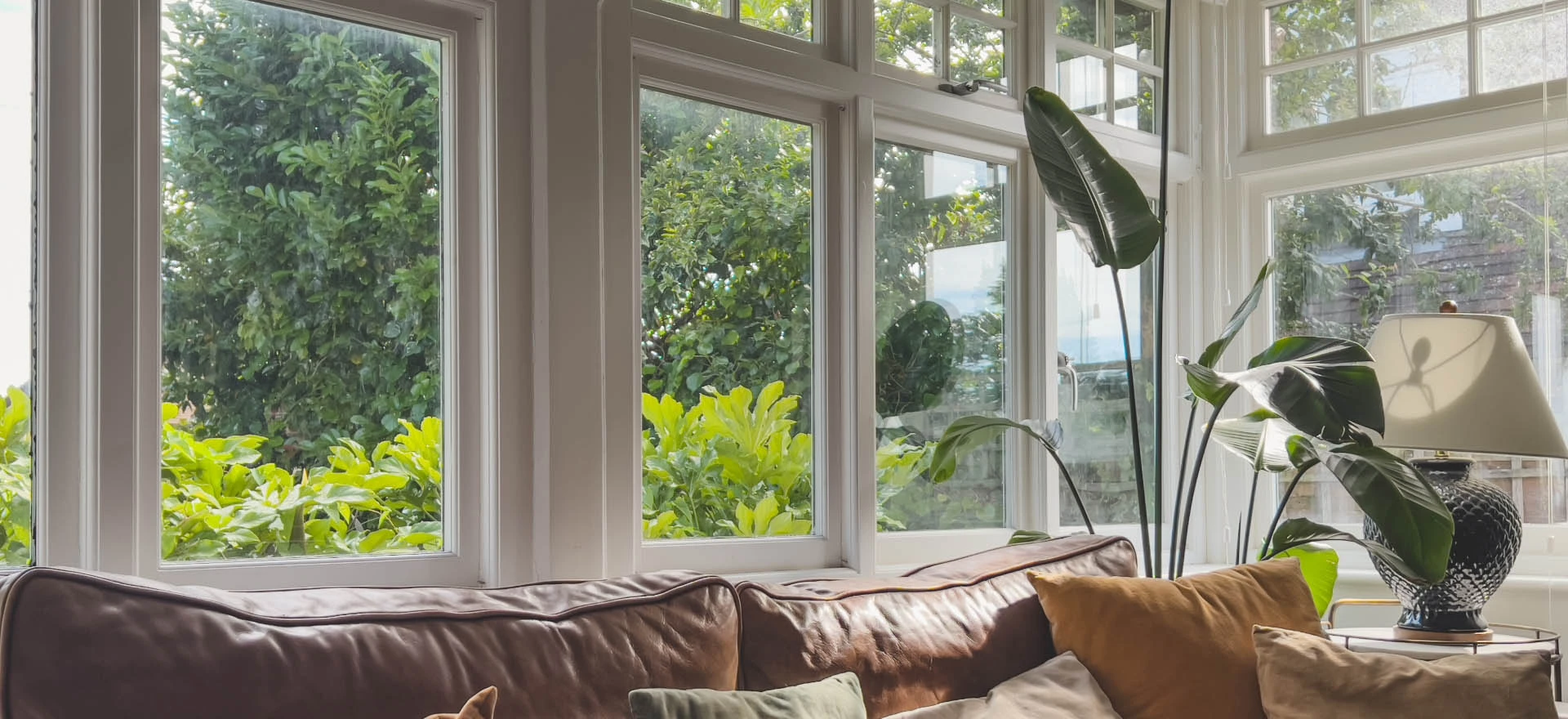
Standard glass has a slight green tint caused by iron content. Low-iron glass removes this, resulting in exceptional clarity. It is practically invisible, making it perfect for framing beautiful views.
Obscure & Textured Glass
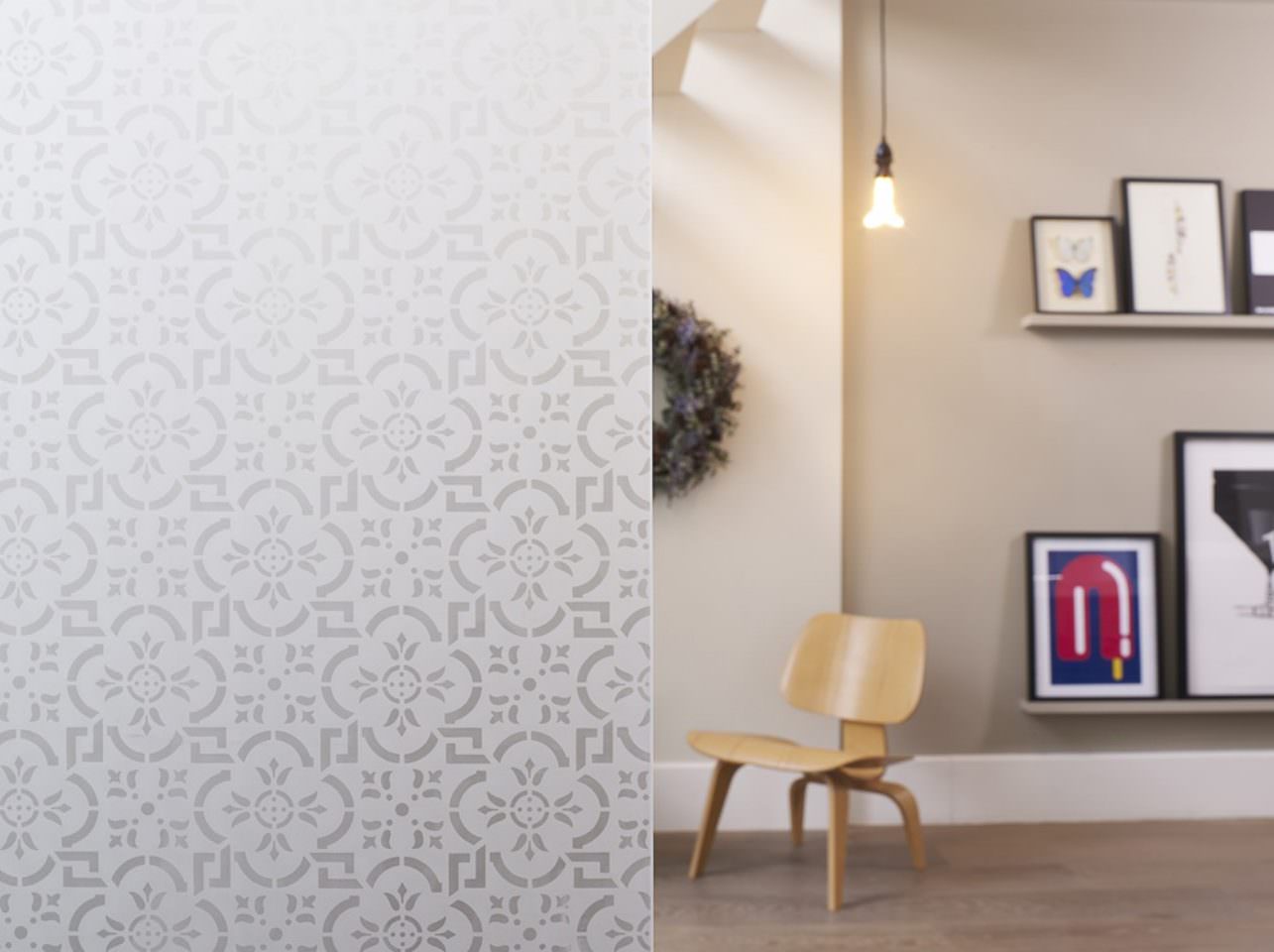
For bathrooms or front doors, obscure glass uses textured patterns or satin finishes to distort the view. This provides privacy ranging from Level 1 (low) to Level 5 (high) without blocking natural daylight.
Self-Cleaning Glass
Ideal for hard-to-reach conservatory roofs. A dual-action coating uses UV daylight to break down dirt, and rainwater to wash it away in a smooth sheet, leaving no streaks.
Safety
Toughened Safety Glass
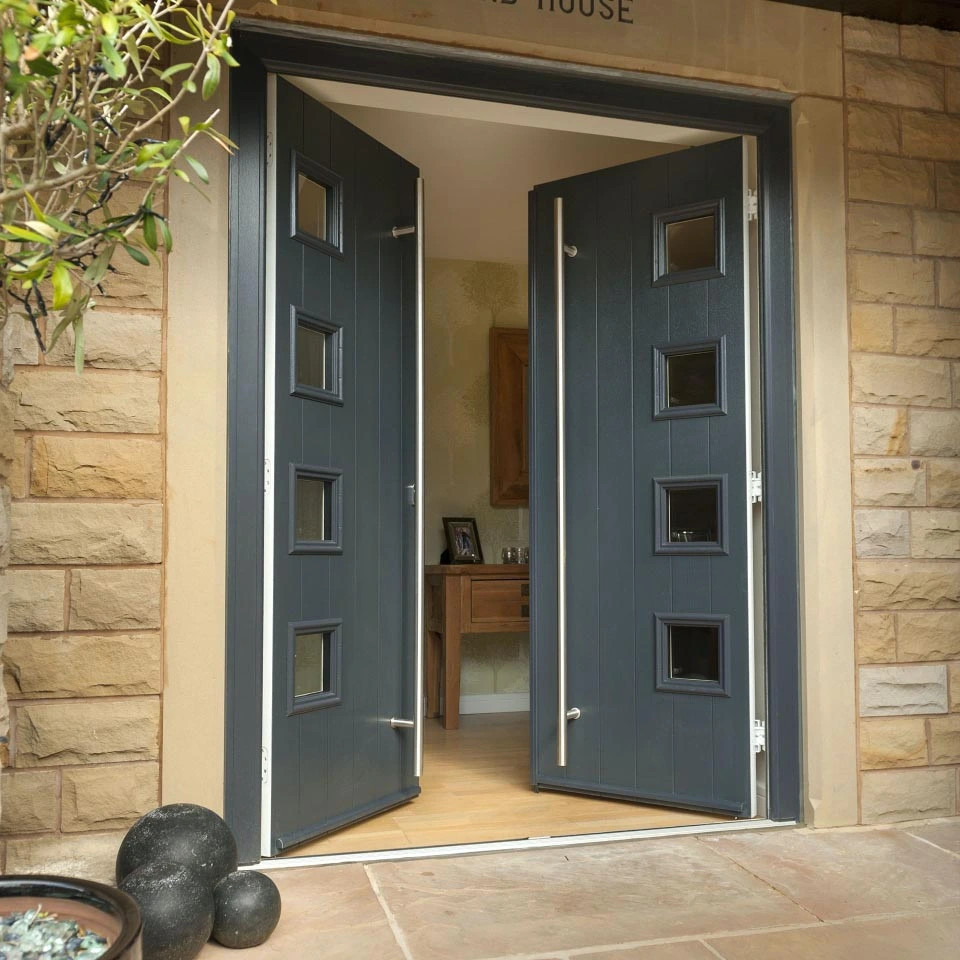
Also known as tempered glass, this is up to five times stronger than regular glass. If it breaks, it shatters safely into thousands of tiny, blunt cubes rather than dangerous shards. It is a legal requirement for doors and low-level windows.
Laminated Security Glass
When security is paramount, laminated glass is the gold standard. Two panes are sandwiched around a tough plastic interlayer (PVB). If the glass breaks, the shards stick to the plastic, maintaining a barrier against intruders. It also offers excellent noise reduction.
Click any guide below for a deep dive into the technology.
Frequently Asked Questions
What is the difference between Toughened and Laminated glass?
The main difference is how they break. Toughened glass (tempered) shatters into thousands of tiny, safe granules; it is designed to prevent injury. Laminated glass holds together when cracked (like a car windscreen) thanks to a plastic interlayer; it is designed for security and noise reduction.
Does Low-E glass make the room darker?
Minimally. Modern coatings like Planitherm Total+ are designed to be virtually neutral. While there is a microscopic coating to reflect heat, it is invisible to the naked eye. You generally won’t notice a difference in natural light compared to older clear glass.
Can glass really stop my conservatory overheating?
Yes. Specialised Solar Control glass (like our Comfort Plus range) uses a coating to reflect up to 50% of the sun’s near-infrared heat before it enters the room. While it can’t replace air conditioning in extreme heatwaves, it significantly reduces the “greenhouse effect” compared to standard glass.
Why is there condensation on the OUTSIDE of my new windows?
This is actually a positive sign! It proves your windows are working. Old windows leaked heat, warming the outer pane and burning off dew. New high-performance glazing keeps the heat inside, meaning the outer pane stays cold. On crisp mornings, external condensation may form, just like dew on grass.
Do I still need to clean "Self-Cleaning" glass?
Occasionally. The coating relies on UV light to break down dirt and rain to wash it away. In long dry spells or for stubborn marks (like bird droppings), you might need to give it a quick hose down, but it requires significantly less maintenance than standard glass.
What is a "Warm Edge Spacer Bar"?
The spacer bar is the frame that separates the two panes of glass. Older windows used aluminium spacers, which conducted cold energy. We use “Warm Edge” spacers made from a composite plastic material. This insulates the edge of the sealed unit, reducing heat loss and the risk of internal condensation.
Planitherm high performance glazing brochure

Our Products

Awards and Accreditations