Timber - PVC - Aluminium - Windows, Doors & Conservatories in Hampshire
Conservatory vs Extension: Costs, Value & Planning Rules (2026)
Conservatory vs Extension: Costs, Value & Planning Rules (2026)
Stuck between a cost-effective conservatory and a permanent, high-value brick extension? We compare costs, planning rules, and property value to help you decide.
🧾 Our Blunt Verdict
If you are struggling to decide between a conservatory or an extension, cut through the sales jargon and ask yourself how you plan to use the room:
- Conservatory = A Lifestyle Add-On. If you want a bright, sunny space to chill in the summer, a conservatory is perfect and budget-friendly.
- Extension = A Proper House Upgrade. If you want a room you will comfortably use every single day of the year (like a kitchen diner or a home office), skip straight to an extension or a solid-roof hybrid.
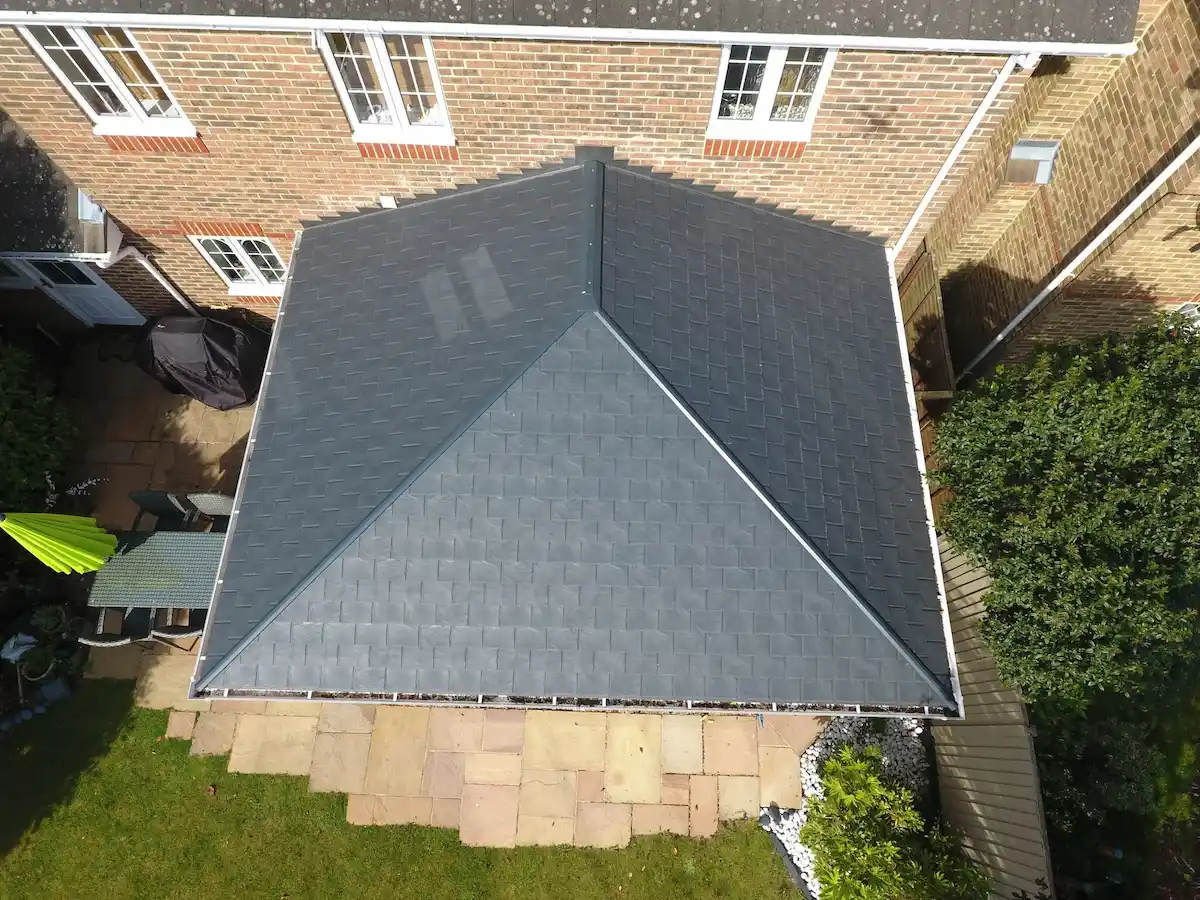
Is your home bursting at the seams? A growing family, the urgent need for a dedicated home office, or simply a desire for a larger, open-plan kitchen often forces the ultimate decision: Move or Improve?
With moving costs and stamp duty remaining exceptionally high, improving your current home is frequently the smarter financial choice. But for decades, the options were stark. You either built a glass Conservatory or a brick Extension.
In 2026, there is a distinct third way. The “Hybrid” conservatory extension—utilising advanced systems like hup!—is changing the game for UK homeowners who want the absolute best of both worlds.
Table of Contents
- 1. Conservatory vs Extension Cost UK (2026 Prices)
- 2. Are Glass Extensions Cheaper Than Brick?
- 3. The Modern Conservatory: A Lifestyle Add-On
- 4. The Brick Extension: A Proper House Upgrade
- 5. The Hybrid: The “Conservatory Extension”
- 6. The “Open Plan” Law (Part L Explained)
- 7. Frequently Asked Questions
1. Conservatory vs Extension Cost UK (2026 Prices)
Before you draw up plans, you need to understand the financial reality. If you are actively comparing conservatory vs extension cost uk data, here is exactly how the three primary options stack up in the current market.
Cost & Build Time Compared
Cost
Lowest (£15,000 – £25,000)
Build Time
Fast (3-5 Weeks)
Best For
Garden rooms, sunny lounges, strict budget constraints.
Cost
Medium (£30,000 – £60,000)
Build Time
Rapid (4-5 Weeks)
Best For
Open-plan dining, home offices, replacing old conservatories.
Cost
Highest (£50,000 – £80,000+)
Build Time
Methodical (3-6 Months)
Best For
Maximum house value, complex two-story layouts, heritage brickwork.
2. Are Glass Extensions Cheaper Than Brick?
Yes. If you look at the raw cost of a conservatory extension versus a traditional brick-and-block build, glass structures are significantly cheaper.
This massive price difference comes down to the foundations and the labour. A traditional brick extension is incredibly heavy. Building Regulations demand substantial, deep concrete footings (often over 1 metre deep). This requires expensive groundworks, skips, and weeks of “wet trades” (bricklayers and plasterers) whose progress is entirely dependent on the British weather.
Conversely, a conservatory or a modern hybrid extension is much lighter. They require shallower foundations and are built using precision-manufactured frames or structural insulated panels (SIPs) that simply clip together on-site. Because you pay for far less manual labour and groundwork, the conservatory extension prices are fundamentally lower.
3. The Modern Conservatory: A Lifestyle Add-On
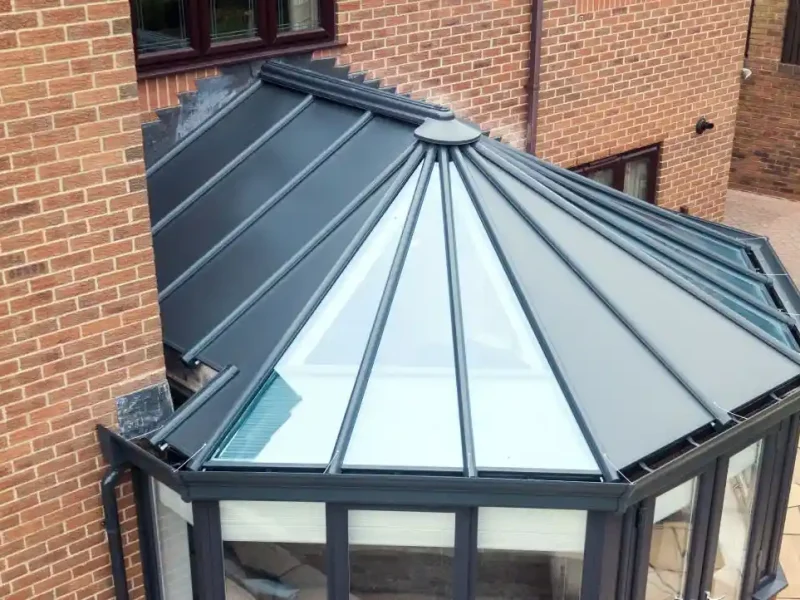
Forget the boiling hot plastic roofs of the 1990s. The modern conservatory has evolved significantly through advanced glazing, but it still retains its core identity: it is a room built primarily of glass.
The Pros
- Light: Nothing beats a glass roof for flooding a home with natural light.
- Connection: It offers the purest visual connection to the garden.
- Permitted Development: In most cases (under 30m²), a conservatory bypasses planning permission entirely, making it the fastest legal route to more space.
The Cons
- Thermal Fluctuations: Glass is simply a poorer insulator compared to a solid wall. Without a solid roof, the room will always naturally fluctuate in temperature more than the rest of the house.
- Separation: You cannot legally remove the exterior doors between the house and the conservatory without upgrading the insulation. It must remain a “separate” room.
4. The Brick Extension: A Proper House Upgrade
The traditional brick-and-block extension is the premium “Gold Standard” for adding permanent, high-value space.
Why choose it? It feels exactly like the rest of your house. It is fully insulated, compliant with Building Regulations Part L (Energy Efficiency), and integrated directly into the home’s central heating system. When asking which adds more value conservatory or extension, the brick extension comfortably wins, usually adding more to the resale price of your home than it costs to build.
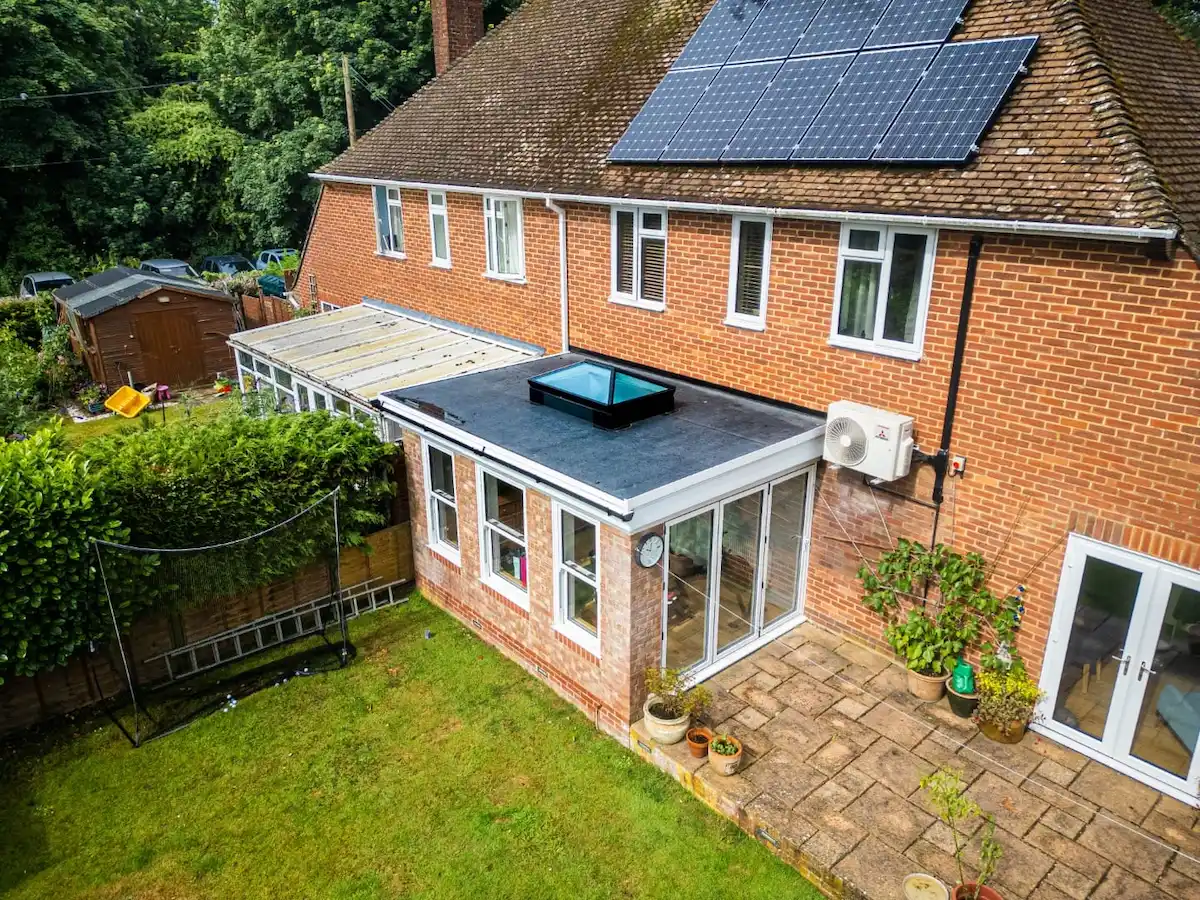
The Considerations: Traditional builds are a major project. However, at KJM Group, our dedicated in-house building team manages this entire process—from architects to structural engineers and Building Control sign-off—ensuring the project runs smoothly without you having to juggle multiple contractors.
5. The Hybrid: The “Conservatory Extension”
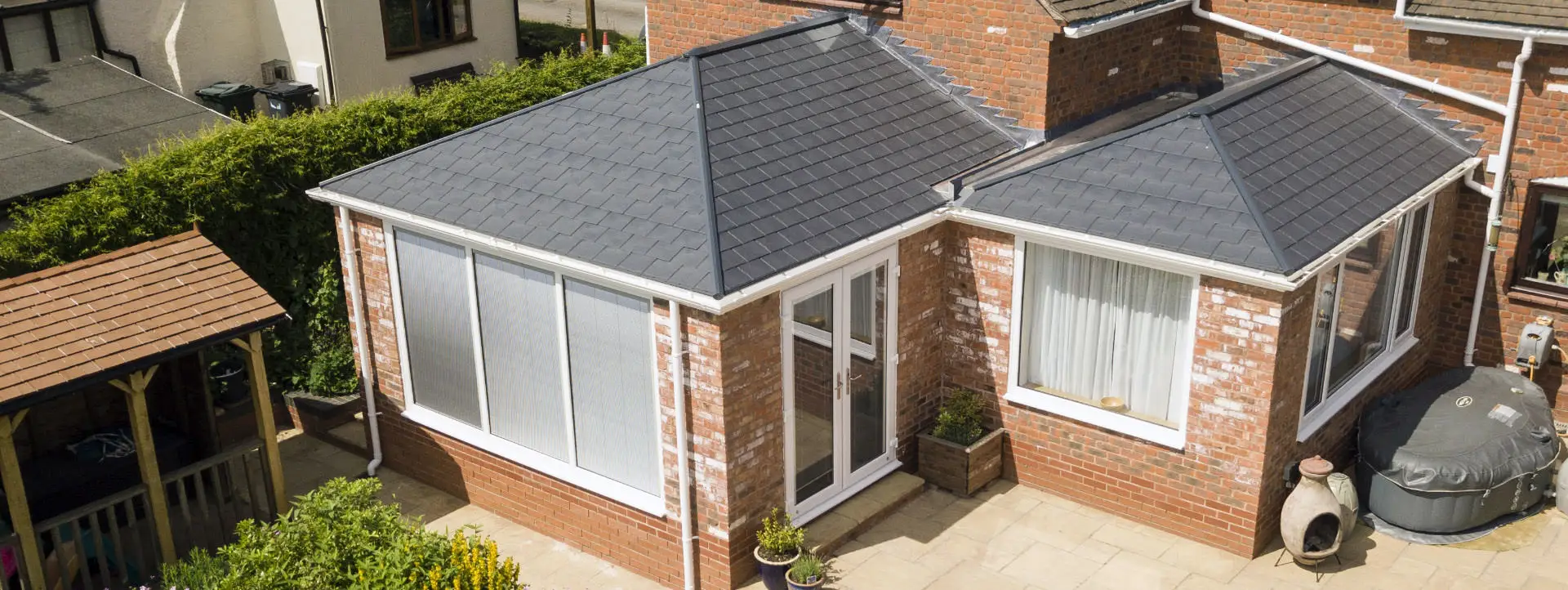
This is where much of the UK construction industry is rapidly moving. Modern systems like hup! use advanced off-site technology to build extension-quality walls and roofs in a fraction of the time.
Often referred to as a conservatory extension, this hybrid system completely bridges the gap. It offers the speed of a conservatory, but the thermal performance and permanent feel of an extension.
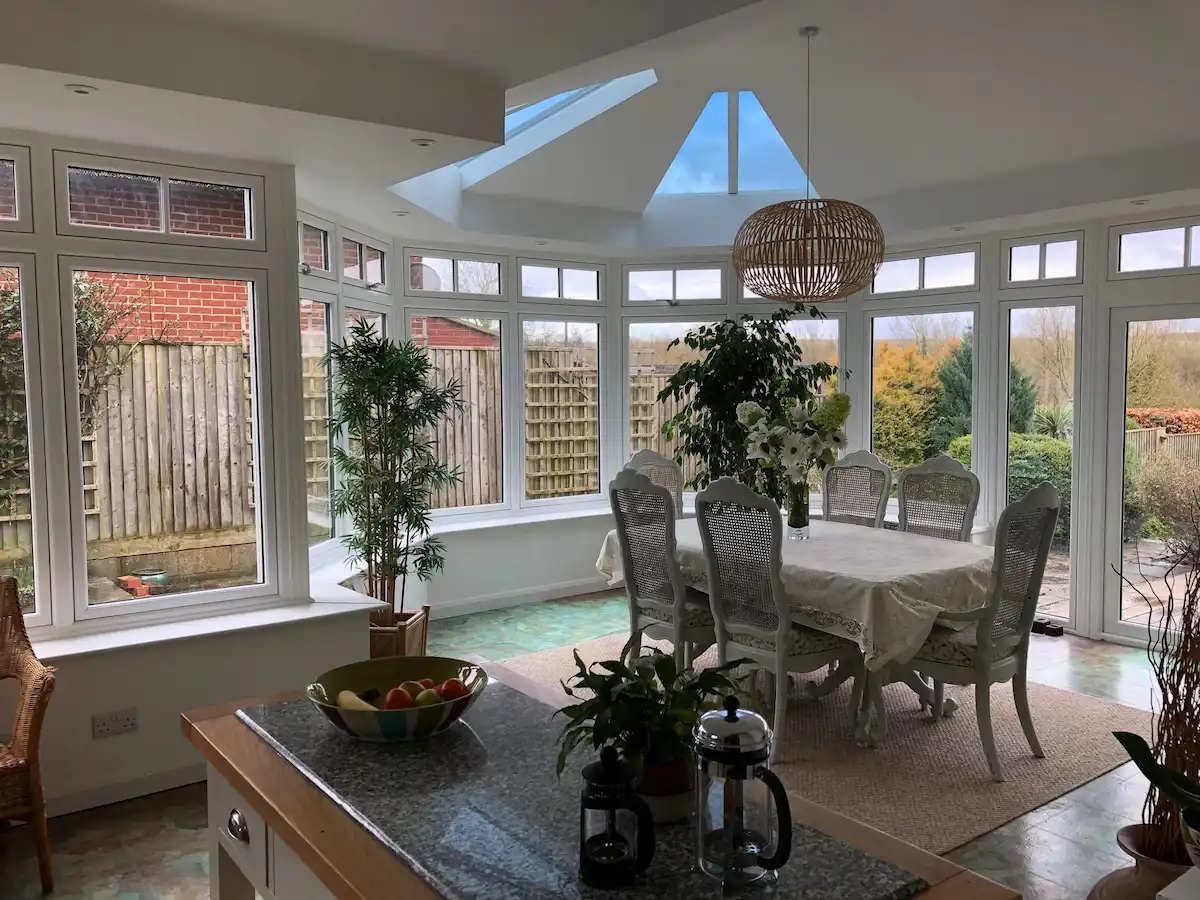
Why choose Hybrid?
- Incredible Warmth: With U-Values as low as 0.17 (significantly better than most brick walls), they are actually cheaper to heat than the rest of your house.
- Rapid Speed: Because the walls are precision-made in a dry factory, there is no “wet trade” delay. A hup! extension can often be completely watertight in just a few days.
- Premium Finish: You can finish them with authentic brick slips (to perfectly match your house), modern smooth render, or timber cladding.
6. The “Open Plan” Law (Part L Explained)
This is the most important legal regulation to understand before you build. Most homeowners want an “Open Plan” layout—removing the back doors so the kitchen naturally flows into the new garden room.
The Law (Part L of Building Regulations): To legally remove the thermal barrier (the exterior doors) between the house and the extension, the new room MUST meet incredibly strict insulation standards.
Can I Go Open Plan?
Result
FAIL
Why?
Too much heat loss through the full glass roof.
Rule
Must keep external doors closed.
Result
PASS
Why?
Built to full masonry insulation standards.
Rule
Doors can be legally removed.
7. Frequently Asked Questions
Yes. This is called a “Refurbishment.” We physically remove the old, thermally inefficient glass or plastic roof and install a highly insulated, lightweight solid tiled roof (like the Ultraroof). It instantly transforms the freezing room into a usable year-round space for a fraction of the cost of a full extension.
Often it is actually warmer. The modern hup! wall system is incredibly thermally efficient (boasting a U-value of 0.17). Because it is built as a single engineered panel, it doesn’t have “cold bridges” (like the mortar joints in traditional brickwork), meaning it retains heat exceptionally well.
A full brick extension or a high-quality Hybrid room typically adds 10-15% to the value of your home, often completely covering its own build cost. A standard glass conservatory separated by exterior doors adds around 5-7%, provided it is in very good condition.
📚 The KJM Extension & Roof Hub
Explore our complete collection of master guides to plan your perfect home improvement project:
Need expert advice on your space?
Don’t guess whether you need planning permission or deep foundations. Contact KJM Group today for a free home survey and a transparent, zero-pressure quote across Hampshire, Berkshire, and Wiltshire.
Request a Transparent Quote
Mark Pearce is a highly experienced specialist in the double glazing industry, having built his knowledge from the ground up through hands-on experience in installation, manufacturing, sales, and business management. Beyond his role at KJM, Mark is a keen blogger, writer, and traveller, often sharing insights on the latest innovations in the home improvement industry.
- Comp Door Launches New 2026 Brochure Featuring ‘Total Black Out’ Frames - 11 September 2026
- Solidor launch five new doors - 21 August 2026
- KJM Group Wins Which? Trusted Trader of the Month (Aug 2026) - 4 August 2026