Timber - PVC - Aluminium - Windows, Doors & Conservatories in Hampshire
Buying a conservatory? – Roof glazing choices
Buying a conservatory? – Roof glazing choices
Ditch the freezing polycarbonate and the boiling summer sauna. Discover how modern solar control glass and hybrid roofs completely transform a conservatory’s climate.
🥶 Polycarbonate is Obsolete
Old 16mm twin-wall polycarbonate is a terrible insulator. It guarantees your room will act as a freezer in winter and a sauna in summer.
☀️ Solar Control Glass
Modern glass utilises Argon gas and Low-E coatings to actively block ultraviolet and infrared heat, drastically reducing summer glare.
🧽 Self-Cleaning Myth
Self-cleaning glass breaks down dirt via UV light so rain can wash it away. It is fantastic, but be honest: you will still need to clean it occasionally!
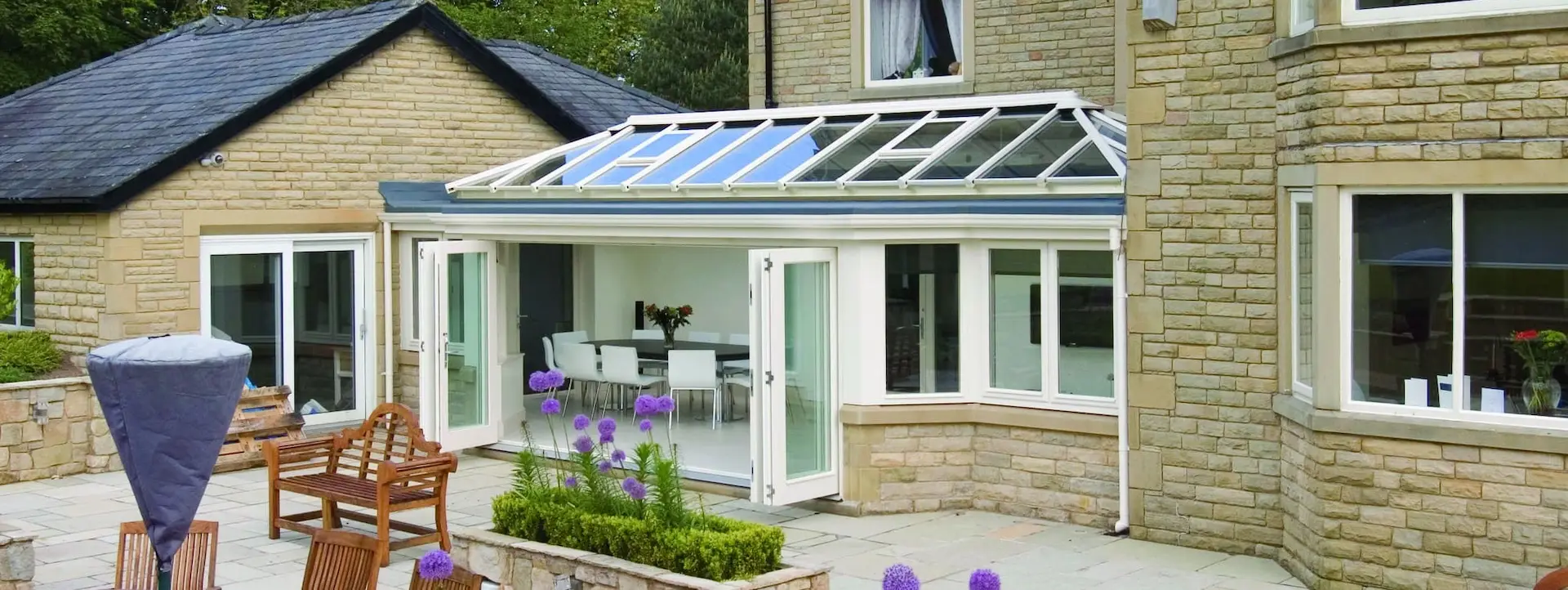
It would be entirely true to say that in the early models of conservatories, temperatures could fluctuate wildly. The absolute biggest culprit when it came to letting heat in and out was the roof glazing.
Our first conservatories in the 1980s and 90s were built with 16mm twin-wall polycarbonate, which is a very poor insulator. The good news was that it allowed in lots of lovely light; the bad news was that it drew in intense heat during the summer (turning the conservatory into a sauna) and let the heat flood out in the winter (turning it into a freezer).
All too aware of this, the UK glass industry has spent the past three decades trying to solve the heat-light dilemma. Let’s look at the incredible innovations that have changed the way we build glazed extensions today.
Page Contents
1. What is Low-E & Solar Control Glass?
You can now buy high-performance glass panes filled with the dense but invisible gas, Argon. Because Argon is heavier than standard air, it makes it much more difficult for either warm or cold air to physically pass through the sealed unit.
As well as this, Low-E coatings play a critical role in insulation. But what exactly is Low-E glass?
The “E” stands for emissivity; this is the ability of the glass to radiate heat. To drastically reduce this, microscopic metallic coatings have been developed to lower the amount of ultraviolet (UV) and infrared light that can pass through the glass, without significantly altering the amount of visible light you see.
- Reduced Fading: By blocking UV rays, your furniture and carpets are protected from sun bleaching.
- Glare Control: Solar control options can also control the harsh visual glare of the sun. There are many beautiful architectural tints available, including Aqua, Bronze, Green, and Blue.
- Condensation Control: Modern glass units are built with ‘Warm Edge Spacer Bars’. These non-conductive strips separate the glass panes, significantly reducing the freezing cold edges that cause winter condensation inside your conservatory.
2. The Honest Truth About “Self-Cleaning” Glass
The final popular option on roof glazing is “self-cleaning glass”. It is a genuinely brilliant product that utilises a dual-action microscopic coating.
First, it uses daylight (UV radiation) to break down organic dirt on the surface of the roof. Secondly, when it rains, the coating causes the water to “sheet” rather than form droplets, washing the broken-down dirt away without leaving streaks.
⚠️ A Note on Expectations
Self-cleaning glass is a fantastic product, but personally, I think the tag “self-cleaning” can mislead people slightly. It drastically reduces maintenance, particularly in hard-to-reach roof areas, but it is not magic. You will still need to gently hose down or clean your conservatory during prolonged dry spells!
3. Acoustic Performance: Silencing the Rain
If you own an old polycarbonate roof, you know the sound. During a heavy British downpour, 16mm or 25mm polycarbonate sheets act exactly like a snare drum, making the room so deafeningly loud you cannot hold a conversation or watch television.
Upgrading to modern double-glazed glass dramatically improves the acoustic performance of your extension. The dense mass of the glass, combined with the sealed Argon gas cavity, severely disrupts sound waves. If you live near a busy road or simply want to silence the rain, high-performance glass transforms a noisy add-on into a peaceful, quiet sanctuary.
4. Glass vs Hybrid vs Solid (Comparing U-Values)
The U-value is a specific mathematical measure of how well a material serves to minimise heat loss. The lower the number, the better the product performs as an insulator.
(For more technical information on glass energy efficiency ratings, visit the Glass and Glazing Federation (GGF) External Link).
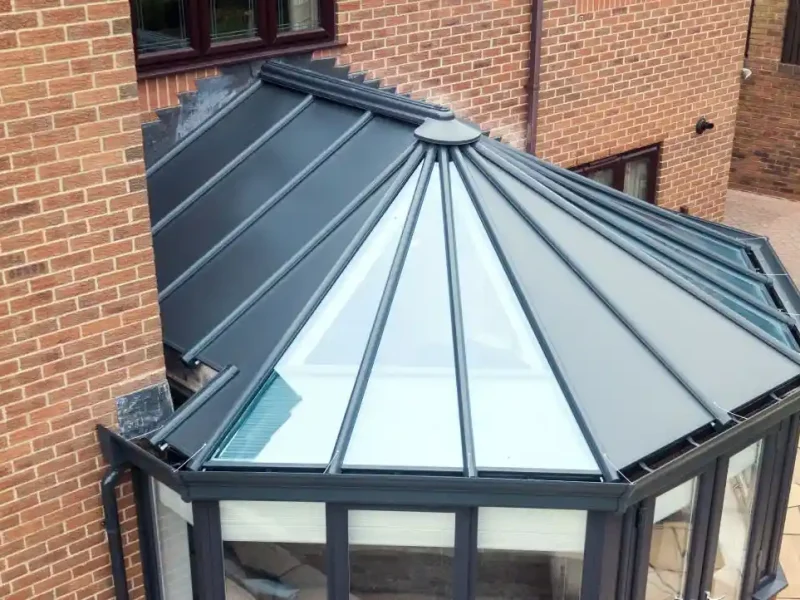
To summarise glazing today: it is vastly superior to when we started in business. The better-insulated glass reduces “the greenhouse effect” considerably, making the room far easier to heat in the winter and cooler in the summer. But how does it stack up against modern solid roofs?
| Roofing Material | Typical U-Value | Performance Verdict |
|---|---|---|
| Old Polycarbonate (16mm-25mm) | 2.4 to 1.5 W/m²K | Very poor. Extreme temperature fluctuations. Highly obsolete. |
| Modern Solar Control Double Glazing | Approx 1.0 W/m²K | Good. Keeps out intense heat, but still acts as a seasonal room during extreme winters. |
| Hybrid Solid Roof (Livinroof) | 0.15 W/m²K | Exceptional. Acts exactly like a modern brick extension while allowing custom glass panels for light. |
5. The Importance of Ventilation
It is worth explicitly stating at this stage: a glass conservatory that sits in the height of the summer sun all day without being ventilated will still get warm!
Even with the most expensive solar control glass on the market, you must design your conservatory with adequate airflow. This means incorporating opening roof vents (either manual or climate-controlled automatic vents) and specifying high-quality opening side windows to allow the hot air to escape.
6. Interactive Roof Glazing Assessor
Unsure which roof upgrade path is right for your lifestyle? Use our quick assessment tool below.
7. Frequently Asked Questions
Yes, in most cases you can perform a “like-for-like” upgrade without needing Building Regulations. However, glass is significantly heavier than plastic polycarbonate, so our surveyors must check that your existing frames and roof joists are structurally strong enough to bear the weight safely.
Argon is an inert, non-toxic gas that is pumped into the cavity between the two panes of double glazing. Because Argon is denser and slower-moving than standard air, it acts as a highly effective thermal blanket, preventing the cold winter air outside from chilling the inner pane of glass.
It will dramatically improve it. While no glass is 100% soundproof, replacing an old, drum-like polycarbonate roof with modern double glazing heavily disrupts acoustic waves, ensuring you can comfortably watch TV or hold a conversation during a heavy downpour.
A high-quality tinted roof (like Aqua or Blue) will gently filter the light, significantly reducing the harsh, blinding glare of the midday sun. It will slightly reduce the overall light transmission compared to clear glass, but the result is a much softer, more comfortable brightness that protects your furniture from fading.
📚 Explore Our Performance Glazing Hub
Now you firmly understand the glazing options, explore the specific extension paths relevant to your home:
Ready to Reclaim Your Conservatory?
If you genuinely want to utilise your conservatory comfortably during the summer and winter, we can help. KJM Group securely manages professional roof replacement services entirely across Andover and Hampshire.
Contact KJM for a Free Survey
Mark Pearce is a highly experienced specialist in the double glazing industry, having built his knowledge from the ground up through hands-on experience in installation, manufacturing, sales, and business management. Beyond his role at KJM, Mark is a keen blogger, writer, and traveller, often sharing insights on the latest innovations in the home improvement industry.
- Comp Door Launches New 2026 Brochure Featuring ‘Total Black Out’ Frames - 11 September 2026
- Solidor launch five new doors - 21 August 2026
- KJM Group Wins Which? Trusted Trader of the Month (Aug 2026) - 4 August 2026