Timber - PVC - Aluminium - Windows, Doors & Conservatories in Hampshire
Is your home too hot when the sun shines?
Is your home too hot when the sun shines?
Discover the science behind modern glazing. Learn how to keep your home warm in the winter, and stop your conservatory boiling in the summer.
- 🔥 Low-E Glass (Winter): Low-Emissivity glass features an invisible metallic coating that acts like a mirror, bouncing your central heating back into the room to lower your energy bills.
- ☀️ Solar Control Glass (Summer): This glass reflects the sun’s harsh infrared heat away from your home. It is an absolute necessity for south-facing conservatories to stop the “greenhouse effect.”
- 🤝 The Ultimate Combo: Modern high-tech glass (like Pilkington Activ SunShade) combines both technologies into a single pane, keeping you warm in January and cool in July.
- 📈 EPC Boost: Upgrading from standard clear glass to Low-E glazing is required by UK Building Regulations and significantly boosts your home’s EPC rating.
Gone are the days when glass was simply a fragile, clear material used to fill a hole in the wall. Today, the glass installed in your replacement windows, bi-fold doors, and conservatory roof is a highly engineered, high-tech component.
However, the technical jargon used by the glazing industry can be incredibly confusing. Homeowners frequently ask us to explain the difference between “Low-E” glass and “Solar Control” glass. While they sound similar, they perform two completely different—and equally vital—jobs for your home’s comfort.
Page Contents
1. What is Low-E Glass? (The Winter Warmer)
Low-E stands for Low Emissivity. This technology is specifically designed to tackle the freezing British winter by reducing heat loss.
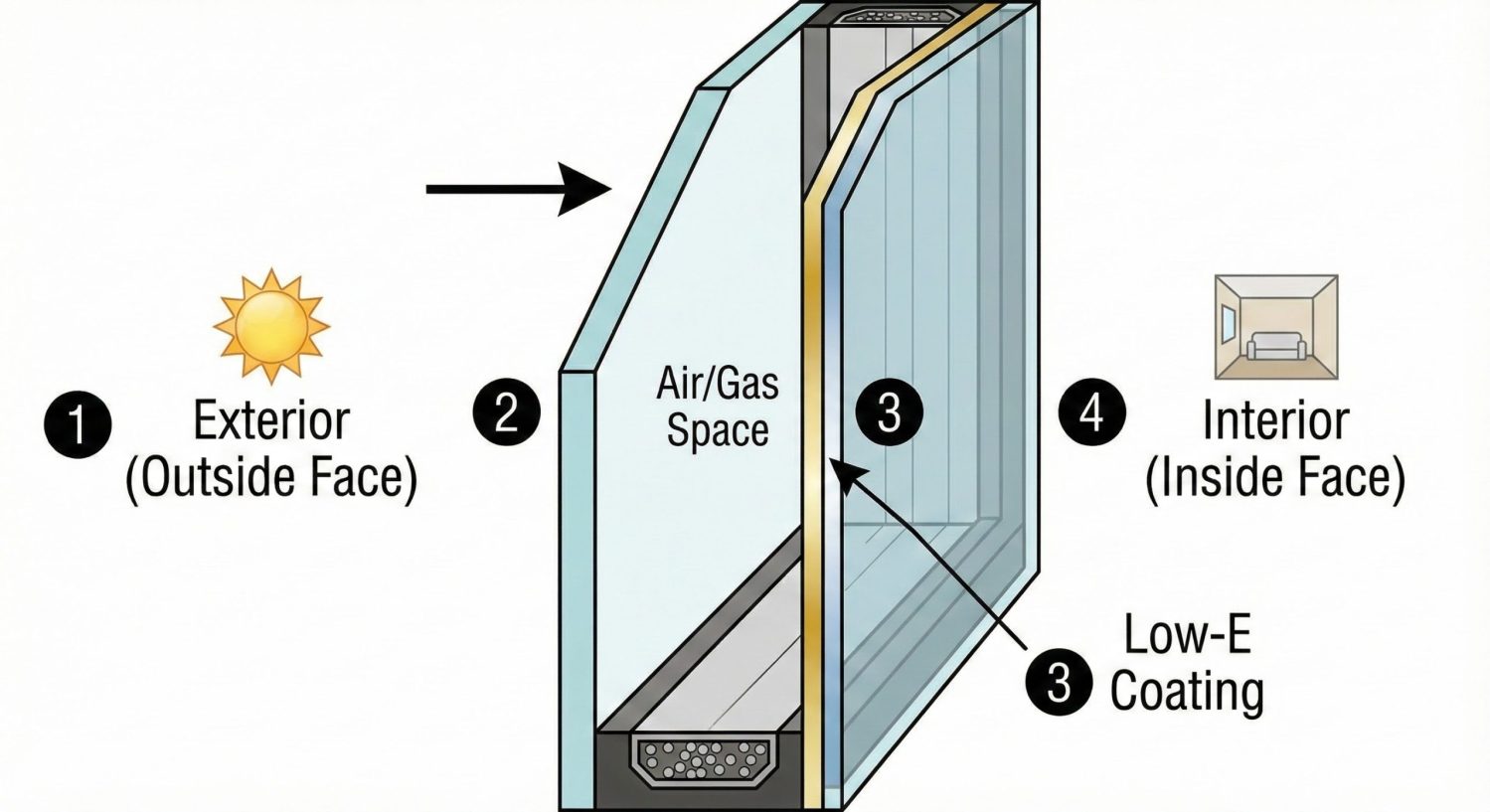
Standard, old-fashioned clear glass is a terrible insulator; the expensive heat generated by your radiators simply radiates straight through the glass and out into the garden. Low-E glass completely changes this. During manufacturing, a microscopically thin, completely transparent coating of metal oxide is applied to the internal pane of the double-glazed unit.
Think of the Low-E coating as a thermal mirror. It allows short-wave solar energy (natural daylight and warmth from the sun) to pass through into your home. However, when your radiators generate long-wave heat energy, the coating acts as a mirror, reflecting that heat straight back into the room rather than letting it escape.
Because of its incredible thermal efficiency (drastically lowering your U-Values), Low-E glass is no longer a luxury upgrade—it is a strict legal requirement under modern UK Building Regulations (Part L) for all replacement windows.
2. What is Solar Control Glass? (The Summer Cooler)
While Low-E glass is designed to keep heat in, Solar Control Glass is explicitly designed to keep heat out.
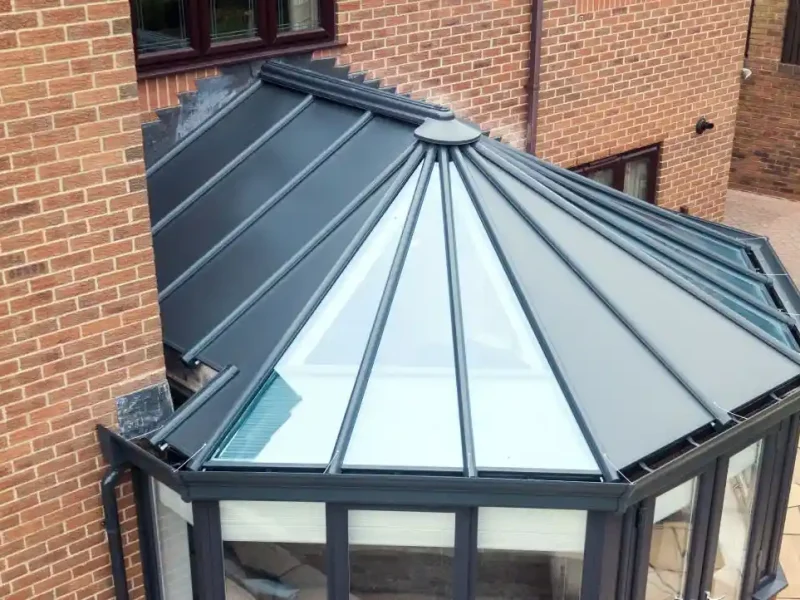
If you have a conservatory, an orangery with a roof lantern, or a large wall of south-facing bi-fold doors, you are likely intimately familiar with the “greenhouse effect.” Standard glass magnifies the sun’s infrared rays, turning beautiful, light-filled rooms into unbearable saunas during July and August.
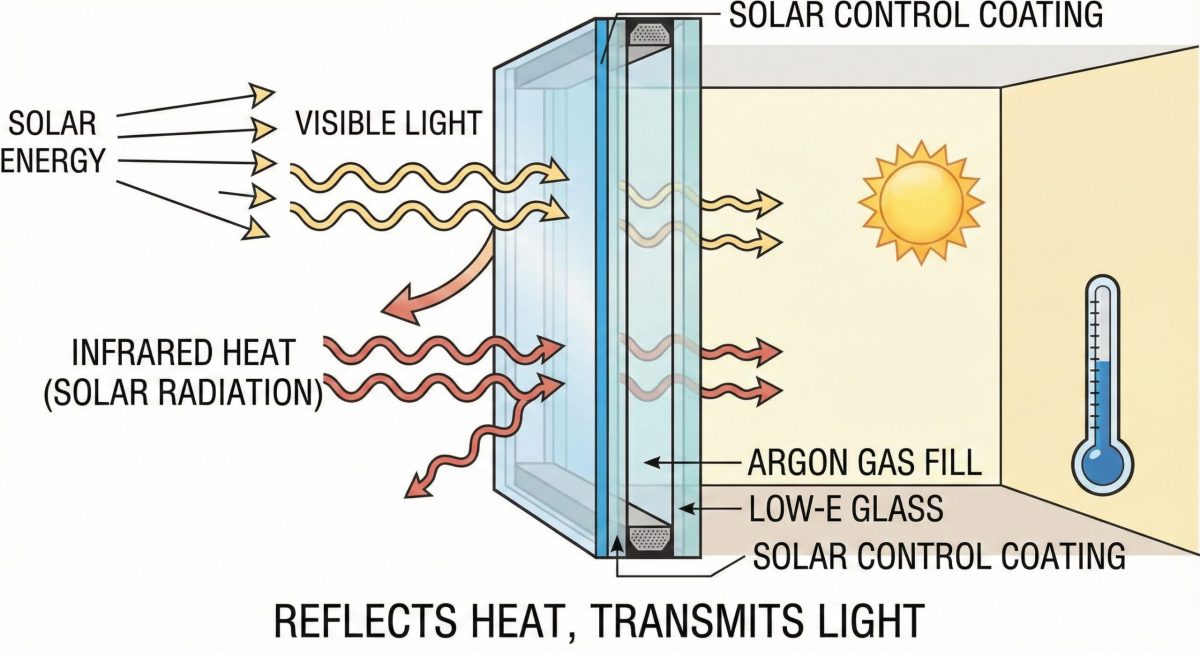
Solar control glass tackles this by using advanced, highly specialised exterior coatings (often tinted slightly blue, neutral, or bronze) that actively reflect a massive percentage of the sun’s solar heat energy away from the building before it ever penetrates the glass. This keeps the internal room cool, comfortable, and usable all year round, without requiring expensive, power-hungry air conditioning.
3. Can You Have Both? (The Ultimate Glass)
Yes! For massive expanses of glass—specifically conservatory roofs—you absolutely need both technologies working simultaneously. You need the room to stay cool during a summer heatwave (Solar Control) and retain the radiator heat during a frosty winter night (Low-E).
At KJM Group, we highly recommend high-performance dual-action products like Pilkington Activ SunShade™ or Saint-Gobain Planitherm 4S. These elite glass units are manufactured with the Solar Control coating on the outside pane to reject the summer sun, and the Low-E coating on the inside pane to trap your winter heating.
4. Hampshire Climate Advice
🏡 Advice for South-Facing Properties
Operating across Andover, Winchester, Basingstoke, Salisbury, and Southampton, our surveyors frequently visit homes that have become structurally unbalanced due to cheap glazing.
If your property features a south-facing or west-facing elevation with large patio doors, French doors, or an older polycarbonate conservatory roof, standard Low-E glass is not enough—it will actually trap the sun’s heat inside, making the room worse! In these specific geographical orientations, you must specify Solar Control glass to ensure the room remains a comfortable living space rather than a greenhouse.
5. Official Pilkington Specifications
We believe in total transparency. If you are researching a new conservatory roof or upgrading your existing glazing, download the official manufacturer technical brochures below to explore the exact performance statistics of Pilkington’s Solar Control range.
📥 Technical Glazing Downloads
6. Frequently Asked Questions
Minimally. Modern high-performance coatings are designed to be virtually neutral. While there is a microscopic metallic coating present to reflect the heat, it is completely invisible to the naked eye. You will not notice a difference in natural daylight levels compared to older, clear glass.
It depends on the level of heat rejection required. Extreme solar control glass (often used on commercial office blocks) is heavily tinted or mirrored. However, for residential use (like bi-fold doors), the coating is usually “Neutral,” meaning it looks like standard glass. For conservatory roofs, a subtle Blue or Aqua tint is highly popular as it enhances the look of the sky while rejecting up to 80% of the heat.
Yes. Under current UK Building Regulations (Part L), all replacement windows and doors must meet strict minimum thermal efficiency standards (U-Values). It is physically impossible to meet these legal requirements without using Low-E coated glass.
📚 The Master Glass Hub
You’ve learned about energy coatings. Now explore the other high-tech glass options available for your home:
Need advice on your specific property?
The right glass choice depends entirely on which direction your house faces. Contact KJM Group today for expert, no-pressure advice on specifying the perfect glass for your new windows, bi-folds, or conservatory across Hampshire, Berkshire, and Wiltshire.
Request Expert Glazing Advice
Mark Pearce is a highly experienced specialist in the double glazing industry, having built his knowledge from the ground up through hands-on experience in installation, manufacturing, sales, and business management. Beyond his role at KJM, Mark is a keen blogger, writer, and traveller, often sharing insights on the latest innovations in the home improvement industry.
- Comp Door Launches New 2026 Brochure Featuring ‘Total Black Out’ Frames - 11 September 2026
- Solidor launch five new doors - 21 August 2026
- KJM Group Wins Which? Trusted Trader of the Month (Aug 2026) - 4 August 2026