Timber - PVC - Aluminium - Windows, Doors & Conservatories in Hampshire
How to Stop Your Home Overheating in Summer: The Glazing Guide (2026)
How to Stop Your Home Overheating in Summer: The Glazing Guide (2026)
With Hampshire summers getting hotter, modern homes are acting like greenhouses. Discover the science behind Solar Control Glass and how to effectively stop your property from overheating.
- 🌡️ The Overheating Crisis: As UK summers intensify, homes with large south-facing windows (like bifolds and conservatories) are absorbing dangerous amounts of solar radiation.
- 📉 G-Values vs. U-Values: When buying new windows, don’t just look at the U-Value (which stops heat escaping). You must look at the G-Value (which measures how much of the sun’s heat is allowed in).
- 🛑 The “Open Window” Myth: If the air outside is hotter than the air inside, opening your windows will actually make your house warmer. Keep them closed and shaded during peak daytime heat.
- 🔬 The Solution: Specifying “Solar Control Glass” drastically reduces the sun’s heat transmittance by up to 75%, allowing you to enjoy massive windows without turning your home into an oven.
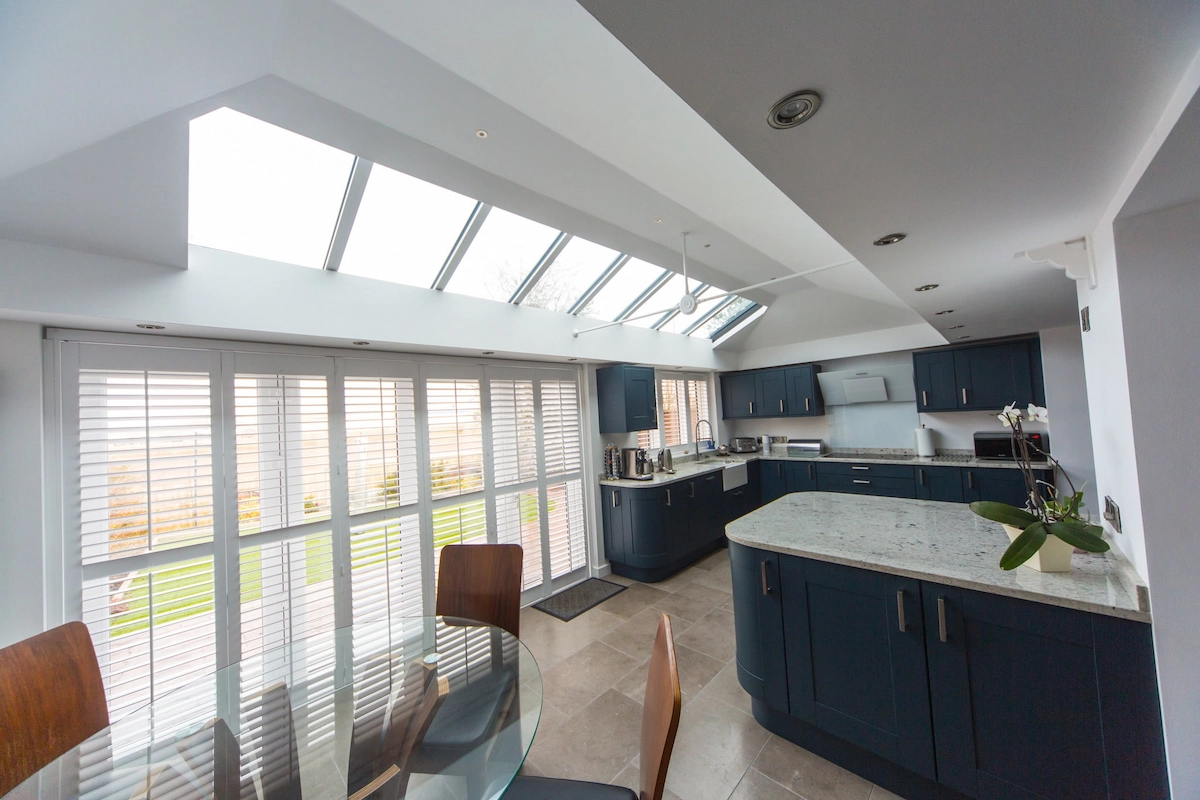
The UK’s climate is definitively changing. According to the Environmental Audit Committee, the UK is “woefully unprepared” for increasingly severe heatwaves, warning that one in five British homes now dangerously overheats during the summer months.
This crisis goes far beyond the old tabloid tips of placing bowls of ice in front of desk fans. As we increasingly design our homes with massive expanses of glass—such as bi-fold doors, sliding patios, and glazed extensions—we are fundamentally changing how our properties absorb solar energy. Here is the technical reality of why your home gets so hot, and exactly how the right glass specification can solve the problem.
Page Contents
1. Interactive: Glazing Assessor
1. Which direction does the main glass in your room face?
2. How much glass does the room actually have?
🏆 Recommendation
2. Why Is My Home Getting So Hot at Night?
Warmer summers expose a critical weakness in modern UK home design. If you observe the traditional architecture of properties in naturally hot Mediterranean countries, their windows are typically small and deeply recessed, particularly on south-facing elevations.
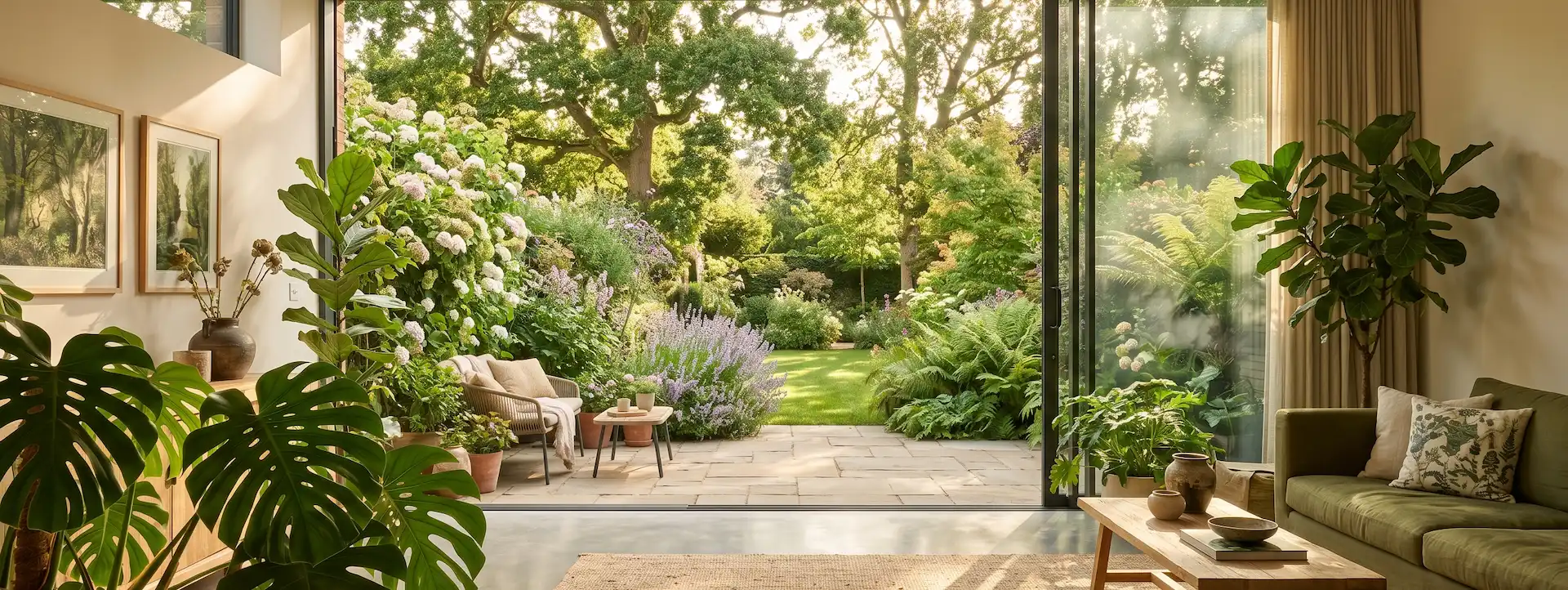
Rewind to the UK, and we do the exact polar opposite. South-facing gardens are highly prized by house buyers. Rather than minimising the glass on the south side to block the sun, we install massive bi-fold doors and wide conservatories to maximise the view. Consequently, on hot days, our homes act like massive greenhouses, absorbing huge amounts of solar heat.
This is compounded heavily in denser urban areas (like central Basingstoke or Southampton) where heat is absorbed into pavements, roads, and masonry during the day. It is then slowly released back into the atmosphere at night, keeping ambient temperatures high and making sleeping incredibly uncomfortable.
3. Immediate Actions (The “Open Window” Myth)
If you are currently sweltering, your first instinct is likely to throw every window in the house wide open. This is often a massive mistake.
🛑 The Laws of Thermodynamics
Logic dictates that if the outside air temperature is 30°C, and the internal temperature in your shaded home is 24°C, opening the window will simply suck the 30°C heat inside.
To stop the heat rising in your home, you must adopt the “Mediterranean Method”:
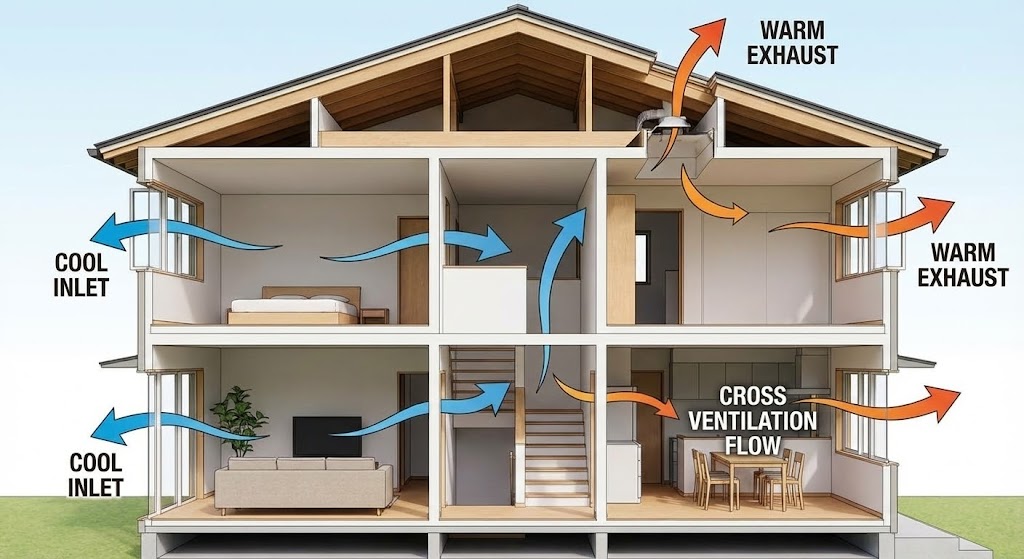
- Keep Windows Closed: During peak daytime heat, shut your windows tight to trap the cooler, shaded air inside.
- Close the Curtains/Blinds: Prevent direct sunlight from hitting your floors and furniture, as these objects absorb radiation and turn into internal radiators.
- Night-Purge Ventilation: Wait until the sun goes down and the outside temperature finally drops below your indoor temperature. Then open windows on opposite sides of the house to create a rapid through-draught of cooler night air.
4. The Science: U-Values vs. G-Values
Glass is singularly the most highly technical aspect of modern window design. When purchasing new windows, you cannot simply look at a generic “Window Energy Rating” (WER) and assume it will keep you cool. In fact, a window designed specifically to keep your house warm in the winter might be the very thing cooking you in the summer.
| The Measurement | What it Actually Means for You |
|---|---|
| The U-Value (Thermal Transmittance) |
This measures how effectively the glass stops heat from escaping from the inside to the outside. Lower is better. Ideal for winter insulation. |
| The G-Value (Solar Heat Gain Coefficient) |
This measures how much raw heat from the sun is allowed to enter your home from the outside. Lower is better for cooling. A G-value of 1.0 means 100% of the sun’s heat enters. |
Standard “A-Rated” energy efficient windows are specifically designed with a high G-Value to deliberately capture “free” solar heat to warm your home in the winter. If you install these massive A-Rated panes on a south-facing bi-fold door, you are actively inviting the summer heatwave inside. You need to specifically request low G-Value glass.
5. How Solar Control Glass Works
If you intend to use a large amount of glass on the South or West facing aspect of your property, you absolutely must consider specifying Solar Control Glass (also referred to as anti-sun or reflective glass).
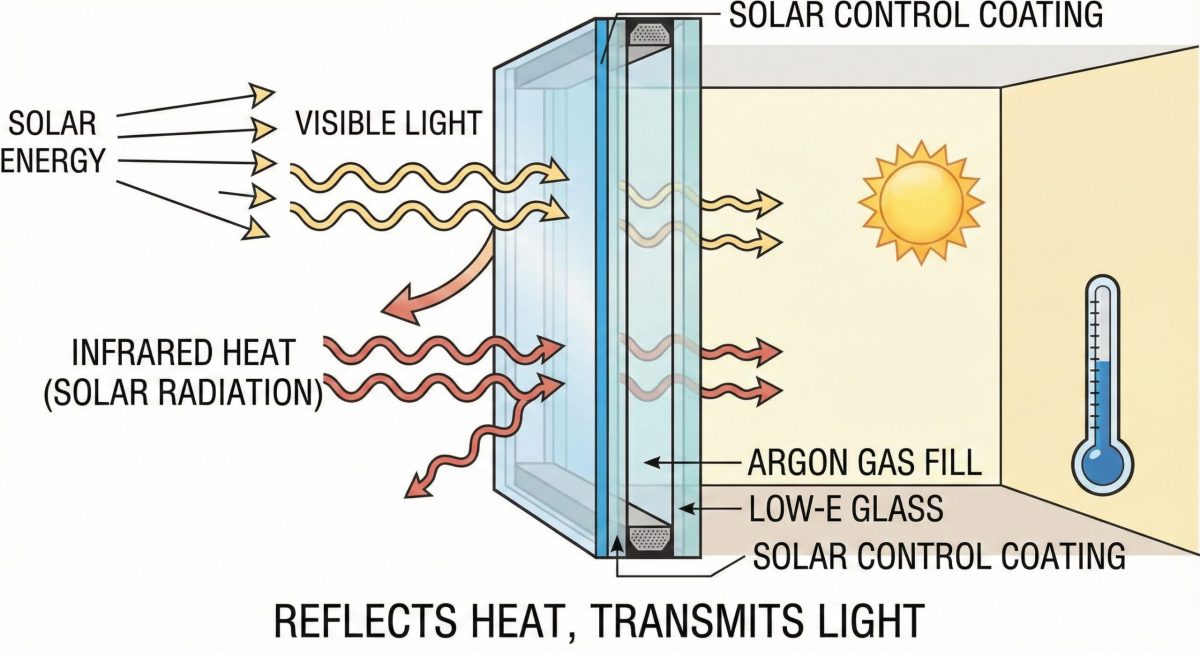
This high-performance glass features microscopically thin, virtually invisible metallic coatings applied directly to the surface during manufacturing. It keeps your home cool by precisely manipulating three specific factors of solar radiation:
1. Reflectance
The metallic coating acts as a selective mirror. It allows visible daylight to pass through freely, but aggressively reflects the invisible infrared heat radiation directly back into the atmosphere.
2. Direct Transmittance
This is the strictly limited amount of the sun’s raw radiation that successfully manages to penetrate the coatings and pass directly into the room.
3. Absorptance
The glass itself will absorb a certain amount of the sun’s heat. Solar control glass manages how much of this absorbed heat is indirectly radiated inside versus radiated back outside.
The Result: While standard double glazing might have a G-Value of 0.70 (allowing 70% of the sun’s heat inside), premium solar control glazing can achieve a G-value as incredibly low as 0.18. This means less than a quarter of the sun’s heat makes it into your living space, rendering your conservatory or kitchen extension perfectly usable, even on the hottest day of the year.
6. Frequently Asked Questions
Historically, UK Building Regulations (Part L) focused entirely on heat *loss* (keeping homes warm). However, recognising the climate crisis, the government recently introduced Part O of the Building Regulations. This new standard specifically addresses the risk of overheating in new-build residential properties, mandating limits on unwanted solar gains and requiring adequate means of removing heat.
No. While early versions of anti-sun glass were heavily tinted (often bronze or dark grey), modern high-performance solar control coatings are highly engineered to maximise “Light Transmittance” (letting visible light in) while minimising “Solar Transmittance” (blocking the invisible infrared heat). Your room will remain beautifully bright and natural.
You can retrofit adhesive solar films to existing glass, which does help reflect heat. However, it is never as effective, durable, or visually flawless as glass that was professionally manufactured with the metallic coating permanently baked into the inner surface of the sealed unit.
📚 Explore Our Energy Knowledge Hub
Dive deeper into the technical specifications that keep your home comfortable all year round:
Ready to upgrade your glazing?
If your conservatory or south-facing rooms have become completely unusable during the summer, the solution lies in the glass. Contact the KJM Group today for a free, transparent consultation across Hampshire on retrofitting Solar Control Glass or upgrading to a thermally efficient solid roof.
Request a Transparent Quote
Mark Pearce is a highly experienced specialist in the double glazing industry, having built his knowledge from the ground up through hands-on experience in installation, manufacturing, sales, and business management. Beyond his role at KJM, Mark is a keen blogger, writer, and traveller, often sharing insights on the latest innovations in the home improvement industry.
- Comp Door Launches New 2026 Brochure Featuring ‘Total Black Out’ Frames - 11 September 2026
- Solidor launch five new doors - 21 August 2026
- KJM Group Wins Which? Trusted Trader of the Month (Aug 2026) - 4 August 2026