Timber - PVC - Aluminium - Windows, Doors & Conservatories in Hampshire
Cat flaps in uPVC, composite & glass doors: what’s possible (and what isn’t)
Cat flaps in uPVC, composite & glass doors: what’s possible (and what isn’t)
A complete guide to installing cat flaps in double glazing, uPVC, and composite doors, including accurate 2026 guide prices.
Cat flaps can be successfully installed in most uPVC door panels and double-glazed glass doors. However, you cannot cut a hole in existing toughened glass. If you want a cat flap in a glass door or patio, the entire sealed glass unit must be replaced with a new one that has been factory-cut prior to the toughening process. For composite doors, cutting a hole after installation often voids the manufacturer’s warranty.
Page Contents
1. Quick Guide: Where Can a Cat Flap Go?
| Door Material | Suitability | Installation Method |
|---|---|---|
| uPVC (Solid/Panelled) | ✅ Very Good | We cut into the lower uPVC panel, or supply a pre-cut replacement panel if the existing one is too thin. |
| Glass Doors & Patios | ✅ Very Good | We completely replace the existing sealed glass unit with a new, factory-cut toughened pane. |
| Composite Doors | ⚠️ Caution | Often voids the slab warranty if cut post-installation. Best ordered factory-prepared from new. |
| Fire-Rated Doors | ❌ Never | Modifying a fire door compromises its legal certification. Do not install. |
2. uPVC Doors: The Straightforward Option
For most standard uPVC front or back doors, installing a cat flap is a simple procedure. We fit the flap into the lower solid panel, ensuring we keep well clear of any internal reinforcement and the locking mechanisms.
Expect a neat finish with draught seals fully intact. If your existing lower panel is highly decorative, moulded, or simply too thin to securely clamp the cat flap tunnel, we will swap it out for a new, matching reinforced uPVC panel that is pre-cut for the flap.
Good to know: Choose a mounting height that allows your cat to walk through level with their belly. Most manufacturers advise fitting it “as low as practical” depending on the design features of your door panel.
3. Glass & Patio Doors: Don’t Cut, Replace
Double-glazed doors and side panels are legally required to use toughened safety glass. Once glass has been toughened, it cannot be cut or drilled. It will instantly shatter into thousands of pieces.
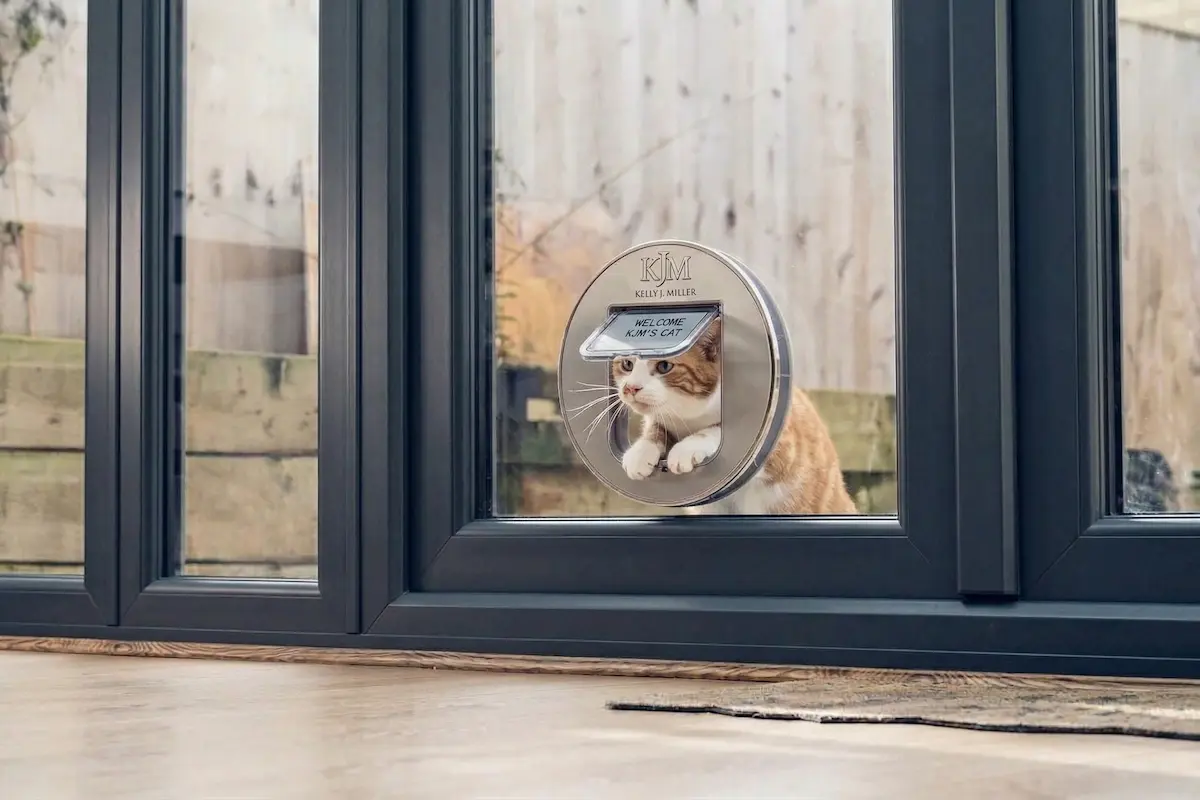
Because of this fundamental rule of glass manufacturing, the hole for the cat flap must be created before the glass goes through the toughening furnace. That is why our process is:
- Survey and measure your existing glass.
- Order a brand new toughened Insulated Glass Unit (IGU) featuring a factory-sealed circular cut-out.
- Remove your old glass and fit the new unit.
- Install the cat flap using a proper circular glass-mounting adaptor.
📏 The Glass Width Rule: Minimum Clearances
When ordering a new toughened glass unit with a cat flap hole, the hole cannot be positioned right on the edge of the glass. To maintain the structural integrity of the pane during the toughening process, sealed unit manufacturers require a minimum gap of 75mm to 100mm between the edge of the hole and the edge of the glass.
The Math: If your cat flap requires a standard 225mm circular hole, the visible glass pane itself must be at least 425mm wide (100mm gap + 225mm hole + 100mm gap) to accommodate it safely. If your glass pane is narrower than this (such as a slim side panel), a glass installation will not be possible.
Sliding Patio Doors
For sliding patios, we generally install the new glass pane and flap into the fixed pane (the side that does not slide). We use specific slimline flaps (often recommended by specialists) to ensure the sliding leaf still operates flawlessly without hitting the flap’s exterior tunnel.
4. Composite Doors: Proceed Carefully
Composite door slabs are complex, layered structures (typically a timber or foam core wrapped in a GRP skin). Cutting a hole through them post-installation presents several risks:
- It reduces the door’s thermal insulation.
- It can introduce points for water ingress into the timber core.
- Crucially, it will invalidate the door warranty with almost all major UK brands.
If you want a cat flap in a composite door, the safest route is to order the door factory-prepared from new, where the manufacturer routes the hole and seals the core during production. If you already have a composite door installed, we strongly advise using a glass installation (if you have a glass side-panel) or a through-the-wall installation instead.
5. Security, FENSA & Which Flap to Choose?
Security & Insurance
Any aperture in a door is a potential weak point. “Key-fishing” is a real threat; UK police guidance warns that thieves can use tools to fish car or house keys through openings like letterboxes and cat flaps. Always keep keys well away from the door, out of sight, and consider internal letterbox/flap guards where appropriate.
Pair the flap with good locking practice: always fully engage your multi-point lock (lift the handle and turn the key), and consider a split-spindle (auto-locking) setup so the external handle cannot be operated if an intruder reaches through the flap.
Which Cat Flap?
- Microchip Flaps (Recommended): These read your pet’s veterinary microchip to unlock, keeping out strays and local foxes. Brands like Sure Petcare are the industry standard for this and require specific circular adaptors for glass fitting.
- Manual 4-Way Flaps (Budget): Simple flaps with In/Out/Locked settings. Good for basic draught control, but offer zero selective entry.
FENSA & Fire Doors
Glass-only swaps do not require a FENSA certificate. FENSA covers the installation of replacement windows and doors including the frames. Replacing a glazed unit within an existing frame is classed as a repair, so FENSA scope does not apply.
Fire Doors: If your door is fire-rated (such as a flat entrance door or an internal door leading to an attached garage), do not install a flap. Manufacturer manuals explicitly prohibit fitting flaps to fire doors, as it immediately destroys the door’s legal fire-certification integrity.
6. Our Process, Travel & Guide Prices
A common question we receive is: “How much does it cost to fit a cat flap?” To give you a transparent answer, we have to factor in the reality of the installation process.
If we are fitting into glass, it is a labour-intensive procedure that legally requires two separate visits. First, we must travel to your property to take millimetre-perfect measurements of your existing unit. We then order the custom-manufactured toughened glass. Finally, we return for a second visit to fit the new unit, install the flap, and safely remove and commercially dispose of your old glass.
🚐 Advice: Keep It LOCAL
Travel time heavily impacts your final price. A property just 20 to 30 miles away from our Andover base adds a minimum of 2 hours of driving time across the two required visits. This is why we strongly advise customers to use a local installer to avoid paying hundreds of extra pounds simply in travel time!
Typical Guide Prices (Inc. VAT)
Assuming you supply the cat flap yourself, here are our average guide prices based on your distance from our Andover HQ:
| Installation Type | Local Fit (Andover Area) | Further Away (~30 Miles) |
|---|---|---|
| Into a New Glass Sealed Unit (Includes measure, custom glass, fitting & commercial disposal) |
~£400 | ~£700 |
| Into an Existing uPVC Flat Panel (Includes travel and fitting labour) |
~£250 | ~£550 |
7. Frequently Asked Questions
No. Toughened glass cannot be cut after manufacture. We must replace the entire pane with a brand new toughened double-glazed unit that has been custom-made with the hole already in it.
Often, yes. If you cut into the slab after installation, most manufacturers will void the warranty. Some manufacturers will accommodate a factory-prepared opening if requested during the initial order—ask us and we will check your specific door brand.
Yes, we usually install the new glass and flap into the fixed pane (the side that doesn’t move), using a slimline cat flap model so the sliding door still clears it without catching.
Because you are not just paying for the hole. You are paying for a brand new, custom-manufactured piece of toughened safety glass, two separate engineering visits (measure and fit), travel time, and the commercial disposal of your old glass unit.
📚 Related Customer Care Guides
Thinking about a cat flap?
Send us a quick photo of your door (inside & outside) and, if glass, the bead type and unit thickness if known. We’ll confirm feasibility and provide a firm, no-obligation price.
Request a Quote
Mark Pearce is a highly experienced specialist in the double glazing industry, having built his knowledge from the ground up through hands-on experience in installation, manufacturing, sales, and business management. Beyond his role at KJM, Mark is a keen blogger, writer, and traveller, often sharing insights on the latest innovations in the home improvement industry.
- Comp Door Launches New 2026 Brochure Featuring ‘Total Black Out’ Frames - 11 September 2026
- Solidor launch five new doors - 21 August 2026
- KJM Group Wins Which? Trusted Trader of the Month (Aug 2026) - 4 August 2026