Timber - PVC - Aluminium - Windows, Doors & Conservatories in Hampshire
The Ultimate Conservatory Buying Guide (2026)
The Ultimate Conservatory Buying Guide (2026)
Stop moving, start extending. Everything you need to know about conservatory styles, solid vs glass roofs, materials, and crucial building regulations.
- 💷 Cost vs Moving: With the average UK house price exceeding £285,000, stamp duty and moving fees can easily hit £15,000. Extending your current home is often a far smarter financial investment.
- 📈 Added Value: A well-designed conservatory or orangery is one of the most profitable home improvements you can make, typically adding around 5% to your property’s resale value.
- 🌡️ The Roof Reality: To add genuine property value and create a true 365-day living space, you need a solid tiled or hybrid roof. All-glass roofs are beautiful, but they are seasonal spaces best suited for plants and sunny winter afternoons.
- 📋 Compliance is Key: Adding a solid roof means your extension falls firmly under Building Regulations. You must ensure your installer handles this certification properly.
The cost of moving home in the modern housing market can quickly spiral out of control. With average house prices remaining high across Southern England, the combined costs of Stamp Duty, estate agent fees, surveyors, and solicitors can easily swallow up to 10% of your total purchasing budget.
That is exactly why so many growing families opt to extend their current property rather than relocate. However, a traditional single-storey brick extension can easily cost between £40,000 and £80,000. This is where contemporary conservatories and glazed extensions offer a highly cost-effective, value-adding alternative.
Page Contents
1. The Return on Investment (ROI)
According to multiple property experts and the Royal Institute of Chartered Surveyors (RICS), adding a high-quality conservatory or orangery to your property delivers one of the single biggest returns on investment of any home improvement project.
A well-built, thermally efficient extension typically increases the overall value of your property by around five per cent. Because the initial outlay for a conservatory is significantly lower than a brick extension, it is one of the few home improvements that often pays for itself when it comes time to sell.
2. Modern Design: Moving Beyond the “Bolt-On”
A decade ago, conservatories were often viewed as separate, somewhat isolated “bolt-on” garden rooms. They lacked the flexibility to be used as genuine household spaces. Thanks to massive leaps in product design and structural engineering, this has completely changed.
You must stop thinking about a conservatory as just a garden room, and start thinking about it as an integral part of your home. Do you want it to function as a dining room, an extended kitchen, or a year-round playroom? How will the space flow between your original house and your patio? Your intended use will dictate your choice of doors (such as bifolding doors to open up the wall entirely) and your choice of roof.
The Core Architectural Styles
The Classic Conservatory
Predominantly glass walls and a glass roof. Perfect for maximising natural light and connecting visually with the garden. Modern Solar Control glass improves overheating in the summer.
The Orangery
Delivers light and space but utilises brickwork pillars and a part-solid roof (usually featuring a lantern skylight). This gives the room a sense of permanent substance, bridging the gap to a full extension.
The “Hybrid” System
Orangery cross-over products utilise a core glass conservatory structure but introduce internal pelmets and external cornices to brilliantly emulate the grand appearance of an orangery, but at a far more affordable price point.
3. Comparing Framing Materials
Next on your checklist is the framing material. The type of material you select will be entirely defined by your property’s architecture, your lifestyle, and your budget.
| Material | Characteristics | Best For… |
|---|---|---|
| uPVC | Incredibly low maintenance, highly energy-efficient, and very cost-effective. Modern foiling technologies can even successfully re-create the textured appearance of timber. | Budget-conscious projects and modern homes. |
| Aluminium | Immense structural strength allows for ultra-slim frames and massive panes of glass. It can be powder-coated in over 200 colours and offers a sleek, architectural aesthetic. | Contemporary designs and large bifold door spans. |
| Timber / Hardwood | The classic framing material. Looks absolutely stunning and offers unmatched heritage character, but comes with a premium price tag and requires cyclical maintenance. | Listed buildings, cottages, and heritage properties. |
4. The Importance of the Roof (Glass vs Solid Tiled)
The roof is the absolute engine room of your conservatory’s thermal performance. Let’s be completely candid about the capabilities of different roofing systems, as choosing the wrong one will fundamentally alter how you use the room.
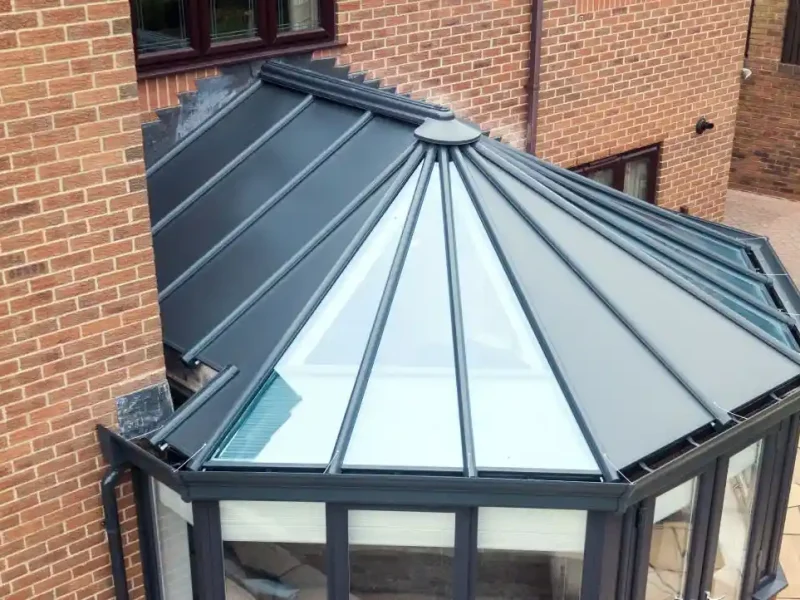
Glass Roofs: The Seasonal Haven
Let’s be honest: even if you specify the highest-quality solar-control glass available, an all-glass roof is inherently a seasonal retreat. While it can be wonderfully insulated, it will still naturally fluctuate in temperature during the absolute depths of winter or the peak of a summer heatwave.
However, glass roofs absolutely still have their place! If you do not require the room for intensive, day-in-day-out use (like a main dining room), a glass roof is beautiful. They are the perfect, light-flooded spot for reading a book on a crisp, sunny winter’s afternoon, or as a sanctuary for cultivating exotic tropical plants and bringing on summer seedlings early in the season.
Solid Tiled & Hybrid Roofs: The Year-Round Extension
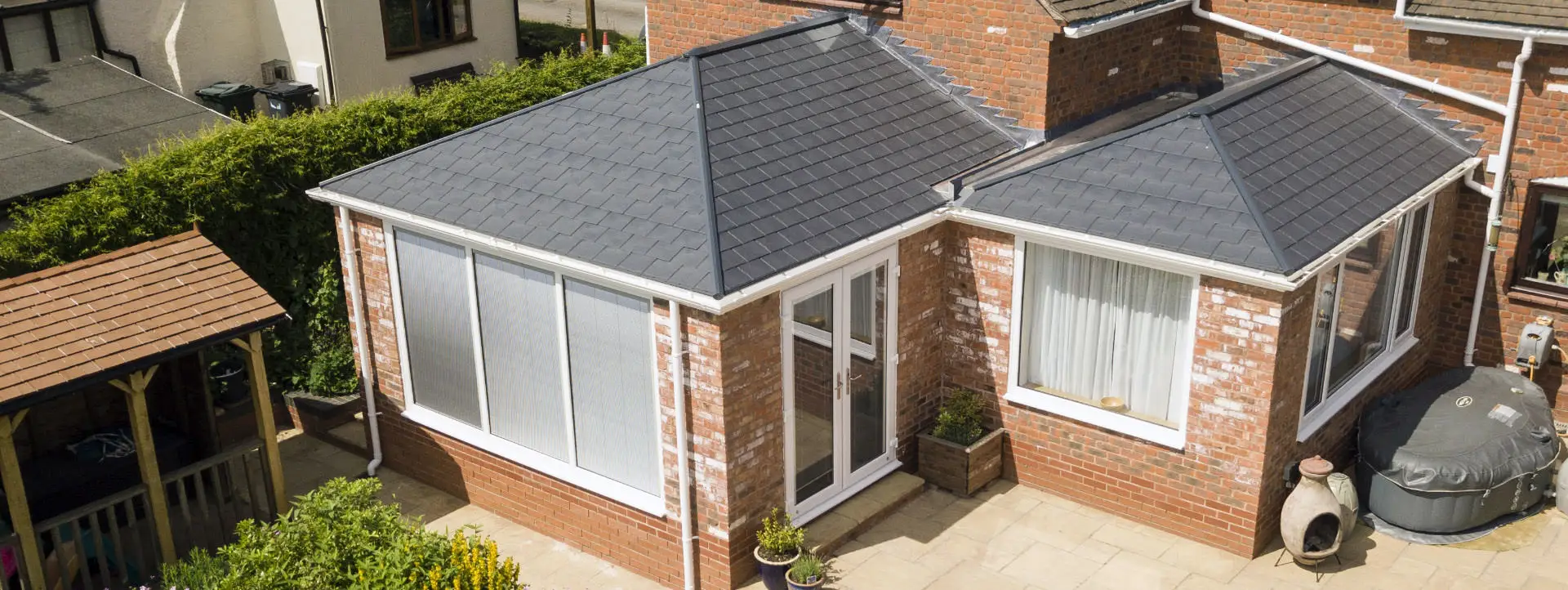
If your goal is to create a true extension of your everyday living space—a room you can use comfortably at 9 PM on a freezing January night—you need a Solid Tiled Roof (like the Ultraroof shown at the top of this article) or a Hybrid Roof.
These roofs are fully insulated, meaning the room acts just like a standard brick extension, maintaining a regulated temperature 365 days a year. Because they perform thermally and aesthetically like a full extension, they are the systems that truly add that 5% premium to your property’s resale value.
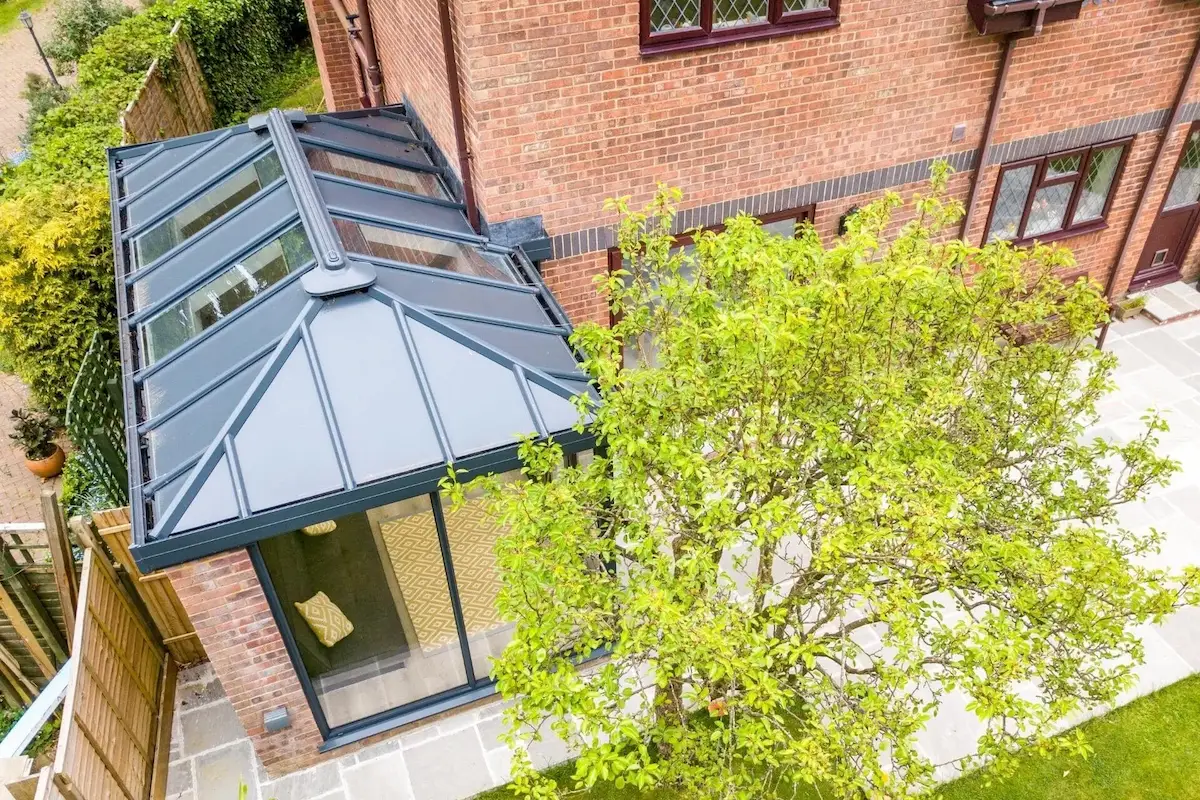
Flat Roof Extensions with Lanterns
Another superb year-round alternative is a modern flat roof extension, complete with a stunning glass roof lantern to flood the space with natural light.
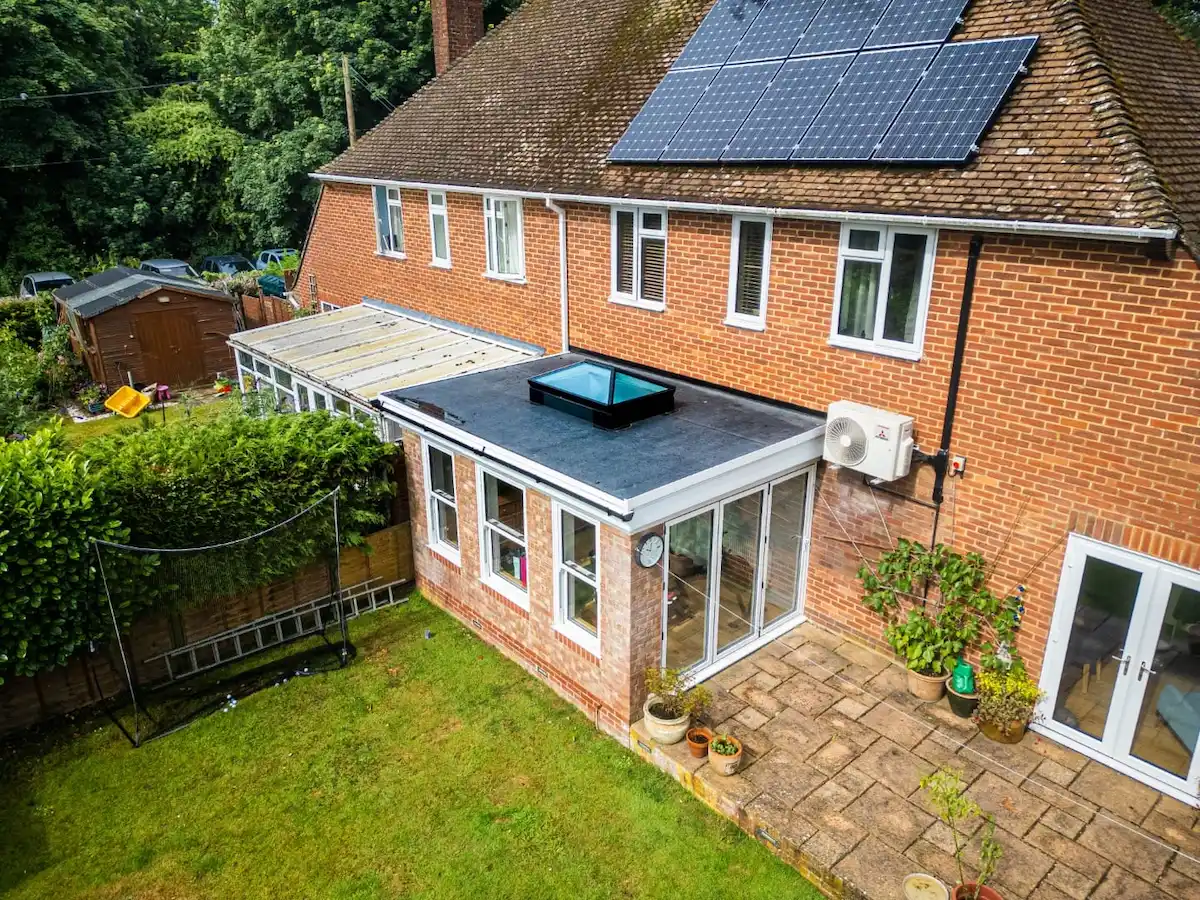
Capable of being fully insulated, these extension systems create a seamless and thermally regulated new living space that adds immense architectural flair and usability to your home without the staggering cost of a traditional build.
If you already have a conservatory with a freezing glass or polycarbonate roof, you do not need to tear the whole structure down! Upgrading to a solid tiled or hybrid replacement roof instantly transforms your existing conservatory from a seasonal “add-on” into a fully-integrated, warm extension.
5. Planning & Building Regulations Checklist
Before you invite an installer to survey your home, it is absolutely critical to understand the legal requirements surrounding your new extension. This is where many homeowners get caught out.
📝 The Compliance Checklist
- Building Regulations for Solid Roofs: This is vital. While standard glass conservatories often bypass Building Regulations, any extension with a solid tiled roof must strictly comply with Building Regulations. You must ensure your installer manages this process and provides you with a Local Authority Building Control (LABC) certificate. Learn more about LABC standards External Link.
- Planning Permission is Becoming Stricter: Historically, many conservatories fell under “Permitted Development.” However, Planning Permission is becoming increasingly required by local councils, particularly if your property is a new build, in a Conservation Area, or if you are extending to the side of the property rather than the rear. We strongly advise always checking with your Local Authority. Check the UK Planning Portal rules External Link.
- FENSA is Not Enough: Remember, FENSA certification only covers replacement windows and doors. It does not cover the construction of a new extension or the installation of a solid roof. This is why KJM Group offers a comprehensive building regulations and planning consultation to legally safeguard your project.
6. Frequently Asked Questions
While many rear conservatories still fall under “Permitted Development,” planning rules are becoming far stricter. If you live in a Conservation Area, a Listed Building, or are building a large solid-roofed extension, you will almost certainly need permission. We strongly advise consulting with your local planning department. KJM Group offers a full planning consultation service and can handle necessary applications on your behalf.
The cost varies massively depending on the size, style, base work required, framing material (uPVC vs Aluminium), and critically, the type of roof. A small, lean-to uPVC conservatory with a glass roof will be highly affordable, whereas a large, aluminium orangery with a solid insulated roof represents a premium investment. We provide free, transparent, and itemised quotes without any high-pressure sales tactics.
If you have a traditional glass or polycarbonate roof, yes, it will likely be too cold for comfortable daily use in the absolute depths of winter. However, if you specify an insulated solid tiled roof or a hybrid roof system, the space retains heat perfectly, acting exactly like a standard brick extension that you can use 365 days a year.
📚 Explore Our Extension Knowledge Hub
Dive deeper into the technical specifications and product options for your new extension:
Ready to upgrade your home?
If your old conservatory has become completely unusable during the winter, or you are looking to build a brand new year-round extension, contact the KJM Group today. We offer a full planning consultation service across Hampshire to ensure your new solid tiled roof or hybrid extension is legally compliant and built to perfection.
Request a Transparent Quote
Mark Pearce is a highly experienced specialist in the double glazing industry, having built his knowledge from the ground up through hands-on experience in installation, manufacturing, sales, and business management. Beyond his role at KJM, Mark is a keen blogger, writer, and traveller, often sharing insights on the latest innovations in the home improvement industry.
- Comp Door Launches New 2026 Brochure Featuring ‘Total Black Out’ Frames - 11 September 2026
- Solidor launch five new doors - 21 August 2026
- KJM Group Wins Which? Trusted Trader of the Month (Aug 2026) - 4 August 2026