Timber - PVC - Aluminium - Windows, Doors & Conservatories in Hampshire
Condensation on Windows Explained: Causes, Fixes & When to Worry
Condensation on Windows Explained: Causes, Fixes & When to Worry
Are your windows constantly wet? Stop panicking. Discover the exact diagnostic steps to cure morning condensation and understand why new windows might actually make it worse.
Condensation on windows is usually caused by warm, moist air hitting cold glass. Inside condensation points to a ventilation issue. Outside condensation means your insulation is working perfectly. Moisture trapped between the panes indicates a failed seal. Most causes are easily fixed without replacing the whole window.
It remains the most frequent panic call we receive at our Andover showroom: “I spent thousands on brand new double glazing to stop condensation, so why are my windows soaking wet every morning?”
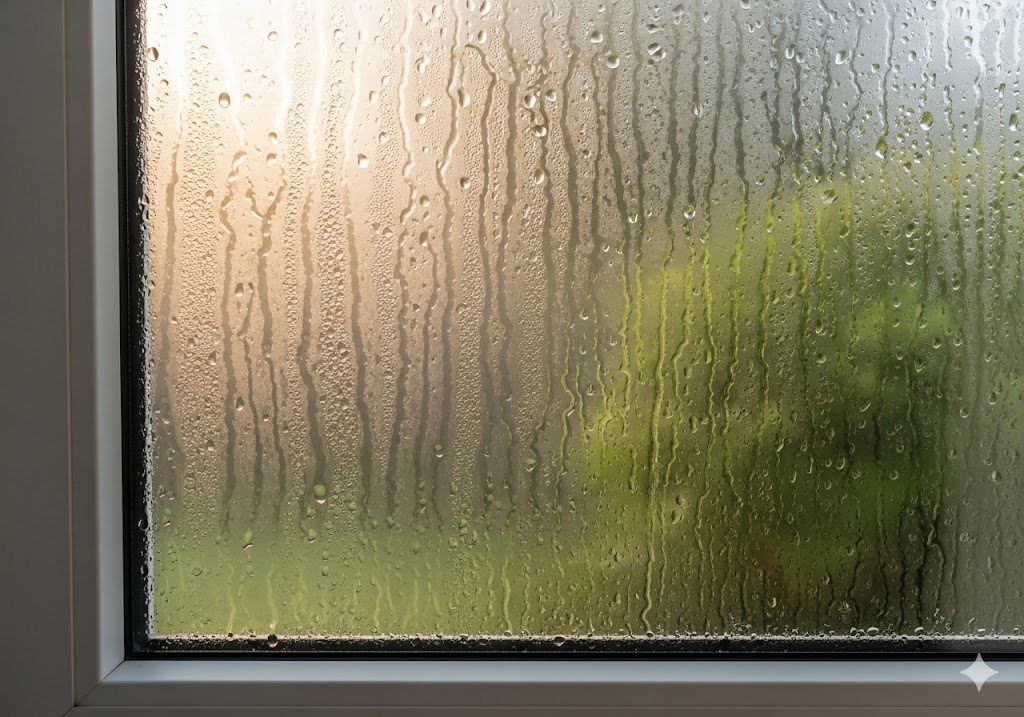
Seeing water on your glass does not automatically mean your windows are broken. Depending on exactly where the water is sitting, it can actually prove your windows are performing flawlessly. Before you start worrying about massive repair bills or toxic black mould, you must properly diagnose the symptoms.
Instant Condensation Diagnosis
Tap your specific symptom below for an immediate diagnosis.
Inside the Room
I can physically wipe the water away with a cloth from inside my house.
Tap to reveal →⚠️ Ventilation Issue
This is not a window fault. The moisture is coming from inside your home. Your new windows are so airtight they have trapped the humidity.
Fix: You must actively ventilate the property.
Outside in the Garden
The glass is noticeably wet on the exterior, facing the street or garden.
Tap to reveal →🏆 Perfect Insulation
Do not panic! This proves your windows are working brilliantly. The inner pane is keeping your heat inside.
Fix: None required! The morning sun will burn it off.
Between the Panes
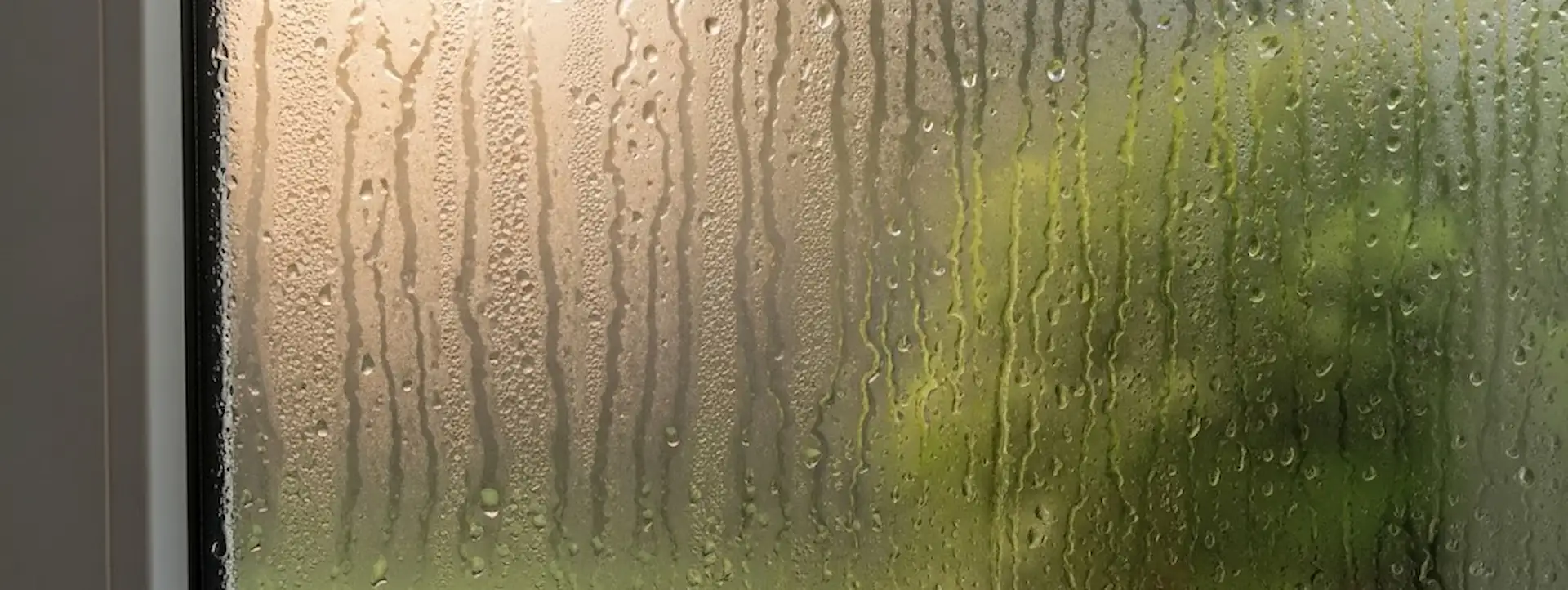
The glass looks permanently foggy, but I cannot wipe it away.
Tap to reveal →🛑 Failed Perimeter Seal
You require a repair. The rubber seal has perished and the insulating gas has escaped.
Fix: You need a replacement glass unit fitted into the existing frame.
Page Contents
1. The Science of Condensation
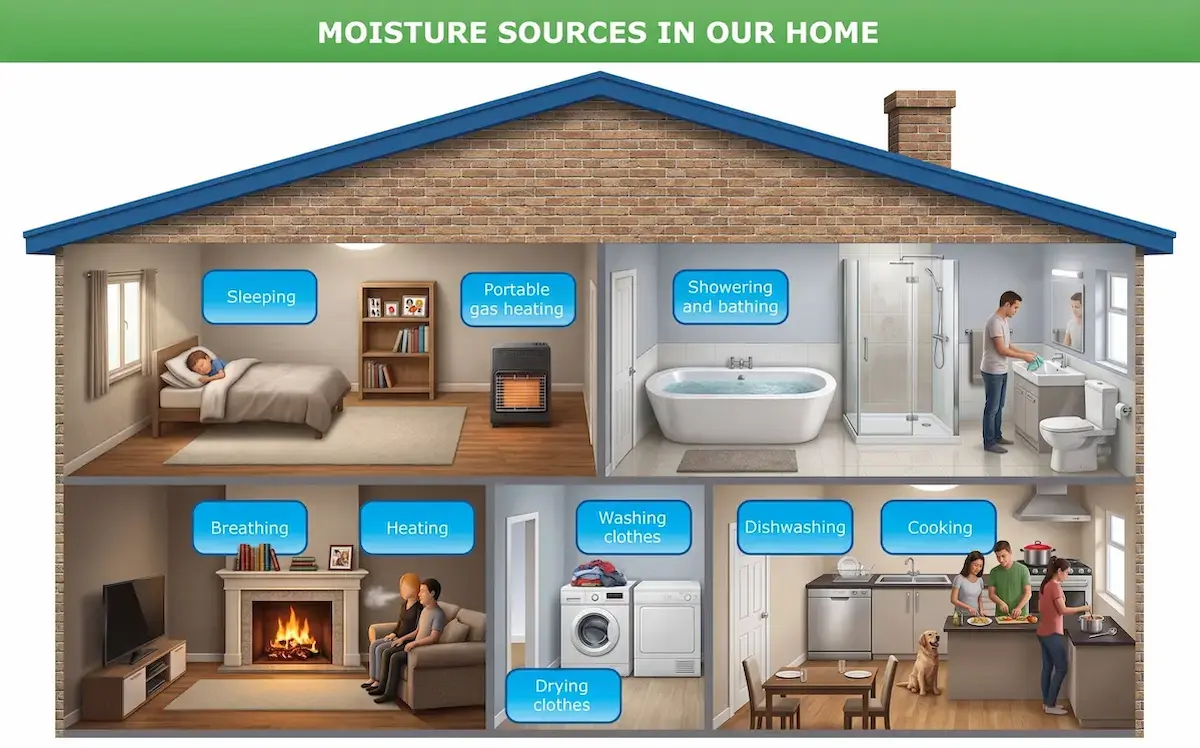
The image below visualises both concepts clearly. First, we have the broader environmental process, and secondly, we examine the specific micro-climate that occurs inside a property.
The Natural Water Cycle
The natural cycle can be broken into distinct, continuous stages. Heat drives evaporation from water bodies and transpiration from plants, effectively turning liquid into water vapour. As this vapour rises into cooler atmospheric layers, it condenses to form clouds. The moisture then falls back to earth as precipitation (rain or snow), where it collects in rivers, lakes, and aquifers to begin the process again.
Condensation in the Home
When we look at condensation inside a property, the physical principles remain the same, but the scale changes. Warm indoor air holds significantly more moisture than cold air—often generated by everyday activities like cooking, showering, and drying clothes.
When this moisture-laden air hits a colder surface, it rapidly cools and releases the excess water vapour as liquid droplets. Standard window glass acts as a primary cold bridge in many homes. Because older single glazing or failing double-glazed units transfer the external cold directly to the inside pane, they inevitably become magnets for condensation.
Upgrading to modern, energy-efficient glazing completely disrupts this cycle. Using advanced multi-chambered window profiles, low-E glass, and warm edge spacers actively keeps the internal pane of glass closer to room temperature. This prevents the indoor air from reaching its dew point when it touches the window, dramatically reducing or completely eliminating surface condensation.
2. Internal Condensation (Inside the Room)
If you have to grab a towel every morning to wipe the water off the inside of your bedroom windows, you are dealing with internal condensation. This is the most common form of window moisture, and ironically, it is often caused by actively upgrading your home.
A typical UK family produces around 14 litres of water vapour a day simply by breathing, cooking, taking showers, and drying clothes indoors. Old timber windows were naturally draughty, which allowed this moisture to safely escape. Modern double glazing is highly airtight. It successfully traps your expensive central heating inside, but it also traps the water vapour.
Understanding the ‘Dew Point’
Warm air holds significantly more invisible water vapour than cold air. When the warm, moist air inside your heated home hits the freezing cold surface of your window glass, the air rapidly cools down. As it cools, it reaches its “Dew Point”—the exact temperature where it can no longer hold the moisture. The invisible vapour is instantly dumped onto the glass as liquid water droplets.
The Dangers of Black Mould
Leaving windows persistently wet causes moisture to pool on your frames and seep into nearby walls. This creates the perfect breeding ground for toxic black mould (Stachybotrys chartarum), which can cause serious respiratory issues, asthma attacks, and permanent damage to your plasterwork.
Your Daily Ventilation Checklist
To cure internal condensation, you must lower the humidity below the dew point. Follow this daily routine:
- Purge Ventilation: Open bedroom windows wide for exactly 10 minutes every morning to flush out the stale, moist air generated overnight.
- Isolate Wet Rooms: Always close the door to the bathroom when showering, and leave the extractor fan running for 20 minutes afterwards.
- Open Trickle Vents: Never close the small grilles at the top of your windows; they provide essential background airflow.
- Stop Drying Indoors: Never hang wet clothes over hot radiators. If you must dry indoors, confine it to one room, close the door, and open the window slightly.
- Maintain Steady Heat: Massive fluctuations in temperature cause condensation. Keep your central heating on a low, steady baseline rather than blasting it for short bursts.
Want more detailed solutions?
Learn our safe recipe for removing black mould without damaging your uPVC frames, and discover when you might need to invest in mechanical ventilation.
Read the Full Internal Condensation Guide3. External Condensation (Outside the House)
Waking up on a crisp Autumn morning to find heavy mist completely obscuring the outside of your windows can be alarming, especially if you have just paid for new double glazing.
Why Low-E Glass Causes Exterior Mist
External condensation is the ultimate badge of honour for your home’s thermal efficiency.
Modern double and triple glazing utilises sophisticated “Low-E” (Low Emissivity) glass. This invisible coating actively reflects your interior heat back into the room. Because none of your expensive heat is escaping through the glass to warm up the outer pane, the exterior piece of glass remains freezing cold. Dew forming on the grass or your car windscreen is exactly the same process—moisture from the cold morning air naturally condenses on your cold window.
Once the sun rises and warms the ambient air, the condensation will naturally evaporate. You do not need to do anything to fix this. It proves your windows are actively saving you money.
The “Good News” Guide
Learn why old, draughty timber windows never misted up on the outside, and understand exactly why this phenomenon is perfectly normal for UK homeowners.
Read the Full External Condensation Guide4. Misted Double Glazing (Between the Panes)
If you see water droplets, persistent fog, or dirty streaks trapped directly between the two sheets of glass, you have a genuine hardware problem. You cannot physically touch or wipe this condensation away.
Why Do Perimeter Seals Fail?
This is commonly referred to as a “blown” or “failed” unit. Over time—typically 10 to 15 years—the black rubber perimeter seal holding the two panes of glass together naturally degrades due to UV exposure and thermal expansion. The seal cracks, the insulating Argon gas permanently escapes, and moist external air is sucked into the cavity. When this moisture hits the inner pane, it condenses.
The Professional Repair Process
The Fix: Do not fall for DIY scams involving drilling holes into the glass to pump out the moisture. This permanently destroys the structural integrity of the window. You also do not need to pay for a whole new uPVC window frame. A professional glazing company can simply pop out the plastic glazing beads, remove the failed glass, and slot a brand new, fully sealed glass unit into your existing frame for a fraction of the cost.
How to Fix Misted Windows
Discover exactly how much a replacement glass unit costs, and learn how our installers handle rapid, mess-free glass replacement across Hampshire.
Read the Full Repair Guide5. The Ultimate Condensation FAQ
Still have questions? We have compiled the ten most common concerns homeowners raise when trying to combat wet windows in the UK.
Old, single-glazed or degrading timber windows are naturally draughty. They allow the moisture generated inside your home to escape through the gaps. Brand new, highly efficient double glazing is incredibly airtight. It stops the draughts, but traps all your internal humidity inside the room. You simply need to adjust your ventilation habits.
Yes, particularly if it forms on the outside of the glass. This is physical proof that the advanced Low-E glass is working correctly to prevent heat loss, leaving the outer pane cold enough for morning dew to settle upon it.
Overnight, the external temperature drops significantly, which massively cools your window glass down to the “dew point”. Your family is asleep inside, exhaling warm, moist water vapour for eight hours with the bedroom doors closed. This naturally creates the perfect micro-climate for heavy morning mist.
Yes. If internal condensation is consistently ignored, the water will pool on your window sills and soak into the surrounding plasterwork. This damp environment allows black mould spores (Stachybotrys chartarum) to thrive, which poses severe risks to your respiratory health.
Absolutely. You should wipe the water away every single morning using an absorbent microfibre cloth or a handheld window vacuum. Removing the physical moisture immediately stops it from soaking into your walls or degrading the silicone seals around the frame.
Bedrooms are often the most problematic rooms because they are typically unheated at night. Two adults sleeping with the door closed will generate roughly a litre of water vapour through breathing alone. Hitting unheated, cold glass guarantees heavy condensation.
Yes. A high-quality compressor dehumidifier physically extracts the excess water vapour from the air, collecting it in a tank. By drastically lowering the overall humidity of the room below the dew point, condensation cannot physically form on the glass.
Trickle vents provide essential, constant background ventilation to remove stale air, and they must remain open. In smaller rooms or areas with high moisture generation (like kitchens), trickle vents alone may not be enough. You will still need to actively “purge” the room by opening the window wide for 10 minutes daily.
This is completely normal. The affected window might be situated on the colder North-facing side of the house, heavily shaded by a tree, or located in a specific room that generates more humidity (like an en-suite bathroom or a room where laundry is dried).
Heating the air actually allows it to absorb and hold more moisture. If you heat a damp room but fail to open a window to let that moisture escape, you are simply turning your room into a sauna. When that hot, saturated air hits the cold window pane, massive condensation is inevitable.
📚 Explore Our Performance Glazing Hub
Now you understand the causes of condensation, explore the specific upgrade and repair options relevant to your home:
Need to Replace a Failed, Misted Window?
If you have a blown, foggy window unit that is obscuring your view, we can help. KJM Group manages professional glass replacement services across Andover and Hampshire.
Contact KJM for a Free Repair Quote
Mark Pearce is a highly experienced specialist in the double glazing industry, having built his knowledge from the ground up through hands-on experience in installation, manufacturing, sales, and business management. Beyond his role at KJM, Mark is a keen blogger, writer, and traveller, often sharing insights on the latest innovations in the home improvement industry.
- Comp Door Launches New 2026 Brochure Featuring ‘Total Black Out’ Frames - 11 September 2026
- Solidor launch five new doors - 21 August 2026
- KJM Group Wins Which? Trusted Trader of the Month (Aug 2026) - 4 August 2026